Gary Coleman – A Complete Biography
Introduction
This biography covers Gary B.B. Coleman (born Gary Don Coleman, 1947–1994), the American soul-blues guitarist, singer, songwriter, producer, and club promoter from Paris, Texas—not to be confused with the actor of the same name. A stalwart of the 1980s–early 1990s Southern blues circuit, Coleman cut a string of albums for Ichiban Records, produced and scouted other artists, and helped shape the label’s blues sound.
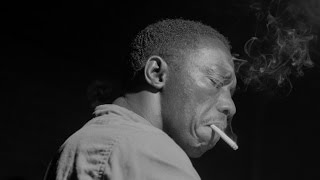
Childhood
Gary Don Coleman was born on January 1, 1947, in Paris, Texas. He taught himself guitar as a pre-teen and grew up steeped in blues and jazz, roots he would carry throughout his career.
Youth
By about age 15, Coleman was already working with fellow Texan Freddie King and later supporting Lightnin’ Hopkins—experiences that hardened his stagecraft and anchored his Texas blues vocabulary. He soon formed his own band and, in parallel, began booking blues acts in clubs across Texas, Oklahoma, and Colorado, a dual track (performer and promoter) he maintained for nearly two decades.
Adulthood
In 1985, Coleman launched his independent imprint Mr. B’s Records, issuing the single “One Eyed Woman” and self-releasing Nothin’ but the Blues (1986). The set traveled by word of mouth until Ichiban Records reissued it in 1987, bringing him national visibility and a Billboard R&B Albums chart appearance.
Signed to Ichiban, Coleman doubled as artist, producer, songwriter, and A&R scout, roles that led him to cut his own LPs—If You Can Beat Me Rockin’… (1988), One Night Stand (1989), Dancin’ My Blues Away (1990), Romance Without Finance Is a Nuisance (1991), and Too Much Weekend (1992)—while producing or playing on records by Blues Boy Willie, Chick Willis, Little Johnny Taylor, and Buster Benton. Stylistically he sat in a lane between modern electric blues and soul-blues, drawing on the “three Kings,” especially B.B. King (honored in his stage name) and Albert King.
In 1993–94, Coleman recorded Cocaine Annie, releasing it on his own imprint and then through Icehouse Records in 1994. Across these projects he often overdubbed multiple instruments—guitar, keys, and vocals—reflecting his hands-on studio approach.
Major compositions (and key recordings)
Although Coleman was celebrated as a performer and producer, he also penned and popularized a number of originals:
- “If You Can Beat Me Rockin’ (You Can Have My Chair)” — a swaggering mid-tempo number that became a signature piece in his shows and on record.
- “I Fell in Love on a One Night Stand” — a slow-burner that showcased his songwriter’s ear for conversational hooks.
- “Stealin’ Your Love Tonight” and the instrumental “Stumble” — originals highlighted on his debut set.
He also cut widely heard renditions of standards, including “The Sky Is Crying” (Elmore James), and built albums that mixed covers with Coleman-penned tunes—an approach that fit his soul-blues niche.
Death
Most references give February 14, 1994, in Shreveport, Louisiana, as the date and place of Coleman’s death, with funeral services held in Paris, Texas. Some local obituaries reported his death a week later, on February 21, 1994, leading to minor discrepancies. The generally accepted date remains February 14.
It has been reported that his death resulted from a combination of stroke and heart attack, though exact details are not universally documented.
Conclusion
Gary B.B. Coleman’s career embodied the working architecture of late-20th-century blues: regional clubs, independent labels, and multitasking artists who wrote, played, produced, and hustled the music they loved. Through his albums for Ichiban, his A&R and production work for fellow blues artists, and his road-tested guitar voice drawing on B.B., Albert, and Freddie King, Coleman left a compact but durable catalog that continues to circulate among blues listeners.
Comments are closed