Introduction

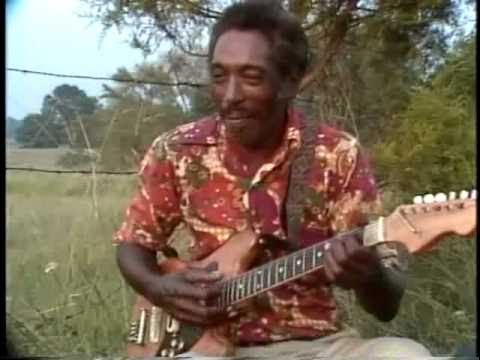
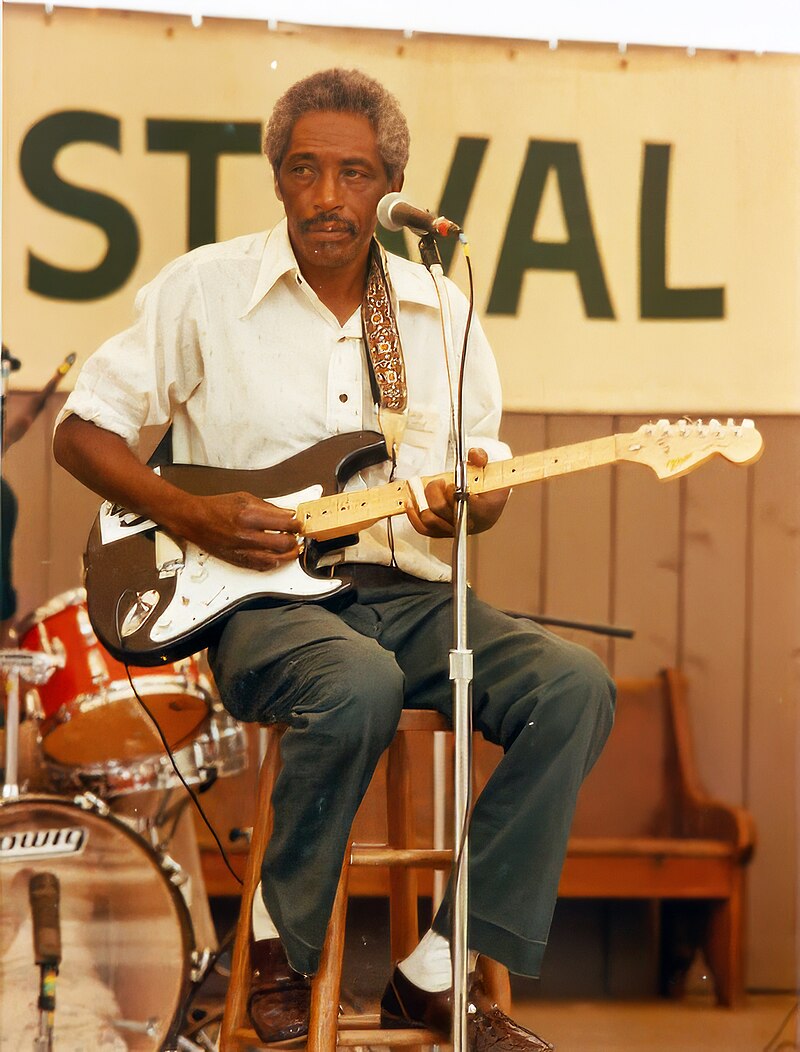
R.L. Burnside (November 23, 1926 – September 1, 2005) was a quintessential American Hill Country blues singer, songwriter, and guitarist. His career spanned decades, yet widespread recognition for his raw, hypnotic blues style came relatively late in his life, particularly after 1995 when he began recording and touring with Jon Spencer. This collaboration introduced his music to a broader audience, including the punk and garage rock scenes, cementing his legacy as a unique and influential figure in blues music.

Childhood

Born in 1926 to Earnest Burnside and Josie Malone, R.L. Burnside's exact birthplace is noted as either Harmontown, College Hill, or Blackwater Creek, all located in the rural Lafayette County, Mississippi. His given name varied, sometimes appearing as R.L., Rural, Robert Lee, Rule, or Ruel. His father left the family early, and Burnside was raised by his mother, grandparents, and several siblings. From the age of seven to seventeen, he resided in Coldwater with his mother and maternal grandparents, experiencing the deep-rooted musical traditions of the Mississippi Delta.

Youth

Burnside began his musical journey early, playing harmonica and guitar by the age of 16, and first performed publicly around 21 or 22. A pivotal influence was Mississippi Fred McDowell, a bluesman who lived nearby and became his mentor. Burnside recalled hearing McDowell play from a young age and eventually joined him for late-night sets. Other local musicians, including his wife's brother, his uncle-in-law Ranie Burnette, Henry Harden, Son Hibbler, Jesse Vortis, and Stonewall Mays, also contributed to his musical education. His childhood musical landscape was further shaped by church singing and fife-and-drum picnics. Later, he cited blues giants like Muddy Waters, Lightnin' Hopkins, and John Lee Hooker as adult influences.

In the late 1940s, seeking better economic prospects, Burnside moved to Chicago, where his estranged father lived. He found work in metal and glass factories and immersed himself in the vibrant blues scene on Maxwell Street, often in the company of his cousin-in-law, Muddy Waters. However, Chicago proved to be a harsh environment; within a year, his father, two brothers, and two uncles were tragically murdered. This violence led Burnside to return south three years later.

Adulthood

Upon his return to Mississippi, Burnside married Alice Mae Taylor in 1949 or 1950, a marriage that lasted over fifty years. Throughout the 1950s, he moved between Memphis, the Mississippi Delta, and the hill country of northern Mississippi. During this period, he encountered blues legends Robert Lockwood Jr. and Aleck "Rice" Miller. It was also around this time that Burnside was involved in a fatal incident, possibly during a craps game, leading to a murder conviction and incarceration in Parchman Farm. He was released after six months, reportedly due to his boss needing his skills as a tractor driver. Burnside often recounted this event with a dark humor, stating, “I didn’t mean to kill him. I just shot him in the head. His dying was between him and his God.”

For the next 45 years, Burnside lived in Panola and Tate counties, northern Mississippi. He balanced his musical pursuits with various manual labor jobs, including sharecropping cotton and soybean, commercial fishing on the Tallahatchie River, and truck driving, typically playing music on weekends. He eventually settled near Holly Springs, regularly performing in juke joints, bars, picnics, and his own house parties. His international career began in 1969 with a performance in Montreal alongside Lightnin' Hopkins and John Lee Hooker. He subsequently undertook three solo tours in Europe and performed at the New Orleans Jazz & Heritage Festival nine times starting in 1974.

His earliest recordings were made in 1967 by folklorist George Mitchell. Six of these tracks, including "Poor Black Mattie," "Goin' Down South," and "Long Haired Doney," appeared on the 1969 Arhoolie compilation album Mississippi Delta Blues, vol. 2. In 1979, musicologist David Evans recorded Burnside's Sound Machine, a band featuring his sons Duwayne and Daniel on guitar, Joseph on bass, and son-in-law Calvin Jackson on drums. This ensemble was known for its unique blend of rural and urban blues, funk, R&B, and soul. Between 1980 and 1986, Burnside recorded for the Dutch label Old Swingmaster and the French label Arion. By the mid-1980s, he retired from farm work to focus entirely on music, touring extensively both domestically and internationally, including appearances at the 1982 World's Fair.

A significant turning point came in the late 1970s or early 1980s when he formed a partnership with Junior Kimbrough. In 1990, Burnside gained further exposure through his prominent feature in the documentary Deep Blues. He began recording for Fat Possum Records in 1991, an Oxford, Mississippi-based label dedicated to preserving the music of aging North Mississippi bluesmen. His albums with Fat Possum included Bad Luck City (1992) and Too Bad Jim (1994). In 1995, his collaboration and touring with the Jon Spencer Blues Explosion garnered him a new generation of fans. The 1996 album A Ass Pocket of Whiskey, recorded with Spencer's band, brought him critical acclaim and crossover success, though it sparked debate among traditional blues critics. Fat Possum further experimented with remixing on albums like Mr. Wizard (1997) and Come on In (1998), leading to tracks being featured in popular culture, such as on The Sopranos soundtrack and in Nissan commercials. His live album Burnside on Burnside (2001) was Grammy-nominated and reached number 4 on Billboard's Blues Albums chart.

Major Compositions

While R.L. Burnside was known for his interpretations of traditional blues songs and his unique style, several of his own compositions and recordings became emblematic of his sound and career. Key tracks that gained prominence include "Poor Black Mattie," "Goin' Down South," and "Long Haired Doney," which were among his earliest recorded works. Later in his career, particularly with Fat Possum Records, songs like "Shake 'Em On Down," "See My Jumper Hanging on the Line," and "Let My Baby Ride" became fan favorites and received significant exposure, especially through their inclusion in films, television, and commercials. His album "A Ass Pocket of Whiskey" (1996) is also considered a landmark, showcasing his raw, electrified sound that appealed to rock audiences.

Death

Burnside's health began to decline in the early 2000s. He suffered an ear infection and underwent heart surgery in 1999. Following a heart attack in 2001, doctors advised him to stop drinking, a change he reported left him unable to play music as he once did. R.L. Burnside passed away at St. Francis Hospital in Memphis, Tennessee, on September 1, 2005, at the age of 78. He was laid to rest in Free Springs Cemetery in Harmontown, Mississippi. At the time of his death, he was residing in Byhalia, Mississippi.

Conclusion

R.L. Burnside's legacy continues to resonate deeply within the blues community and beyond. He was a recipient of several W.C. Handy Awards and was posthumously inducted into the Blues Hall of Fame in 2014. His distinctive musical style, characterized by a powerful, expressive voice and a drone-heavy guitar approach, remains highly influential. He played both electric and acoustic guitar, often using a slide, and his rhythms were heavily influenced by the fife and drum blues of North Mississippi. His music often featured single chords or simple bassline patterns, played fingerstyle without a pick, and frequently in open-G tuning. His vocal technique included brief falsetto breaks. Burnside cultivated a persona as a hardworking, hard-living individual, a master storyteller who often interspersed his performances with toasts and humorous anecdotes, solidifying his image as an authentic and charismatic blues icon. His extended family, including his sons Duwayne and Garry, and grandsons Cedric and Kent Burnside, proudly carry on his musical tradition, ensuring that the unique sound of R.L. Burnside endures for future generations.
Comments are closed