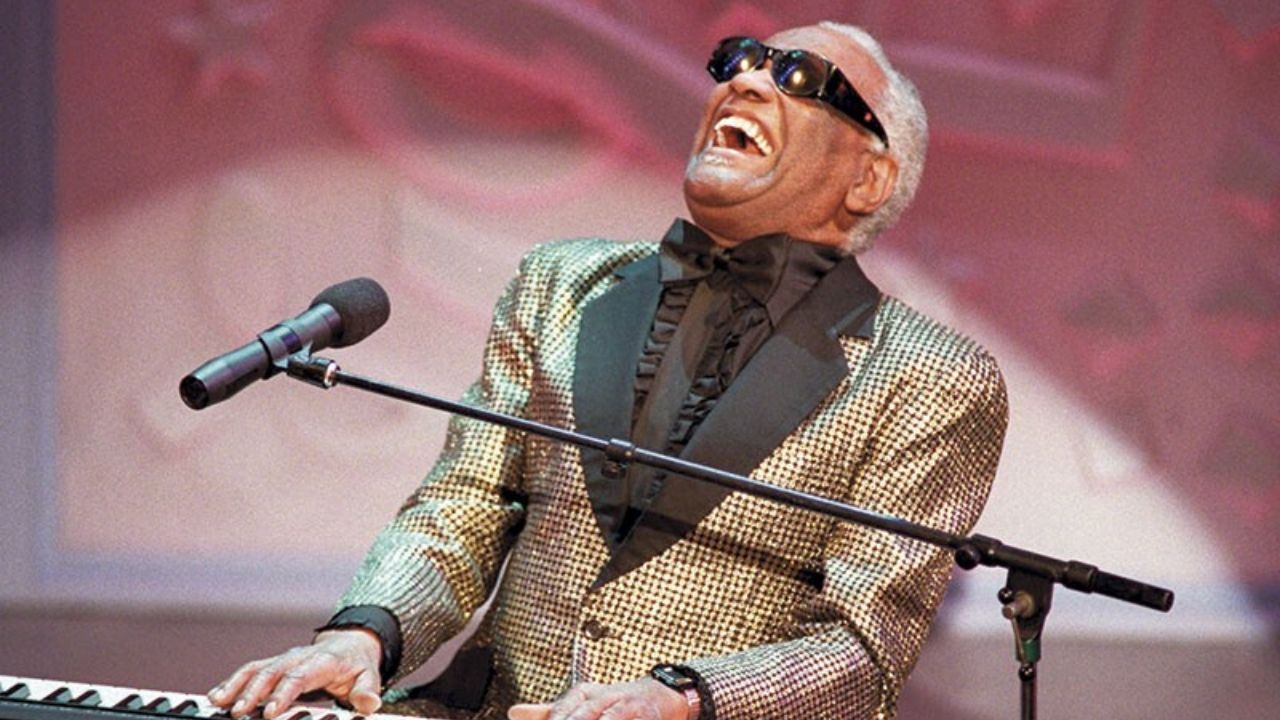
Ray Charles – A Complete Biography
Introduction
Ray Charles Robinson, known worldwide simply as Ray Charles, was one of the most influential figures in 20th-century music. Blending elements of blues, gospel, jazz, and country, he pioneered a sound that would later be called soul music. Blind since early childhood, Charles overcame immense personal and societal challenges to become a groundbreaking artist, composer, and performer. His dynamic voice, masterful piano skills, and innovative spirit reshaped the boundaries of American music, inspiring generations of artists across genres.
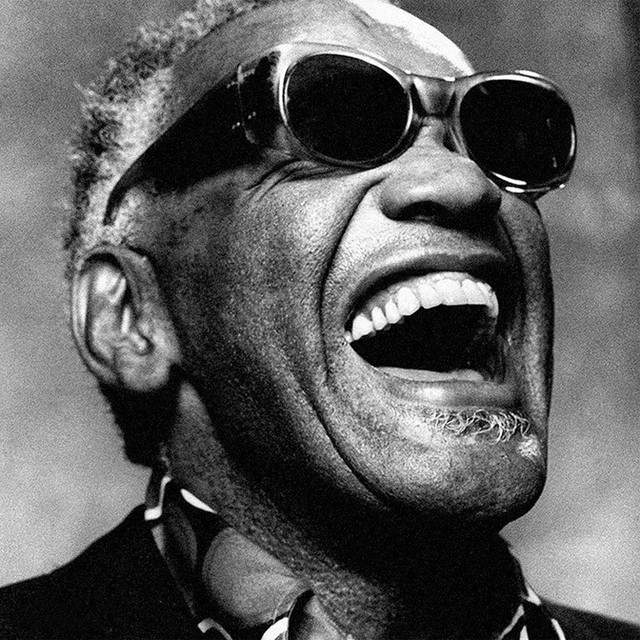
Childhood
Ray Charles Robinson was born on September 23, 1930, in Albany, Georgia, to Aretha and Bailey Robinson, who were sharecroppers. The family lived in deep poverty during the Great Depression and soon moved to Greenville, Florida, where Ray spent most of his early years.
Tragedy struck early in his life. At the age of five, Ray witnessed his younger brother George drown in a washtub—a traumatic event that would haunt him throughout his life. Around the same time, Charles began to lose his sight due to glaucoma. By the age of seven, he was completely blind.
His mother, Aretha, was a strong and determined woman who insisted that Ray learn to be independent despite his disability. She enrolled him in the Florida School for the Deaf and Blind in St. Augustine, where he learned Braille, music notation, and classical piano. The young boy showed an early aptitude for music, quickly mastering Bach, Mozart, and Beethoven, while simultaneously developing a love for jazz and blues that he heard on the radio.
Youth
After his mother’s death when he was fifteen, Charles left school and began supporting himself as a musician. He traveled across Florida, playing piano in small clubs, hotels, and bars. During this period, he modeled his early style after Nat King Cole and Charles Brown, developing smooth vocal phrasing and jazzy piano accompaniments.
In 1948, Charles moved to Seattle, Washington, a thriving city for postwar rhythm and blues. There, he formed a trio and recorded his first songs, including “Confession Blues” and “Baby, Let Me Hold Your Hand,” which gained regional popularity. His early records, though derivative, displayed hints of the emotional power and rhythmic drive that would later define his music.
It was in Seattle that Charles met Quincy Jones, who would become a lifelong friend and collaborator. Charles’s confidence and individuality grew as he experimented with different genres, slowly forging his unique sound—a fusion of gospel’s spiritual fervor and the raw emotion of the blues.
Adulthood
By the early 1950s, Ray Charles had relocated to Los Angeles, where he signed with Atlantic Records in 1952. This partnership marked the beginning of his ascent to national fame. Under the guidance of producers Ahmet Ertegun and Jerry Wexler, Charles was encouraged to develop his own musical identity.
In 1954, he released “I Got a Woman,” a song that fused the rhythm and emotion of gospel with the sensibilities of secular R&B. The record became a major hit and is now considered one of the first true soul songs. Over the next several years, Charles produced a string of classics including “What’d I Say,” “Hallelujah I Love Her So,” and “Drown in My Own Tears.” These songs showcased his powerful voice, rhythmic inventiveness, and willingness to blend sacred and profane musical traditions.
In 1959, Charles signed with ABC-Paramount Records, gaining unprecedented creative control and ownership of his master recordings—a rarity for Black artists at the time. During the 1960s, his career reached new heights. He recorded the monumental album “The Genius of Ray Charles” (1959) and his landmark country crossover “Modern Sounds in Country and Western Music” (1962), which included the hits “I Can’t Stop Loving You” and “You Don’t Know Me.”
Despite his professional success, Charles struggled with heroin addiction for much of his early career. In 1965, after a widely publicized arrest, he entered rehabilitation and permanently overcame his dependency.
Over the following decades, Ray Charles continued to record, tour, and collaborate with countless artists. He embraced a variety of styles—from jazz and country to pop—while remaining deeply rooted in the blues and gospel traditions that shaped him.
Major Compositions
Ray Charles’s musical legacy spans a wide range of genres, and his most celebrated songs have become standards of American music. Among his most significant compositions and recordings are:
- “I Got a Woman” (1954) – A groundbreaking fusion of gospel and rhythm and blues, laying the foundation for soul music.
- “What’d I Say” (1959) – A call-and-response masterpiece that became a cornerstone of his live performances.
- “Georgia on My Mind” (1960) – Originally written by Hoagy Carmichael, this became Charles’s signature song and the official state song of Georgia.
- “Hit the Road Jack” (1961) – A Grammy-winning track marked by its catchy rhythm and spirited vocal exchanges.
- “Unchain My Heart” (1961) – Another timeless hit showcasing Charles’s emotive vocal range.
- “I Can’t Stop Loving You” (1962) – A defining moment in the blending of soul and country, appealing to audiences across racial and cultural divides.
- “America the Beautiful” (1972) – Charles’s soulful rendition transformed a patriotic standard into an expression of deep, personal conviction.
His genius lay not only in performance but in interpretation. Ray Charles could take any song—regardless of genre—and make it unmistakably his own.
Death
Ray Charles’s health began to decline in the early 2000s due to liver disease. Even as his body weakened, his passion for music never diminished. His final album, “Genius Loves Company” (2004), featured collaborations with artists such as Norah Jones, Elton John, and Willie Nelson. The record was released shortly after his passing and went on to win eight Grammy Awards, including Album of the Year.
Ray Charles passed away on June 10, 2004, at his home in Beverly Hills, California, at the age of 73. His death marked the end of an era, but his influence continues to echo through countless musicians who followed in his footsteps.
Conclusion
Ray Charles was more than a musician—he was a visionary who transformed the landscape of American popular music. Through perseverance, creativity, and a fearless blending of genres, he bridged racial and cultural divides at a time when segregation still defined much of the United States.
Nicknamed “The Genius,” Charles’s body of work stands as a testament to the power of art to transcend adversity. His ability to combine raw emotion with technical mastery redefined how music could express the human spirit. Whether singing about love, heartbreak, faith, or freedom, Ray Charles gave voice to the soul of a nation.
Today, his legacy lives on in every artist who dares to blur the boundaries between genres and speak from the heart. Ray Charles remains one of the most important and beloved figures in the history of American music—a man whose genius will never fade.
Comments are closed