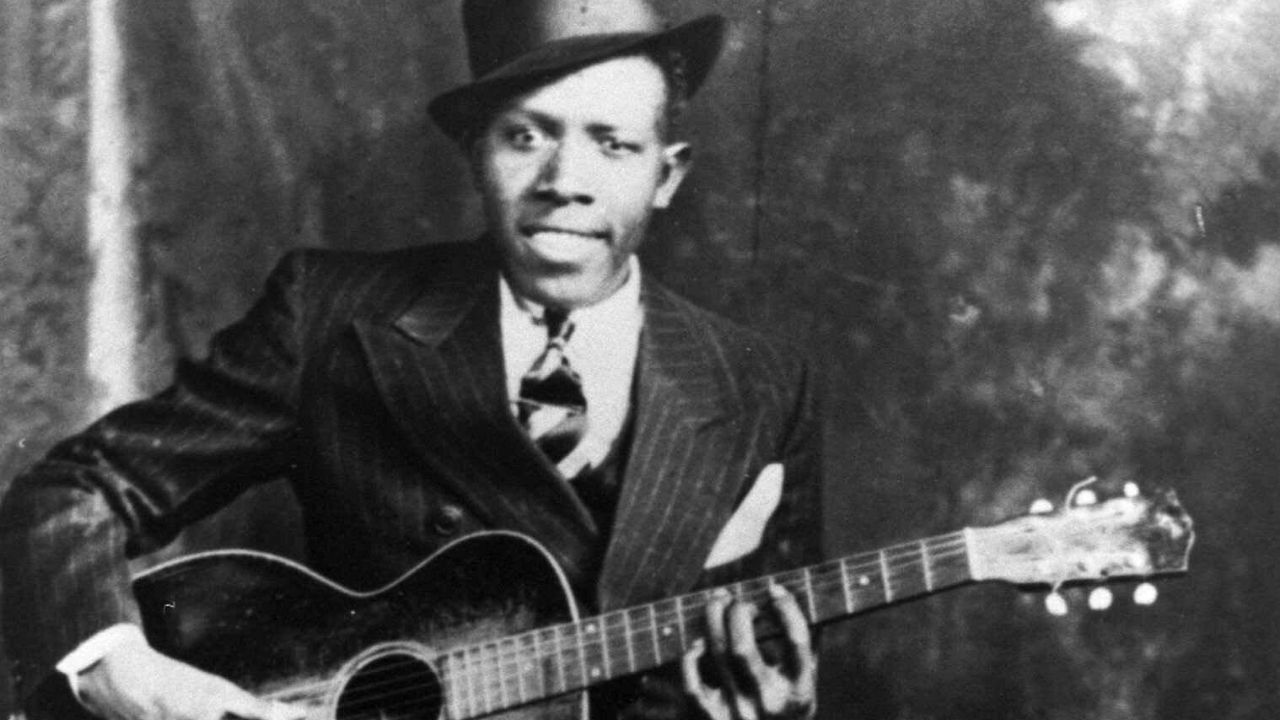
Robert Johnson – A Complete Biography
Introduction
Robert Johnson stands as one of the most enigmatic and influential figures in the history of the blues. Though his life was short and shrouded in mystery, his music laid the foundation for modern blues and rock and roll. His haunting voice, complex guitar techniques, and poetic lyrics created a legacy that continues to captivate audiences nearly a century after his death. Johnson’s recordings, made in the 1930s, have influenced countless musicians, including Eric Clapton, Keith Richards, Bob Dylan, and Jimi Hendrix. Despite having recorded only twenty-nine songs, his artistry and myth — particularly the legend that he sold his soul to the devil in exchange for musical prowess — have immortalized him in American culture.
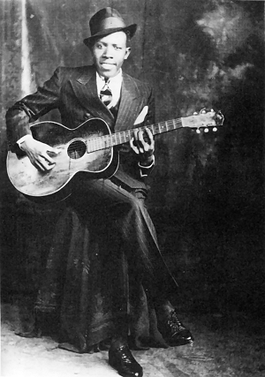
Childhood
Robert Leroy Johnson was born on May 8, 1911, in Hazlehurst, Mississippi, to Julia Major Dodds and Noah Johnson. His mother, Julia, was married to a man named Charles Dodds, but by the time Robert was born, she was living apart from him. Robert’s early life was marked by instability. He moved frequently with his mother through the Mississippi Delta, a region characterized by extreme poverty and deep racial segregation.
Johnson’s stepfather, Dusty Willis, was known for his strictness, and their relationship was often strained. The young Robert showed an early interest in music, particularly the sounds of the Delta blues that filled the air in juke joints and on street corners. From an early age, he was drawn to the guitar and harmonica, often practicing alone for hours. His fascination with the itinerant bluesmen who passed through his community would become the spark that shaped his destiny.
Youth
During his teenage years, Robert Johnson began to immerse himself in the Delta blues scene. He listened closely to local legends such as Son House, Charley Patton, and Willie Brown, learning their songs and techniques by observation. Although his early performances were reportedly unimpressive, Johnson’s determination and natural talent soon began to blossom.
Around this time, the legend of Johnson’s supernatural abilities began to take shape. According to popular lore, after a period of musical mediocrity, Johnson disappeared for several months. When he returned, he displayed an astonishing mastery of the guitar. Fellow musicians were stunned by his transformation. It was whispered that Johnson had met the devil at a crossroads — often said to be in Clarksdale, Mississippi — where he exchanged his soul for unparalleled musical skill.
While the story is most likely a metaphor for his intense dedication and rapid improvement, it added an otherworldly aura to his reputation. This myth would follow him throughout his career and beyond, contributing to the mystique that continues to surround his name.
Adulthood
By the early 1930s, Robert Johnson had become a traveling musician, performing across the Deep South. He played in juke joints, on street corners, and at house parties, earning a living through his performances and the generosity of those who listened. His charm and musical talent made him a popular figure, especially among women.
Johnson’s style combined intricate fingerpicking with slide guitar, creating a sound that was both rhythmic and melodic. His voice carried a haunting intensity, filled with longing, sorrow, and defiance. He had an uncanny ability to adapt his songs to fit any audience, seamlessly blending traditional Delta blues with his own innovative phrasing and emotional depth.
In 1936 and 1937, Johnson recorded his only known sessions — first in San Antonio, Texas, and later in Dallas. These sessions produced twenty-nine songs, including blues classics such as Cross Road Blues, Love in Vain, Sweet Home Chicago, and Hellhound on My Trail. His work captured themes of love, loss, danger, and the supernatural, expressed through vivid imagery and a distinctive, mournful delivery.
Despite his talent, Johnson’s fame during his lifetime was limited mostly to the South. He remained a wandering musician, never achieving commercial success or financial stability. Yet, he was deeply respected by his peers and inspired awe among those who witnessed his performances.
Major Compositions
Robert Johnson’s recordings, though few in number, form a cornerstone of American blues. Among his most celebrated songs are:
- “Cross Road Blues” – Perhaps his most famous composition, often interpreted as a reflection of his rumored pact with the devil. It’s a haunting depiction of fear, desperation, and redemption.
- “Sweet Home Chicago” – A more upbeat tune that became an anthem of longing for a better life. Its catchy rhythm and optimistic tone have made it a blues standard.
- “Hellhound on My Trail” – A chilling masterpiece that evokes the image of a man pursued by unseen forces, capturing both psychological and spiritual torment.
- “Love in Vain” – Later covered by The Rolling Stones, this song showcases Johnson’s lyrical sensitivity and his ability to express heartbreak with simplicity and power.
- “Come On in My Kitchen” – A song filled with sensual imagery and melancholy, considered one of his most emotionally resonant works.
Each of these compositions displays Johnson’s genius in combining poetic storytelling with technical mastery on the guitar. His innovative use of rhythm and melody influenced not only later blues musicians but also the entire trajectory of rock and roll.
Death
Robert Johnson’s life came to a mysterious and tragic end. He died on August 16, 1938, near Greenwood, Mississippi, at the age of twenty-seven. The exact circumstances of his death remain unclear, contributing to his mythic status. One widely accepted account suggests that Johnson was poisoned by a jealous husband after flirting with the man’s wife during a performance.
Witnesses recalled Johnson falling ill over several days, suffering from severe stomach pains and convulsions before passing away. There were no official medical records or autopsy reports, leaving the true cause of his death open to speculation.
Johnson was buried in an unmarked grave — the location of which is still debated, with three different sites claiming to be his final resting place. His death at twenty-seven also placed him among the first members of what would later be called the “27 Club,” a tragic list of musicians who died at that same age, including Jimi Hendrix, Janis Joplin, Jim Morrison, and Kurt Cobain.
Conclusion
Robert Johnson’s life was brief, but his influence on music is immeasurable. His songs, steeped in the pain and poetry of the Delta, became a bridge between early country blues and the electrified Chicago sound that followed. Decades after his death, his recordings resurfaced and inspired a new generation of musicians in the 1960s and beyond.
Eric Clapton once called Johnson “the most important blues singer that ever lived,” and many others have echoed this sentiment. His music not only shaped the blues but also laid the groundwork for rock, inspiring artists to explore the emotional and spiritual depths of their art.
Though much about his life remains veiled in mystery, Robert Johnson’s legacy endures as a testament to the power of human expression through music. His haunting voice and unparalleled guitar work continue to echo through time, ensuring that the legend of the man at the crossroads will never fade.
Comments are closed