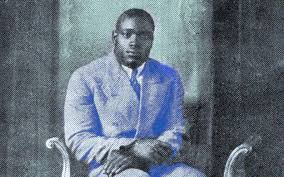
Alger Texas Alexander – A Complete Biography
Introduction
Alger “Texas” Alexander, born on September 12, 1900, was one of the most distinctive early voices in Texas blues. Known for his booming, resonant singing and his unconventional sense of rhythm, Alexander carved a unique place in blues history. Although he rarely played an instrument on his recordings, his powerful vocal delivery shaped the sound of the Texas country blues. His recordings from the late 1920s and 1930s capture a raw, emotional, and often deeply personal style that continues to influence musicians and blues scholars today.
Childhood
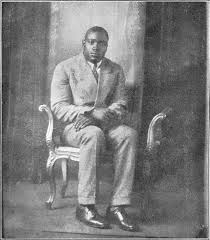
Alger Alexander was born in Jewett, Texas, and grew up in the rural communities of East Texas. Much of his early childhood was spent near Richards, where he was raised partly by his grandmother. The region’s work songs, spirituals, and field hollers formed the musical landscape of his youth. These sounds—rooted in the rhythms of labor and African American oral traditions—would later heavily inform his singing style. Life in East Texas offered few comforts, but it exposed him to the expressive forms of music that surrounded farm work, church life, and community gatherings.
Youth
As a young man, Alexander supported himself through railroad and farm labor while performing informally at house parties, picnics, fish fries, and on the streets. His enormous voice, capable of carrying across open fields and noisy gatherings, earned him growing respect in the local music scene. During this period he crossed paths with other Texas blues musicians, including Blind Lemon Jefferson. His vocal delivery was already developing into its trademark form—free-flowing, unbound by strict meter, and emotionally charged. Musicians who played with him often had to listen closely and adapt to his unpredictable timing, a challenge that later gave his recordings their distinctive sound.
Adulthood
Alexander entered the world of commercial recording in 1927, cutting his first sides for major race-record labels of the era. Over the next decade he recorded intermittently for companies such as Okeh and Vocalion, sometimes traveling far from Texas for sessions. Unlike many blues performers, Alexander usually did not accompany himself. Instead, he worked with guitarists and fiddlers who provided a backdrop for his expansive vocal phrasing. Musicians such as Lonnie Johnson and members of the Mississippi Sheiks recorded with him, creating memorable pairings of instrument and voice.
His adult life, however, was far from stable. Alexander continued to work labor jobs between recording opportunities. Stories circulated about violent incidents and possible prison time, though historical evidence about these events is inconsistent. What is clear is that his life outside music was difficult, marked by the hardships common among African American laborers in the Jim Crow South. Despite these struggles, his artistic output remained emotionally potent and shaped the Texas blues tradition.
Major Compositions
Though not prolific compared to some contemporaries, Alexander produced a body of work that remains essential listening for anyone interested in early blues. His songs include “Mama’s Bad Luck Child,” “Broken Yo Yo,” “Don’t You Wish Your Baby Was Built Up Like Mine?,” “Ninety-Eight Degree Blues,” “Sittin’ on a Log,” and “Texas Special,” among many others.
His recordings display a remarkable variety of themes: romantic troubles, travel, natural disasters, prison life, and reflections on daily hardship. Alexander’s ability to improvise lyrically and rhythmically created performances that feel immediate and intensely personal. His 1934 recordings, including collaborations with members of the Mississippi Sheiks, show him at his storytelling peak. Many of his songs capture local events or personal experiences with a candidness that sets him apart from other blues singers of his era.
Death
Alger “Texas” Alexander died in 1954. Accounts describe his death as resulting from complications related to syphilis. He was buried in Longstreet Cemetery in Montgomery County, Texas. For many years his grave was unmarked and largely forgotten, reflecting the obscurity into which many early blues musicians fell. In later decades, historians and blues enthusiasts revived interest in his career, and efforts were made to acknowledge and preserve his resting place.
Conclusion
Alger “Texas” Alexander remains one of the most compelling figures in early Texas blues. His powerful, unrestrained vocal style and emotionally direct storytelling set him apart from his peers and left a lasting imprint on the genre. Though his life was marked by hardship and his recording career was relatively brief, his music endures as a vital link to the roots of the blues. Today, his recordings continue to inspire listeners, musicians, and scholars who seek to understand the authentic sound of early twentieth-century African American music.
Comments are closed