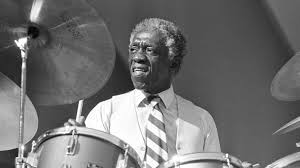
Art Blakey – A Complete Biography
Introduction
Art Blakey stands among the most influential figures in the history of modern jazz. As a drummer, bandleader, and mentor, he helped shape generations of musicians and defined the sound of hard bop—a style that merged blues, gospel, and bebop energy into a powerful and soulful form. Blakey’s work with the Jazz Messengers became a cornerstone of 20th-century jazz, nurturing many of the greatest players of the era. His impact is not only musical but cultural, representing discipline, mentorship, creativity, and an unwavering commitment to artistic integrity.
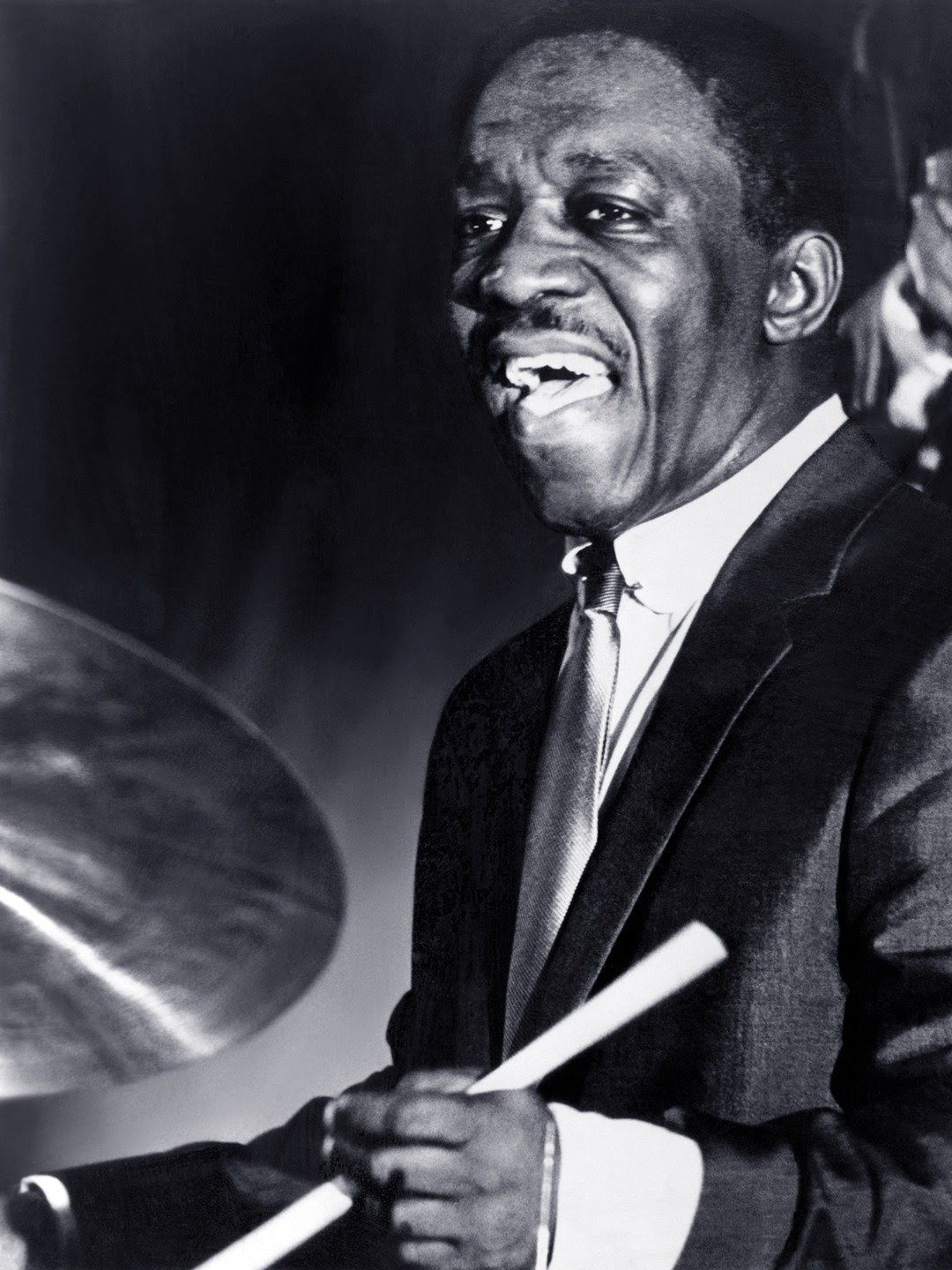
Childhood
Arthur “Art” Blakey was born on October 11, 1919, in Pittsburgh, Pennsylvania, a city rich with musical heritage. Raised primarily by a single mother until her early passing, Blakey grew up in a challenging environment marked by economic hardship. Despite these struggles, his community was steeped in music—church traditions, neighborhood bands, and the beginnings of swing culture helped shape his early interests.
Initially, Blakey played piano, an instrument he learned in his youth. His transition to drums came almost by necessity: according to common accounts, he was asked to switch instruments when a band needed a drummer more urgently than a pianist. The shift would become foundational for his future. Even as a child, Blakey displayed a natural sense of rhythm, intensity, and improvisation—qualities that later defined his style.
Youth
Throughout his teenage years, Blakey became increasingly active in Pittsburgh’s vibrant jazz scene. By his mid-teens, he was already playing professionally, earning a reputation as a reliable and powerful drummer. His early influences included the swing drummers of the 1930s, and he absorbed their techniques while constantly experimenting with his own ideas.
In the early 1940s, Blakey’s talent drew him beyond Pittsburgh and into national circuits. He spent several pivotal years playing with major touring bands, including those led by Mary Lou Williams and Fletcher Henderson. These experiences helped him refine his technical skills and introduced him to the fast-evolving world of bebop.
By the mid-1940s, Blakey had moved to New York City—the epicenter of the new jazz revolution. There, he connected with rising innovators, musicians who were transforming jazz from dance music into a sophisticated, improvisational art form.
Adulthood
Art Blakey’s adulthood marked the blossoming of his artistic identity and the beginning of his lasting influence. During the late 1940s and early 1950s, he collaborated with bebop pioneers such as Charlie Parker, Dizzy Gillespie, Thelonious Monk, and Bud Powell. These associations placed him at the heart of the new jazz generation.
In 1954, Blakey co-founded the Jazz Messengers, initially alongside pianist Horace Silver. Although Silver later departed, Blakey carried the group forward for more than three decades, transforming it into a legendary institution. The Jazz Messengers became famous not only for their bold, soulful sound but for their role as a training ground for young musicians. Many of the world’s most renowned jazz artists spent formative years under Blakey’s leadership, including:
- Wayne Shorter
- Freddie Hubbard
- Lee Morgan
- Benny Golson
- Clifford Brown
- Wynton Marsalis
- Keith Jarrett
Blakey’s leadership style was strict but supportive. He believed in discipline, rehearsal, and constant innovation. Yet he also encouraged his musicians to compose, to take risks, and to develop original voices. His booming drum sound—characterized by explosive press rolls, dynamic accents, and driving swing—anchored the band’s identity.
Throughout the 1960s and 1970s, Blakey continued recording and touring internationally, even as musical trends shifted. The rise of rock, fusion, and free jazz did not sway him. He remained committed to acoustic jazz and to nurturing new generations.
In the 1980s, a renaissance of interest in acoustic jazz brought Blakey renewed visibility. The Jazz Messengers once again produced headline names, including musicians who later formed the core of the “Young Lions” movement.
Major Compositions
Although Art Blakey was known primarily as a drummer and bandleader rather than a composer, the Jazz Messengers’ catalog includes many pieces associated closely with his vision and direction. His contributions were often organizational and stylistic—shaping arrangements, promoting the compositions of band members, and defining the group’s sound.
Some major works strongly connected with Blakey’s legacy include:
- “Moanin’” – Composed by Bobby Timmons, this piece became the signature tune of the Jazz Messengers and a defining example of hard bop.
- “Blues March” – Written by Benny Golson, this work captured Blakey’s commanding rhythmic approach and became a highlight of the group’s performances.
- “A Night in Tunisia” – Although originally composed by Dizzy Gillespie, Blakey’s arrangements and recordings of this piece became some of the most celebrated in jazz history.
- “The Egyptian” – A composition by Wayne Shorter deeply associated with the Messengers’ adventurous 1960s era.
- “Along Came Betty” – Another Golson tune that Blakey popularized, showcasing his ability to elevate a piece through rhythmic intensity and dynamic leadership.
Blakey contributed a few original pieces across his career, but his principal creative impact lay in his bandleading and interpretive genius—transforming compositions into iconic works through performance, structure, and style.
Death
Art Blakey continued performing well into his later years, maintaining an energy that defied his age. He remained committed to touring, recording, and developing young musicians even as his health declined.
He passed away on October 16, 1990, in New York City at the age of 71. His death marked the end of an era, but his influence endured through thousands of recordings, students, protégés, and admirers.
Conclusion
Art Blakey’s legacy is monumental. As a drummer, he redefined the instrument’s role in jazz, bringing unmatched power, clarity, and creativity. As a bandleader, he created a multigenerational institution that shaped the course of modern jazz. As a mentor, he nurtured talent with discipline, generosity, and vision, ensuring the continuity of the tradition he loved.
His contributions to hard bop remain foundational, and his recordings with the Jazz Messengers continue to inspire musicians and listeners worldwide. Art Blakey was more than a performer—he was a teacher, a pioneer, and a guardian of jazz. His life’s work endures as a testament to the transformative power of music and the profound impact of artistic mentorship.
Comments are closed