Big Joe Williams – A Complete Biography
Introduction
Joseph Lee “Big Joe” Williams (October 16, 1903 – December 17, 1982) stands among the most distinctive and idiosyncratic figures of American Delta blues. A traveling singer and guitarist whose career spanned more than five decades, Williams became known for a raw, resonant voice, a driving rhythmic approach, and an unusually strung guitar that helped him craft a signature sound. He wrote, recorded, and popularized several songs that entered the wider blues and popular-music repertoire, and he bridged the pre-war country-blues world and the post-war folk-blues revival. This biography traces his life from earliest years through his rise as a recording and performing artist, surveys his major compositions, and summarizes the circumstances of his death and his legacy.
Childhood
Joseph Lee Williams was born in Oktibbeha County in eastern Mississippi, a rural area of the Delta region where the musical and social conditions that produced the blues were firmly established. Family and community shaped his early exposure to music: he learned songs and techniques by ear, absorbing work-song patterns, field hollers, and the simple chordal rhythms of country guitarists. Accounts vary on the precise details of his upbringing, as is common for itinerant musicians of that era, but the landscape and labor economy of rural Mississippi—sharecropping, seasonal work, and itinerant labor—formed the environment in which his musical identity took root. From childhood into adolescence, Williams began to travel locally to play for work camps, dances, and informal gatherings; these early experiences taught him to project his voice and fill a performance role as a one-man band.
Youth
As a young man Williams became a wanderer in the broadest sense. During the 1920s he moved beyond Mississippi, performing in a variety of venues—street corners, juke joints, medicine shows, and traveling revues—where a versatile performer could survive by meeting the tastes of diverse, often transient audiences. These years of itinerancy hardened his stagecraft and introduced him to regional musical variations and fellow musicians whose interplay and rivalry sharpened his repertoire.
Early recording opportunities came in the 1930s when he participated in sessions with jug bands and other ensembles. By the mid-1930s he had connected with producers and talent scouts in urban centers such as St. Louis and Chicago. These contacts led to Williams’s first substantial periods of recording and exposure under labels active in the commercial blues marketplace. The 1930s thus marked a transition from itinerant youth to recording artist and regional name.
Adulthood
Williams’s adult career encompassed a long string of recording sessions and tours that took him from the Deep South to northern cities and, later, to audiences in the United States, Europe, and Japan. He recorded extensively from the 1930s onward, working with a wide range of labels and producing a body of work that documented both acoustic Delta blues and post-war electric styles. His recordings included solo performances as well as collaborations with other blues musicians.
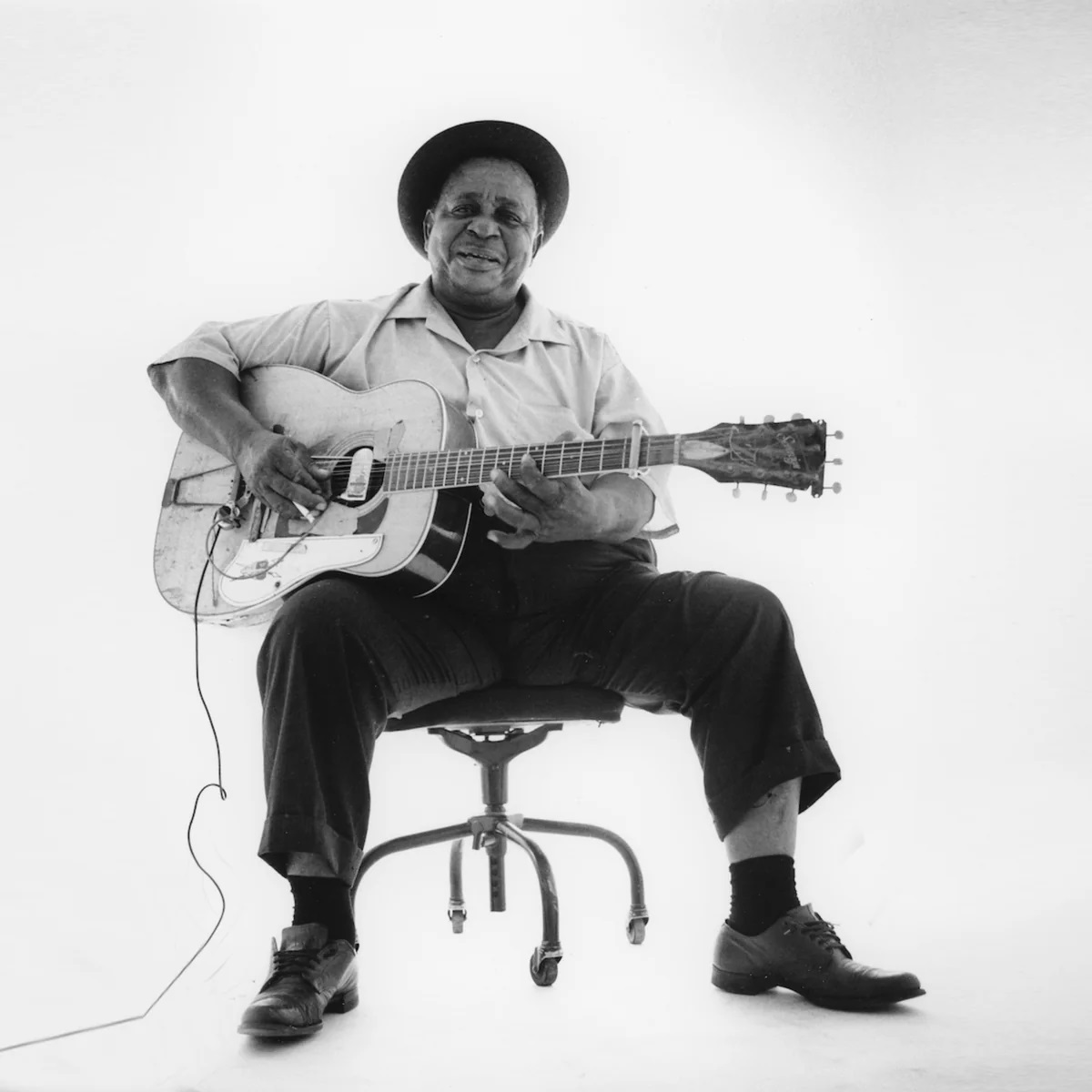
A defining personal and professional trait was Williams’s unconventional instrument: a guitar fitted with extra strings arranged to create a fuller, denser sound. Most famously, he played what was often described as a nine-string guitar, which contributed to the heavy rhythmic drone and percussive tone that became his hallmark. This setup allowed him to accompany himself with powerful bass figures while playing melodic lines on higher strings, giving his performances an unusually rich texture.
Williams proved adaptable as musical tastes shifted. During the folk-blues revival of the 1950s and 1960s, he found renewed popularity among audiences eager to hear traditional blues performers. He appeared at clubs, folk venues, and festivals, and he recorded new albums aimed at collectors and enthusiasts of early blues. Known for his direct personality and practical wisdom, Williams became a respected elder figure within the blues community.
Major Compositions
Big Joe Williams’s catalog includes several songs that became enduring standards in the blues and beyond. Among the most significant are:
- “Baby, Please Don’t Go.” First recorded by Williams in the mid-1930s, this song became one of the most frequently covered blues numbers of the twentieth century. Its urgent lyric and driving rhythm helped it transition easily into rhythm-and-blues and later rock interpretations.
- “Crawlin’ King Snake.” Williams was one of the key figures associated with this song, which features a dark, repetitive structure and symbolic lyrics. His versions helped establish the tune as a blues classic later interpreted by numerous artists.
- “Peach Orchard Mama” and a variety of country-blues and hokum-style songs that showcased his humor, storytelling ability, and rhythmic strength.
Williams’s songwriting emphasized memorable vocal phrasing, repetitive structures suited to improvisation, and a strong rhythmic pulse. While authorship of many blues songs is often shared or disputed due to oral tradition, Williams’s recordings played a central role in shaping how these songs entered the broader blues canon.
Death
After a long performing life that extended into the early 1970s, Big Joe Williams died on December 17, 1982, in Macon, Mississippi. Though his public appearances had become less frequent, his influence remained strong among blues musicians and historians. His passing marked the end of a career that had spanned the formative decades of recorded blues and the later revival period. In recognition of his contributions, he was later honored with induction into the Blues Hall of Fame.
Conclusion
Big Joe Williams occupies a vital place in American blues history as both a Delta original and a seasoned professional who helped carry rural blues into the modern recording era. His powerful voice, innovative guitar style, and enduring songs secured his reputation as a musician of lasting significance. Though never a mainstream star, his influence echoes through countless recordings by later artists who drew inspiration from his work. Today, Williams is remembered as a bridge between generations—a musician whose life and music offer a vivid portrait of the blues as lived experience across much of the twentieth century.
Comments are closed