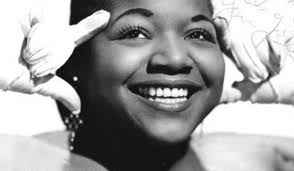
Big Maybelle – A Complete Biography
Introduction
Mabel Louise Smith (May 1, 1924 – January 23, 1972), known professionally as Big Maybelle, was one of the most powerful and distinctive voices in American blues and rhythm & blues. Renowned for her commanding vocal delivery, emotional intensity, and stylistic versatility, she played a crucial role in shaping postwar R&B and influencing the early development of soul and rock music. Her recordings in the 1950s, including “Gabbin’ Blues,” “Candy,” and an early version of “Whole Lotta Shakin’ Goin’ On,” remain landmarks of mid-20th-century American popular music.
Childhood
Big Maybelle was born Mabel Louise Smith on May 1, 1924, in Jackson, Tennessee. She grew up in the segregated American South during an era when African American musical life was deeply rooted in the church. Gospel music played a central role in her upbringing, and she developed her singing voice in religious settings, where emotional expression and vocal power were highly valued. From an early age, she demonstrated exceptional talent and confidence, reportedly winning a local amateur contest as a child. These early experiences laid the foundation for her expressive singing style and strong stage presence.
Youth
During her teenage years, Mabel Smith began transitioning from gospel into secular music, particularly blues and rhythm & blues. She started performing professionally in the late 1930s and 1940s, working with traveling bands and orchestras. These early professional experiences exposed her to swing, jazz, and jump blues, broadening her musical vocabulary and refining her performance skills. Touring with established ensembles taught her how to command large audiences and adapt her voice to different arrangements, from big-band settings to more intimate blues formats. By the end of this period, she had established herself as a formidable vocalist with both technical skill and emotional depth.
Adulthood and Professional Career
Mabel Smith adopted the stage name Big Maybelle in the early 1950s, a name that reflected both her physical presence and the extraordinary power of her voice. Her professional breakthrough came after signing with major rhythm & blues labels, beginning a prolific recording career that spanned multiple companies and musical styles.
Her first significant success arrived in 1953 with the single “Gabbin’ Blues,” which brought her national recognition and chart success within the R&B market. Throughout the 1950s, she recorded extensively, producing a series of memorable singles that showcased her ability to blend blues feeling, gospel intensity, and pop accessibility. In 1955, she recorded “Whole Lotta Shakin’ Goin’ On,” a version that predates the song’s later rock-and-roll popularity and highlights its rhythm & blues origins. The following year she released “Candy,” a slow, emotionally charged ballad that became her most enduring recording.
Big Maybelle appeared at major venues and festivals during this period, performing for diverse audiences and gaining respect from fellow musicians. However, as musical tastes shifted in the 1960s, her commercial success declined. Personal struggles, including substance abuse and declining health, further complicated her career. Despite these challenges, she continued recording and performing intermittently, maintaining her reputation as a vocalist of exceptional strength and authenticity.
Major Compositions and Recordings
Although Big Maybelle was primarily a recording artist rather than a songwriter, her interpretations of songs left a lasting impact on American music. Several recordings stand out as central to her legacy:
- “Gabbin’ Blues” (1953) – A breakthrough hit that demonstrated her ability to balance humor, assertiveness, and vocal authority within the blues tradition.
- “Whole Lotta Shakin’ Goin’ On” (1955) – Her early recording of this song emphasized its blues and R&B roots and influenced later interpretations that brought it to a wider audience.
- “Candy” (1956) – Her signature song, characterized by restrained intensity and emotional nuance, and widely regarded as one of the finest R&B ballads of its era.
Beyond these recordings, her extensive catalog includes dozens of singles and sessions that document the evolution of rhythm & blues from the early 1950s into the soul era. Later compilations have helped preserve and reintroduce her work to new generations of listeners.
Death
Big Maybelle’s health deteriorated significantly in the late 1960s and early 1970s. After a prolonged period of illness, she died on January 23, 1972, in Cleveland, Ohio, at the age of 47. The cause of death was a diabetic coma. Her passing marked the loss of a major yet underappreciated figure in American blues and R&B. She was survived by her daughter and other family members.
Conclusion
Big Maybelle’s legacy rests on the sheer force and emotional honesty of her voice. She bridged gospel, blues, and rhythm & blues at a critical moment in American musical history, influencing the vocal approaches that would later define soul and rock music. While her career was marked by personal hardship and changing industry conditions, her recordings endure as powerful statements of mid-century African American musical expression. Today, she is recognized as a foundational figure whose artistry continues to resonate with listeners, scholars, and musicians alike.
Comments are closed