Introduction
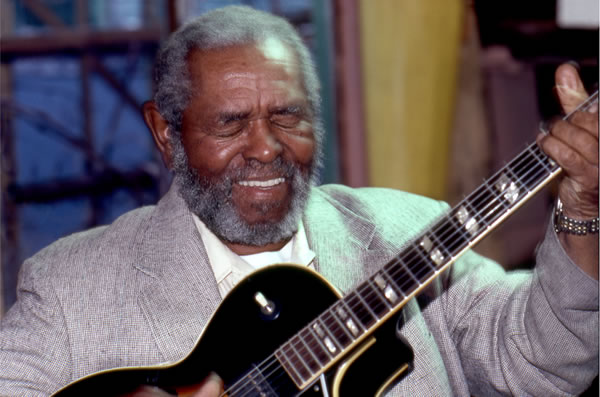
Brownie McGhee was one of the most influential blues musicians of the twentieth century. A master guitarist, singer, songwriter, and performer, he became one of the leading representatives of the Piedmont blues tradition. His long partnership with harmonica virtuoso Sonny Terry helped bring traditional blues music to audiences around the world and played a significant role in the American folk revival of the 1950s and 1960s. Throughout a career that spanned more than five decades, McGhee preserved the roots of acoustic blues while adapting to changing musical landscapes.
Childhood
Walter Brown McGhee, known professionally as Brownie McGhee, was born in Knoxville, Tennessee, on November 30, 1915. Shortly after his birth, his family relocated to Kingsport, Tennessee, where he spent most of his childhood. Music was an important part of family life. His father, George McGhee, played guitar and sang at local gatherings, exposing young Brownie to traditional Southern music from an early age.
At the age of four, McGhee contracted polio, a disease that severely affected the use of his right leg. For several years, he relied on a small cart for mobility, often pushed by his younger brother Granville, who later became known as the blues musician Sticks McGhee. Despite this physical challenge, Brownie developed a strong determination and a deep love for music. An uncle built him a homemade guitar, and he quickly began teaching himself to play. Eventually, surgery funded through charitable assistance helped him regain the ability to walk.
Youth
As a teenager, McGhee immersed himself in various musical activities. He sang in gospel groups, learned several instruments, and studied different styles of American folk and blues music. His early exposure to recordings by artists such as Bessie Smith and Lonnie Johnson helped shape his musical tastes and technique.
By his early twenties, McGhee had begun traveling throughout the South as a professional musician. He performed in medicine shows and traveling minstrel productions, experiences that allowed him to develop his stage presence and expand his repertoire. During this period, he encountered influential blues performers and became particularly inspired by the celebrated Piedmont blues guitarist Blind Boy Fuller. Fuller’s intricate fingerpicking style would leave a lasting impact on McGhee’s own playing.
Following Fuller’s death in 1941, talent scout J. B. Long promoted McGhee as a successor to the popular bluesman. Although McGhee respected Fuller’s legacy, he soon established his own distinctive musical identity through recording and touring.
Adulthood
McGhee’s professional breakthrough came in the early 1940s. After recording in Chicago, he moved to New York City in 1942, where his career expanded rapidly. That same year, he founded the Home of the Blues Music School, teaching aspiring musicians the techniques of blues guitar while continuing his recording work.
One of the most important developments in his career was his partnership with harmonica player Sonny Terry. Although the two musicians had met earlier, their collaboration flourished after McGhee’s move to New York. Together they created one of the most successful and enduring partnerships in blues history. Their contrasting styles—McGhee’s smooth vocals and sophisticated guitar work paired with Terry’s energetic harmonica playing—produced a sound that appealed to both traditional blues audiences and new listeners.
Throughout the 1940s and 1950s, the duo recorded extensively and toured across the United States. They appeared in concerts, folk festivals, theaters, and even Broadway productions. During the folk revival of the 1960s, they became major attractions on the college and festival circuit, introducing traditional blues to younger generations.
McGhee also pursued solo projects and collaborated with numerous blues legends, including Lightnin’ Hopkins and Big Joe Williams. His versatility allowed him to move comfortably between traditional country blues, urban blues, folk music, and even elements of early rhythm and blues.
Beyond music, McGhee occasionally worked as an actor. He appeared in films and television productions, including The Jerk, Angel Heart, Family Ties, and Matlock. These appearances introduced him to audiences who might not otherwise have encountered his music.
His contributions to American culture were formally recognized in 1982 when he and Sonny Terry became among the first recipients of the National Heritage Fellowship, the highest honor in the United States for traditional folk artists.
Major Compositions and Recordings
Although Brownie McGhee was best known as a performer and interpreter of blues traditions, he also wrote and recorded many memorable songs throughout his career. Among his most significant recordings are:
- Sporting Life Blues
- Pawnshop Blues
- Living with the Blues
- Death of Big Bill
- Brownie’s Blues
- Meet You in the Morning
- Heart in Sorrow
- A Letter to Lightnin’ Hopkins
- Po’ Boy
- Better Day
His work with Sonny Terry produced numerous acclaimed albums, including Down Home Blues, Brownie McGhee and Sonny Terry Sing, and Back Country Blues. These recordings remain important examples of traditional acoustic blues and continue to influence musicians today.
McGhee’s guitar style combined intricate fingerpicking techniques with strong rhythmic accompaniment, making him one of the foremost practitioners of Piedmont blues. His recordings serve as educational models for generations of blues guitarists.
Death
In his later years, McGhee remained active as a performer despite declining health. One of his final major appearances was at the Chicago Blues Festival in 1995. By then, he had become widely recognized as one of the last great masters of the classic Piedmont blues tradition.
Brownie McGhee died of stomach cancer on February 16, 1996, in Oakland, California, at the age of eighty. His passing marked the end of an era in American blues music. Tributes from musicians, critics, and fans highlighted his extraordinary contributions to preserving and popularizing traditional blues.
Conclusion
Brownie McGhee’s life is a story of perseverance, artistic excellence, and cultural preservation. Overcoming childhood disability and economic hardship, he rose to become one of the most respected figures in American blues. His partnership with Sonny Terry brought traditional blues to international audiences, while his solo work demonstrated remarkable skill as a guitarist, vocalist, and songwriter.
Through decades of recording, teaching, performing, and mentoring, McGhee helped ensure that the rich traditions of Piedmont blues would survive for future generations. Today, he remains celebrated as one of the greatest acoustic blues musicians in American history, a performer whose artistry continues to inspire musicians and listeners around the world.
Comments are closed