
Introduction
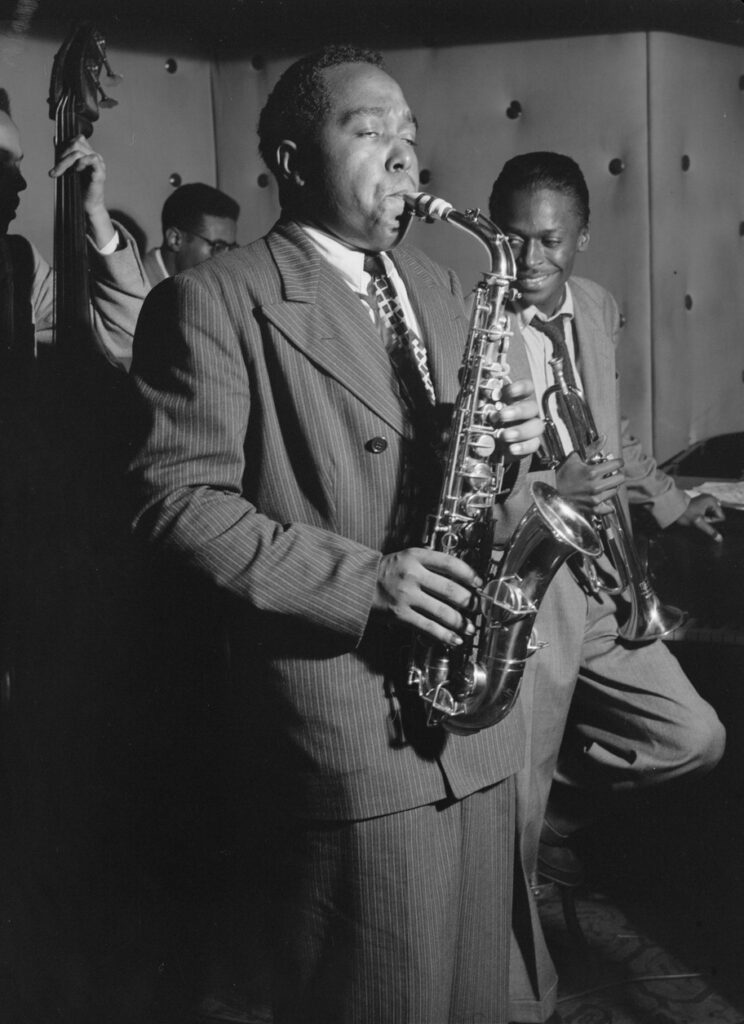
Charlie Parker stands among the most influential musicians in the history of jazz. Known by the nicknames “Bird” and “Yardbird,” he revolutionized modern music through his extraordinary virtuosity on the alto saxophone and his pioneering role in the creation of bebop. His innovative approach to harmony, rhythm, and improvisation transformed jazz from popular dance music into a sophisticated art form. Although his life was marked by personal struggles and ended prematurely, Parker’s musical legacy continues to shape jazz and contemporary music around the world.
Childhood
Charles Christopher Parker Jr. was born on August 29, 1920, in Kansas City, Kansas. He was the only child of Charles Parker Sr. and Adelaide “Addie” Parker. During his early childhood, the family moved across the state line to Kansas City, Missouri, a city that was rapidly becoming one of the most important centers of American jazz.
Parker grew up surrounded by music. Kansas City’s vibrant nightlife exposed him to blues, swing, and jazz performances that would later influence his artistic development. His father worked various jobs and occasionally performed as a singer and entertainer, while his mother worked long hours to support the family.
At the age of eleven, Parker began playing the saxophone. Although he initially struggled with the instrument, he quickly developed a deep fascination with music. By his early teens, he was spending countless hours practicing, often at the expense of schoolwork and other activities.
Youth
Parker’s teenage years were characterized by intense dedication to music. He attended Lincoln High School in Kansas City but became increasingly focused on his musical ambitions. By the age of fourteen, he was performing with local bands and participating in jam sessions throughout the city.
An important turning point came after an embarrassing experience during a public jam session in which his playing was criticized by more experienced musicians. Rather than discouraging him, the incident motivated Parker to practice relentlessly. He reportedly spent up to fifteen hours a day mastering his instrument.
In 1935, Parker left high school and committed himself fully to a professional music career. He joined local groups and developed his improvisational skills while performing in Kansas City’s thriving jazz clubs. During this period, he absorbed the influences of leading saxophonists such as Lester Young while gradually creating a unique musical voice of his own.
By the late 1930s, Parker had become a respected young musician and began touring with the orchestra of pianist Jay McShann. His performances attracted increasing attention, and his reputation started to spread beyond the Midwest.
Adulthood
In 1939, Parker moved to New York City, where he sought greater opportunities and immersed himself in the rapidly evolving jazz scene. During this period, he worked various jobs while studying the music of leading jazz artists. It was also during these years that he developed the revolutionary musical concepts that would become the foundation of bebop.
Parker’s breakthrough came in the early 1940s. Collaborating with musicians such as Dizzy Gillespie, Thelonious Monk, Kenny Clarke, and Bud Powell, he helped create a new style of jazz characterized by fast tempos, advanced harmonies, intricate melodies, and highly sophisticated improvisation. Bebop represented a dramatic departure from the swing music that had dominated the previous decade.
In 1945, Parker began recording under his own name. His recordings quickly established him as the leading voice of the bebop movement. Young musicians across the United States studied his solos and attempted to imitate his remarkable technical skill and harmonic imagination.
Despite his artistic success, Parker struggled with substance abuse for much of his adult life. Addiction, financial difficulties, and health problems frequently disrupted his career. Nevertheless, he continued to produce groundbreaking music and remained a central figure in jazz throughout the late 1940s and early 1950s.
His influence extended beyond jazz. Writers of the Beat Generation admired his artistic freedom and rebellious spirit, while later generations of musicians viewed him as a model of creativity and innovation.
Major Compositions
Charlie Parker composed and recorded numerous works that became jazz standards. Among his most important compositions are:
Ko-Ko
One of Parker’s most celebrated recordings, “Ko-Ko” is regarded as a defining statement of bebop. Its rapid tempo and complex improvisations demonstrated the revolutionary nature of the new style.
Ornithology
Based on the harmonic structure of the song “How High the Moon,” “Ornithology” became one of the most famous bebop compositions and remains a staple of jazz performance.
Confirmation
Widely considered a masterpiece of jazz composition, “Confirmation” combines intricate melodies with sophisticated harmonic structures.
Anthropology
Co-written within the bebop tradition, “Anthropology” became one of the movement’s most recognizable pieces and a favorite among jazz improvisers.
Yardbird Suite
Named after Parker’s nickname, this composition showcases his gift for memorable melodies and advanced harmonic design.
Billie’s Bounce
A blues-based composition, “Billie’s Bounce” demonstrated Parker’s ability to blend traditional blues feeling with modern jazz innovation.
Donna Lee
Although authorship has been debated, the piece is closely associated with Parker and is regarded as one of the most challenging and influential melodies in jazz history.
These compositions continue to be performed, recorded, and studied by musicians worldwide.
Death
By the early 1950s, years of heavy alcohol and drug use had severely damaged Parker’s health. He suffered from various medical problems, including liver disease and ulcers. Emotional difficulties further intensified after the death of his young daughter, Pree, in 1954.
On March 12, 1955, Charlie Parker died in New York City while visiting the apartment of his friend Baroness Pannonica de Koenigswarter. He was only thirty-four years old. The physician who examined him reportedly believed he was much older because of the physical deterioration caused by years of substance abuse.
Parker’s death shocked the jazz world. Despite his short life, he had already achieved a level of artistic influence that few musicians have ever matched.
Conclusion
Charlie Parker transformed the course of modern music. Through his extraordinary talent, relentless dedication, and revolutionary imagination, he helped create bebop and redefined the possibilities of jazz improvisation. His compositions remain central to the jazz repertoire, and his recordings continue to inspire musicians, scholars, and listeners across generations.
Although his life was tragically brief, Parker’s artistic achievements secured his place among the greatest musicians of the twentieth century. More than seventy years after his death, “Bird” remains a symbol of innovation, freedom, and creative excellence in American music history.
Comments are closed