Introduction
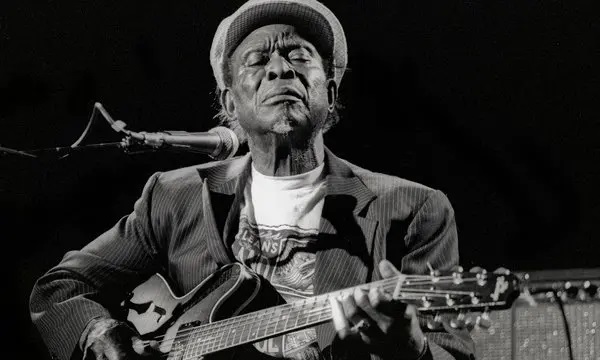
David “Honeyboy” Edwards was one of the last living links to the earliest generation of Mississippi Delta blues musicians. Born in 1915 and active for more than eight decades, he witnessed and participated in the development of the blues from its rural origins in the American South to its worldwide recognition as a foundational form of modern popular music. Known for his expressive guitar playing, soulful singing, and remarkable storytelling ability, Honeyboy Edwards preserved the traditions of Delta blues while sharing firsthand memories of legendary musicians such as Robert Johnson, Charley Patton, Howlin’ Wolf, and Sonny Boy Williamson. His long career earned him numerous honors, including a Grammy Award and a Grammy Lifetime Achievement Award.
Childhood
David Edwards was born on June 28, 1915, in Shaw, Mississippi, a small town in the heart of the Mississippi Delta. He was raised in a family of sharecroppers during a period marked by poverty, racial segregation, and limited economic opportunities for African Americans. Like many children in the Delta, he worked in the fields from an early age, picking cotton and helping support his family.
Music became an important part of his life while he was still young. His father played guitar, and Edwards became fascinated with the instrument. At around twelve years old, he acquired his first guitar and began teaching himself to play. He carefully observed local musicians and learned from influential Delta blues performers such as Tommy Johnson, Charley Patton, Tommy McClennan, and Robert Petway. These early experiences helped shape the distinctive style that would define his career.
Youth
As a teenager, Edwards became determined to escape the difficult life of agricultural labor. Around the age of seventeen, he left home and began traveling throughout the South. Following the tradition of many blues musicians of the era, he often rode freight trains from town to town, performing on street corners, at house parties, in juke joints, and wherever audiences could be found.
During these years he met and traveled with Big Joe Williams, who became an important mentor. Edwards learned not only musical techniques but also how to survive as an itinerant performer. His travels brought him into contact with many of the greatest blues musicians of the period.
One of the most significant relationships of his youth was with Robert Johnson. Edwards performed with Johnson and later became one of the most important firsthand sources of information about the legendary musician’s life. He was present during Johnson’s final days in 1938 and recounted many stories that helped historians better understand Johnson’s career and influence.
By the late 1930s and early 1940s, Honeyboy Edwards had established himself as a respected Delta blues performer, known throughout the South for his guitar playing, singing, and deep knowledge of the blues tradition.
Adulthood
In 1942, folklorist Alan Lomax recorded Edwards for the Library of Congress, preserving some of the earliest recordings of his music. Although this recognition was important, commercial success remained limited for many years.
Edwards continued to travel and perform across the South before eventually moving to Chicago during the era of the Great Migration. In Chicago, he worked various jobs while maintaining his musical career. He played on Maxwell Street, in clubs, and at community gatherings, becoming part of the city’s thriving blues scene.
Throughout the 1950s and 1960s, he recorded for several labels, including Sun Records and Chess Records. However, many of these recordings were not immediately released, delaying broader recognition of his talent. Despite these challenges, he remained dedicated to preserving the authentic acoustic Delta blues style.
Beginning in the 1970s and continuing through the 1990s and 2000s, Edwards experienced a significant revival of interest. Blues enthusiasts, historians, and younger musicians increasingly recognized him as one of the last surviving representatives of the original Delta blues generation. He toured extensively throughout the United States and abroad, performing for audiences that appreciated both his music and his vivid recollections of blues history.
His autobiography, The World Don’t Owe Me Nothing, published in 1997, further established his reputation as both a musician and an important chronicler of American musical history. A documentary film about his life, Honeyboy, introduced his story to an even wider audience.
During his later years, Edwards received many honors. He was inducted into the Blues Hall of Fame, named a National Heritage Fellow by the National Endowment for the Arts, won a Grammy Award for Best Traditional Blues Album, and received a Grammy Lifetime Achievement Award.
Major Compositions
Honeyboy Edwards recorded and performed a large body of blues material throughout his career. Among his most notable compositions and recordings are:
- “Long Tall Woman Blues”
- “Just Like Jesse James”
- “Gamblin’ Man”
- “Who May Your Regular Be”
- “Build a Cave”
- “Drop Down Mama”
- “The World Don’t Owe Me Nothin’”
- “Sad and Lonesome”
- “Blues Like Showers of Rain”
- “Don’t You Lie to Me”
Although he also performed many traditional blues standards associated with the Delta tradition, these songs remain closely linked to his own artistic legacy. His recordings captured the raw emotional power and storytelling qualities that characterized classic Delta blues.
Death
Honeyboy Edwards continued performing well into his nineties. Even in advanced age, he remained active on the concert circuit and regularly appeared at blues festivals. His final public performances took place in 2011.
On August 29, 2011, David “Honeyboy” Edwards died at his home in Chicago, Illinois, at the age of ninety-six. The cause of death was congestive heart failure. His passing marked the end of an era, as he was widely regarded as one of the last direct connections to the first generation of Delta blues musicians.
Musicians, historians, and fans around the world mourned his loss, recognizing that his death represented the disappearance of a living witness to the formative years of the blues.
Conclusion
Honeyboy Edwards occupies a unique place in American musical history. More than simply a performer, he served as a bridge between the earliest days of the Delta blues and modern audiences. His life reflected the struggles, migrations, and cultural transformations that shaped the twentieth century. Through his music, recordings, memoirs, and stories, he preserved a rich tradition that might otherwise have been lost.
Today, Honeyboy Edwards is remembered not only as a gifted blues musician but also as one of the most important guardians of the Delta blues heritage. His legacy continues to influence musicians, scholars, and listeners who seek to understand the roots of American music.
Comments are closed