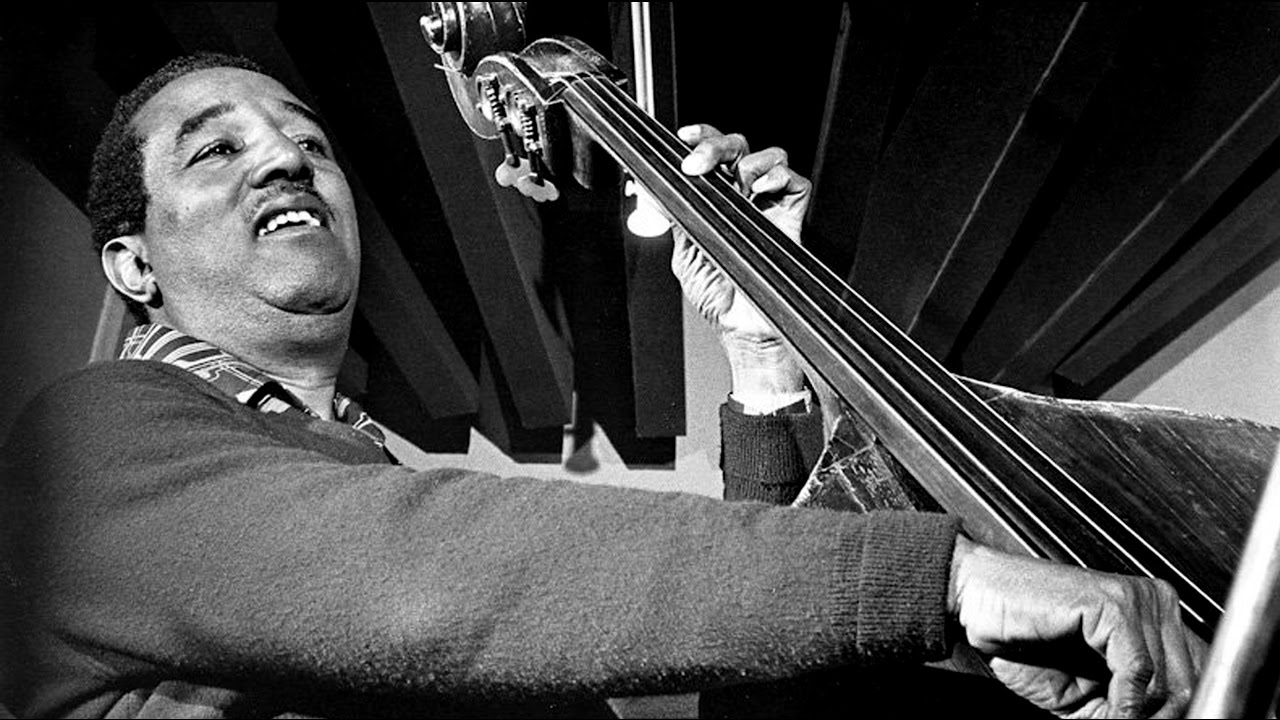
Ray Brown – A Complete Biography
Introduction
Raymond Matthews Brown (1926–2002) was an American jazz double bassist renowned for his profound influence on jazz music over more than five decades. Celebrated for his exceptional dexterity, rich tone, and impeccable rhythmic sense, Brown set a benchmark for bassists worldwide. His career encompassed pivotal collaborations with jazz luminaries such as Dizzy Gillespie, Oscar Peterson, and Ella Fitzgerald, establishing him as one of the most prolific and respected musicians in jazz history.

Childhood
Born on October 13, 1926, in Pittsburgh, Pennsylvania, Ray Brown’s musical journey began early. He started piano lessons at the age of eight. However, a pivotal moment in his youth led him to the bass. Observing the abundance of pianists in his high school, Brown initially considered playing the trombone. When his father was unable to afford the instrument, and a vacancy arose in the high school jazz orchestra, he opted for the upright bass. This decision, driven by circumstance, ultimately shaped his legendary career. An early and significant influence on his bass playing was Jimmy Blanton, the innovative bassist with the Duke Ellington band. Brown’s dedication to his craft was evident even then; his high school music teacher noted his diligence in taking the school bass home for practice, though it was later discovered he was using it for paid gigs with local Pittsburgh bands.
Youth
At 19, in 1945, Brown moved to New York City, a vibrant hub for jazz. His talent was quickly recognized, and he soon found himself working with Dizzy Gillespie, a leading figure in the burgeoning bebop movement. Brown’s association with Gillespie was instrumental in shaping his early career, placing him at the forefront of bebop’s development. During this period, he also collaborated with other jazz giants like Charlie Parker and Bud Powell, further solidifying his reputation as a formidable bassist.
Adulthood
Brown’s adult career was marked by numerous significant collaborations and musical endeavors. From 1951 to 1965, he was a cornerstone of the Oscar Peterson Trio, a group celebrated for its intricate interplay and virtuosic performances. The trio initially featured a guitarist, with Barney Kessel and later Herb Ellis filling the role. After Ellis’s departure, Peterson continued the trio with Brown and drummer Ed Thigpen, where Brown’s bass work became even more central to the group’s acclaimed sound. Concurrently, Brown was a highly sought-after session musician for producer Norman Granz, frequently recording alongside Peterson. Following his departure from the Oscar Peterson Trio, Brown relocated to Los Angeles, where he focused extensively on studio work.
His personal life also intertwined with his musical journey. In 1947, he married the celebrated vocalist Ella Fitzgerald, whom he had met while she toured with Gillespie’s band. They adopted a child, Ray Brown Jr. Although their marriage ended in divorce in 1953, they continued to perform together, a testament to their enduring musical partnership. In the 1960s, Brown played a role in the formation of the Modern Jazz Quartet and co-founded the prestigious Monterey Jazz Festival. In the 1980s and 1990s, he led his own trios, continuously refining his distinctive bass style. He toured and recorded extensively with pianists like Gene Harris, Monty Alexander, and Benny Green, and drummers such as Jeff Hamilton and Lewis Nash. Brown also contributed significantly to jazz education, authoring instructional materials like the Ray Brown Bass Book 1 and mentoring many young musicians, including John Clayton and Christian McBride, who cite him as a major influence.
Major Compositions
While primarily known as a performer and sideman, Ray Brown also made notable contributions as a composer. His most famous composition is
“Gravy Waltz,” a piece that earned him a Grammy Award and was later adopted as the theme song for The Steve Allen Show. Other original compositions include “Ray’s Idea,” “Blues for Junior,” and “Custard Puff.”
Death
Ray Brown passed away in his sleep on July 2, 2002, in Indianapolis, Indiana. He had played a round of golf earlier that day and was scheduled to perform a show that evening. His death marked the end of an era for jazz, leaving behind a legacy of unparalleled musicianship and a profound impact on the role of the bass in jazz.
Conclusion
Ray Brown’s contributions to jazz are immeasurable. His innovative techniques, unwavering swing, and deep, resonant tone made him a model for bassists across generations. From his early days in the bebop revolution to his leadership of his own trios in his later years, Brown’s career was a testament to his dedication to the art of jazz. His extensive discography, both as a leader and a sideman, continues to inspire and educate musicians and jazz enthusiasts alike. Ray Brown’s legacy is not only in his recordings but also in the countless musicians he mentored and the standard of excellence he set for the jazz bass.
Comments are closed