
Robert Lockwood Jr – A Complete Biography
Introduction
Robert Lockwood Jr. (1915–2006) was a masterful blues guitarist whose career linked the early Delta tradition to the urban, electrified Chicago sound. He is uniquely known as the only musician to have learned directly from Robert Johnson in a home setting, since Johnson lived with Lockwood’s mother for several years. Over the course of more than seventy years, Lockwood worked as a studio guitarist, a radio performer, a respected bandleader, and a late-career 12-string innovator who deeply influenced the direction of modern blues guitar.
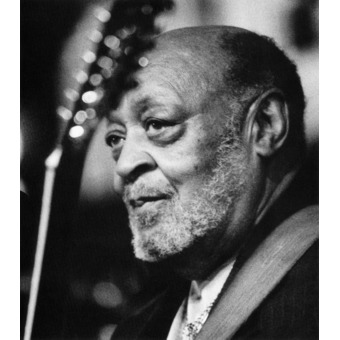
Childhood
Robert Lockwood Jr. was born on March 27, 1915, in Turkey Scratch, Arkansas, a rural farming community near Helena. His earliest musical experiences came from church services and his family’s pump organ, where he developed an ear for rhythm and harmony. His parents separated when he was young, and during his adolescence his mother, Estella Coleman, entered into a relationship with the traveling blues musician Robert Johnson. Johnson lived with the family on and off, which allowed Lockwood to watch, learn, and eventually study the guitar under Johnson’s guidance. This unusual close contact shaped Lockwood’s musical foundation in a way no other blues guitarist experienced.
Youth
By his teenage years, Lockwood had absorbed the techniques, musical phrasing, and stage presence that Johnson was known for, but he did not simply imitate him. Lockwood focused on precision, clarity, and structured rhythm, making him well-suited to band performances. As a young musician, he began performing at house parties and juke joints throughout the Mississippi Delta. He soon partnered with the harmonica player Sonny Boy Williamson (Rice Miller), and in 1941 they both became regular performers on the radio program King Biscuit Time in Helena. This was one of the first daily radio shows to feature live blues musicians, and it made Lockwood a well-known name across the region.
Adulthood
During the 1940s and 1950s, Lockwood moved into the larger world of the Chicago blues scene. He played and recorded with several major artists, including Little Walter and Sonny Boy Williamson, becoming valued for his steady rhythm playing and ensemble discipline. Unlike many guitarists of the era, Lockwood emphasized tasteful chord work and musical structure rather than flashy solos.
In 1960, he moved to Cleveland, Ohio, where he built a long-lasting career. During this period, Lockwood adopted the electric 12-string guitar, crafting a rich, piano-like sound that became his signature. He held regular club residencies, mentored younger musicians, and continued recording well into his later years. In recognition of his contribution to American music, Lockwood received the National Heritage Fellowship in 1995, one of the highest honors awarded to traditional artists in the United States.
Major Compositions
Lockwood was both an interpreter and an innovator. His own standout songs include:
- “Take a Little Walk with Me”
- “Little Boy Blue/Blues”
These pieces show the fusion of early Delta blues melodies with more advanced harmonic ideas that became common in postwar urban blues. As a bandleader and recording artist, several of his albums stand as landmarks:
- Steady Rollin’ Man (1970)
- Contrasts (1973)
- …Does 12 (1975)
- Hangin’ On (1979) with Johnny Shines
- I Got to Find Me a Woman (1998)
- Delta Crossroads (2001)
These recordings document his evolution from a traditional Delta guitarist to a sophisticated arranger and ensemble leader.
Death
Robert Lockwood Jr. passed away on November 21, 2006, in Cleveland, Ohio, after suffering a stroke. He was ninety-one years old. Shortly after his death, a concert he had participated in with other Delta blues veterans, Last of the Great Mississippi Delta Bluesmen, won a Grammy Award, celebrating the legacy he helped to preserve and shape.
Conclusion
Robert Lockwood Jr. represents a rare living link between the earliest Delta blues and the modern electric blues tradition. He was not only a student of Robert Johnson but a disciplined musician who carried those lessons forward into new musical contexts. His mastery of time, harmony, and ensemble playing influenced countless musicians, and his 12-string electric style remains one of the most distinct voices in blues history. Lockwood’s legacy endures in recordings, in the musicians he mentored, and in the ongoing evolution of the blues form he helped shape.
Comments are closed