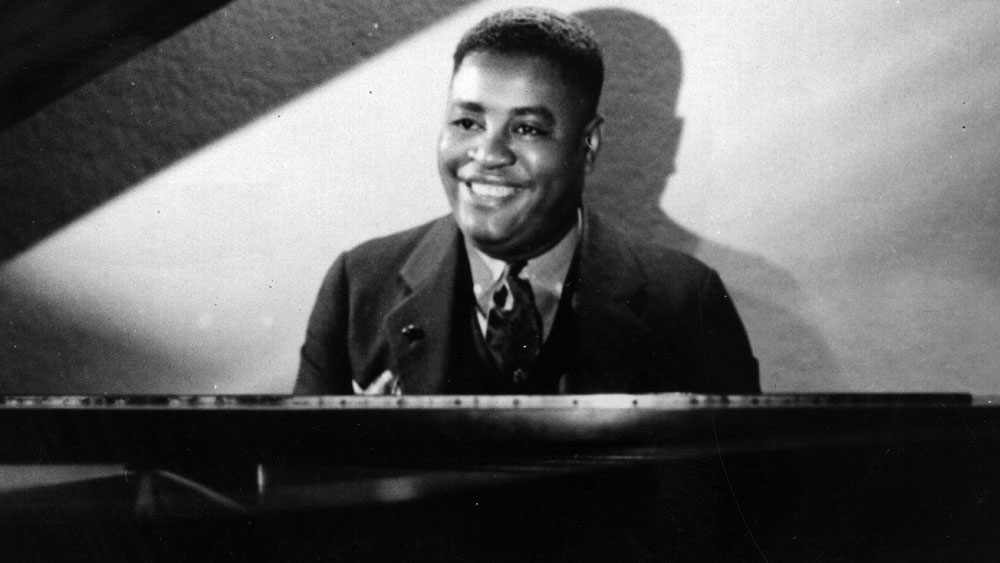
Art Tatum – A Complete Biography
Introduction
Art Tatum stands as one of the most revolutionary figures in jazz and blues-influenced piano playing. Widely regarded as one of the greatest pianists in history, he redefined the technical and harmonic possibilities of the instrument. His dazzling speed, harmonic imagination, and ability to embellish even the simplest melodies reshaped jazz piano for generations. Though visually impaired from childhood, Tatum rose to international acclaim, influencing countless musicians across jazz, classical, and popular genres. Through his prodigious technique and unyielding creativity, he helped establish the piano as a central instrument in modern jazz.

Childhood
Arthur Tatum Jr. was born on October 13, 1909, in Toledo, Ohio, into a musical family that nurtured his early interests. His father played guitar, and his mother was a church pianist who recognized and encouraged her son’s innate sense of rhythm. From birth, Tatum suffered from severe visual impairment; cataracts in both eyes left him nearly blind.
Despite these challenges, young Art showed a remarkable ear for music. Family accounts describe him picking tunes out on the piano after hearing them only once. By age three, he was already experimenting with melodies, and by six he was playing complex church hymns. His mother arranged lessons at the Toledo School of Music, where teachers quickly noticed his exceptional memory and ability to learn pieces by ear, compensating for his limited vision.
Youth
During his teens, Tatum immersed himself in the piano styles he heard on the radio and in local clubs. He gravitated toward recordings by Fats Waller, James P. Johnson, and Earl Hines—musicians who would shape his understanding of stride piano and early jazz. Tatum absorbed their techniques but rapidly pushed beyond them, developing a style marked by cascading runs, intricate reharmonizations, and rhythmic independence between his hands.
While still in high school, he began performing on Toledo’s WSPD radio station, where his astonishing ability quickly attracted attention. His reputation grew so fast that visiting musicians often made a point to hear the “blind boy wonder pianist.” By the time Tatum reached adulthood, he was already considered a prodigy capable of musical feats few professionals could match.
Adulthood
Art Tatum’s professional career took off in the late 1920s and early 1930s. In 1932, he traveled to New York City—a crucial turning point. There, he participated in cutting contests in Harlem, where pianists competed to outplay one another. Tatum stunned even the most celebrated musicians of the era. Fats Waller famously told an audience, “I play piano, but God is in the house tonight,” after hearing Tatum perform.
Tatum’s first recordings in 1933 showcased the sophisticated technique and stylistic identity that would define the rest of his career. Throughout the 1930s and 1940s, he recorded prolifically, toured nationally and internationally, and became a staple of elite nightclubs. His playing combined aspects of stride, classical piano, blues phrasing, and advanced harmonic exploration. He was equally celebrated for solo performances and small-group recordings, where his improvisational brilliance could unfold without constraint.
Despite his intense schedule, Tatum led a relatively private personal life. He enjoyed socializing with other musicians, playing pool, and discussing music theory. His peers often described him as soft-spoken, humorous, and gentle, though fiercely disciplined in his musical pursuits. Although his brilliant artistry was admired universally by musicians, general audiences sometimes found his playing overwhelming due to its technical complexity. Nonetheless, Tatum maintained a loyal following and earned steady work until the end of his life.
By the 1950s, with bebop rising in prominence, Tatum remained a revered figure. Artists such as Charlie Parker, Oscar Peterson, Bud Powell, and even classical pianists like Vladimir Horowitz expressed profound admiration for him. Tatum’s 1953–1956 solo recordings for Norman Granz’s label are often considered definitive examples of his mature style—expansive, daring, and technically breathtaking.
Major Compositions
While Art Tatum was primarily celebrated as an interpreter and improviser rather than a composer, his recordings produced some of the most influential versions of American standards ever documented. His improvisations were so structurally inventive that many musicians treated them as new compositions in their own right.
Notable pieces associated with his legacy include:
1. “Tiger Rag”
One of Tatum’s most famous early showpieces, “Tiger Rag” demonstrated his extraordinary speed, rhythmic control, and harmonic freedom. This recording became a benchmark for technical piano mastery.
2. “Tea for Two”
Tatum’s rendition transformed the lighthearted tune into an explosive display of virtuosity and reharmonization. Musicians frequently studied this recording for its innovative chord substitutions.
3. “Yesterdays”
His interpretation is considered one of the most refined examples of his ballad-playing. It features lush harmonies and intricate melodic ornamentation.
4. “Sophisticated Lady”
Tatum’s version of Duke Ellington’s classic showcases his ability to stretch harmonic language far beyond the original composition while preserving its emotional essence.
5. “Humoresque”
His reinterpretation of the classical piece by Dvořák demonstrates his ease crossing between classical and jazz idioms. The result is both technically dazzling and stylistically seamless.
6. “Begin the Beguine”
Tatum’s reading of Cole Porter’s tune offers a masterclass in rhythmic elasticity and harmonic inventiveness.
Though not a composer in the traditional sense, Tatum’s arrangements and improvisational structures deeply influenced the development of modern jazz composition.
Death
Art Tatum’s health declined in the mid-1950s, partly due to complications from untreated diabetes. Even as his body weakened, he continued performing and recording at a high level, leaving behind some of his most remarkable studio work. On November 5, 1956, he died in Los Angeles at the age of 47.
His death marked the loss of one of the most gifted musicians in American history. Tributes poured in from around the world, with fellow artists acknowledging that the jazz piano landscape had been permanently transformed by his presence.
Conclusion
Art Tatum remains a towering figure in jazz and blues-inflected piano performance. His lightning-fast runs, bold harmonic innovations, and effortless phrasing continue to inspire both aspiring and accomplished musicians. Despite near-blindness and a life filled with health challenges, Tatum reshaped the boundaries of what jazz piano could be. His legacy spans countless recordings, the influence he exerted on multiple generations of musicians, and the enduring awe that his artistry evokes. Today, he is remembered not only as a virtuoso but as a visionary whose musical language helped shape modern jazz at its core.
Comments are closed