Introduction
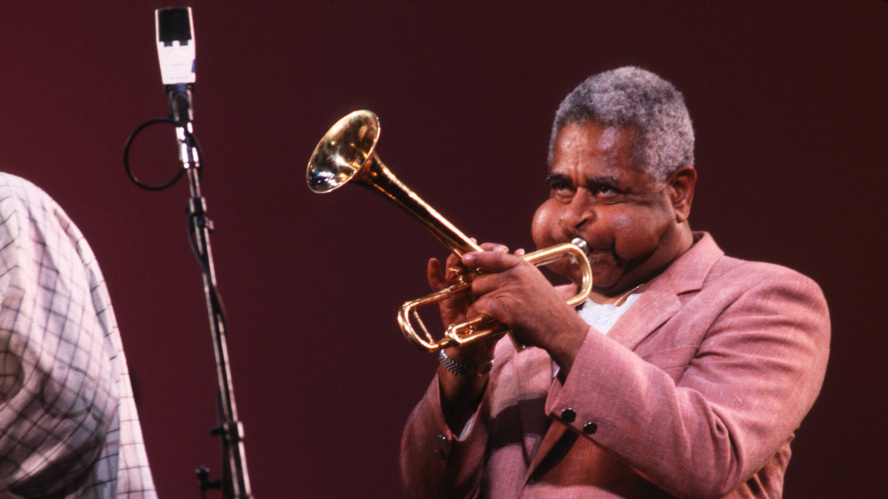
John Birks “Dizzy” Gillespie was one of the most influential musicians in the history of jazz. As a virtuoso trumpeter, innovative composer, charismatic bandleader, and cultural ambassador, he helped create the bebop movement that transformed modern jazz during the 1940s. His distinctive bent trumpet, puffed cheeks, and energetic stage presence made him instantly recognizable around the world. Beyond his remarkable technical abilities, Gillespie expanded the language of jazz through complex harmonies, rapid improvisation, and the incorporation of Afro-Cuban rhythms. His contributions shaped generations of musicians and established him as one of the most important figures in twentieth-century music.
Childhood
Dizzy Gillespie was born John Birks Gillespie on October 21, 1917, in Cheraw, South Carolina. He was the youngest of nine children in a family where music played an important role. His father, James Gillespie, was a bricklayer, pianist, and local bandleader who encouraged musical activity in the household.
Gillespie began playing the piano at the age of four. Although his father died when he was only ten years old, the musical foundation established during his early years had a lasting influence on him. As a child, he developed a strong interest in instruments and spent countless hours teaching himself to play. He first learned the trombone and later turned his attention to the trumpet, which would become his signature instrument.
The young Gillespie was largely self-taught. He listened carefully to recordings and radio broadcasts, studying the techniques of leading jazz musicians. One of his earliest inspirations was trumpeter Roy Eldridge, whose powerful playing convinced Gillespie that he wanted to become a professional jazz musician.
Youth
During his teenage years, Gillespie’s musical talent became increasingly evident. He attended the Laurinburg Institute in North Carolina, where he received formal musical training and continued developing his trumpet skills. His education provided him with a stronger understanding of music theory and performance.
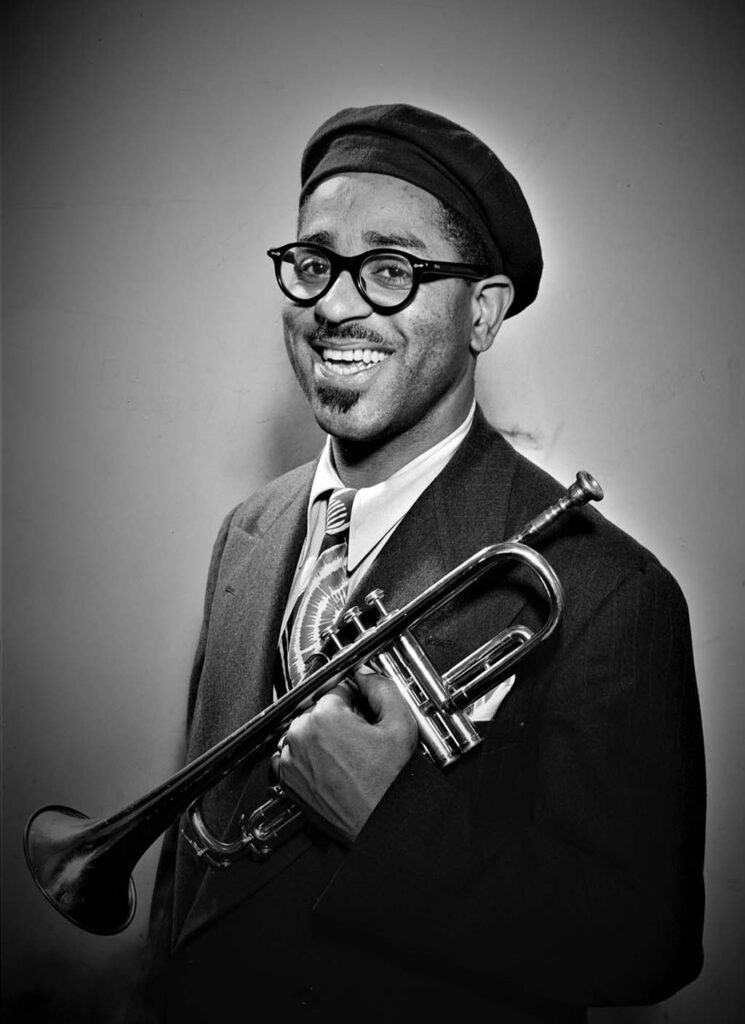
In 1935, after moving to Philadelphia, Gillespie began his professional career. He performed with local orchestras and quickly earned a reputation as a gifted young trumpeter. Within a few years, he joined the bands of notable musicians such as Frank Fairfax, Edgar Hayes, and Teddy Hill.
By the late 1930s and early 1940s, Gillespie had become a member of several important big bands, including those led by Cab Calloway, Earl Hines, and Billy Eckstine. These experiences exposed him to some of the finest musicians of the era and allowed him to experiment with new musical ideas. During this period, he began developing the harmonic innovations that would later define bebop.
Adulthood
The 1940s marked the beginning of Gillespie’s most influential period. Working closely with saxophonist Charlie Parker, pianist Thelonious Monk, drummer Kenny Clarke, and other innovators, he helped create bebop, a revolutionary style of jazz characterized by rapid tempos, complex harmonies, and advanced improvisation.
Unlike the dance-oriented swing music that dominated popular culture at the time, bebop emphasized artistic expression and musical sophistication. Gillespie became one of the movement’s leading figures, performing in small ensembles that showcased his extraordinary technical abilities and creative imagination.
His success continued throughout the 1940s and 1950s. He led both small groups and big bands, recording extensively and touring internationally. During this period, he also became a pioneer of Afro-Cuban jazz. Collaborating with Cuban percussionist Chano Pozo, Gillespie blended jazz improvisation with Afro-Cuban rhythms, creating a new musical style that influenced countless artists. Their work helped produce classics such as “Manteca,” which became a landmark composition in Latin jazz.
Gillespie’s influence extended beyond performance and composition. He served as an educator, mentor, and cultural ambassador, introducing jazz to audiences around the world. His international tours sponsored by the United States government helped promote cultural exchange during the Cold War era.
Throughout his career, Gillespie remained known for his humor, intelligence, and generosity. Despite achieving legendary status, he continued encouraging younger musicians and supporting the development of jazz worldwide.
Major Compositions
Dizzy Gillespie’s compositions are among the most celebrated works in jazz history. Many have become enduring standards performed by musicians across generations.
A Night in Tunisia
Composed in 1942, “A Night in Tunisia” is one of Gillespie’s most famous works. The composition combined bebop harmonies with exotic rhythmic elements and represented a significant departure from traditional jazz forms. It remains one of the most frequently performed pieces in the jazz repertoire.
Groovin’ High
First recorded in 1945, “Groovin’ High” became one of the defining recordings of the bebop movement. The composition demonstrated Gillespie’s advanced harmonic thinking and helped establish the new style’s artistic legitimacy.
Salt Peanuts
“Salt Peanuts” is another bebop classic associated with Gillespie. Its memorable melody, rhythmic complexity, and playful vocal elements made it one of the most recognizable works of the era.
Woody ‘n’ You
This composition showcased Gillespie’s sophisticated harmonic language and became a favorite among jazz musicians seeking challenging material for improvisation.
Con Alma
Written in the 1950s, “Con Alma” reflected Gillespie’s growing interest in Latin influences and demonstrated his ability to combine emotional depth with technical sophistication.
Manteca
Co-written with Chano Pozo, “Manteca” stands as one of the foundational works of Afro-Cuban jazz. Its fusion of jazz and Afro-Cuban rhythms helped establish an entirely new direction for the genre.
Death
In the early 1990s, Gillespie’s health began to decline. He was diagnosed with pancreatic cancer but continued to inspire musicians and audiences through his enduring legacy.
Dizzy Gillespie died on January 6, 1993, in Englewood, New Jersey, at the age of seventy-five. His passing marked the end of an extraordinary musical career that had spanned nearly six decades.
Following his death, tributes poured in from around the world. Musicians, critics, and fans recognized his immense contributions to jazz and his role in shaping modern music. His recordings, compositions, and educational efforts continue to influence performers and scholars today.
Conclusion
Dizzy Gillespie was far more than an exceptional trumpet player. He was a visionary artist who helped redefine jazz during one of the most creative periods in its history. Through his role in the development of bebop, his pioneering work in Afro-Cuban jazz, and his commitment to musical education, he expanded the possibilities of the art form and inspired generations of musicians.
His compositions remain central to the jazz canon, and his innovative spirit continues to shape contemporary music. Decades after his death, Dizzy Gillespie is remembered not only as one of the greatest trumpeters of all time but also as one of the most important architects of modern jazz.
Comments are closed