Introduction
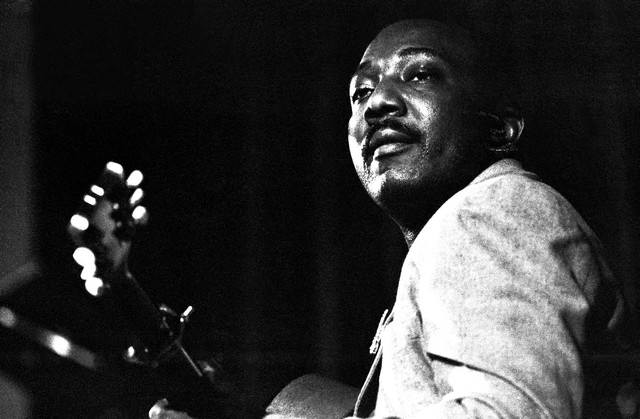
J. B. Lenoir was one of the most original and socially conscious figures in the history of American blues. A gifted singer, guitarist, and songwriter, he combined the traditional sounds of the Mississippi Delta with the electric energy of postwar Chicago blues. While many blues musicians focused primarily on personal struggles, love, and hardship, Lenoir expanded the genre by writing songs about racial injustice, politics, war, and civil rights. His unusually high-pitched voice, innovative guitar playing, and fearless lyrics distinguished him from his contemporaries.
Although his commercial success was limited during his lifetime, his influence has steadily grown since his death. Today he is recognized as an important pioneer whose music anticipated the role that protest songs would later play in popular music.
Childhood
J. B. Lenoir was born on March 5, 1929, near Monticello, Mississippi. His legal name was simply J. B. Lenoir; the initials were not abbreviations for longer given names. He grew up on his family’s farm during the era of racial segregation in the American South, where African Americans faced widespread discrimination and economic hardship.
Music became part of his life at an early age. His father, Devitt (also recorded as Dewitt) Lenoir Sr., played guitar and introduced him to blues music. Through his father he became familiar with the work of influential artists such as Blind Lemon Jefferson, whose expressive guitar style left a lasting impression on the young musician.
Growing up in rural Mississippi also exposed Lenoir to work songs, gospel music, and traditional Delta blues. These musical traditions shaped his artistic identity long before he began performing professionally.
The harsh realities of segregation deeply affected him. Witnessing the unequal treatment of African Americans, particularly the discrimination directed at his own family, inspired many of the social themes that would later appear in his songwriting.
Youth
As a teenager, Lenoir left Mississippi in search of better opportunities. He spent time in New Orleans, Louisiana, where he absorbed the city’s rich musical culture, blending blues with rhythm and blues and early jazz influences.
Around 1949 he relocated to Chicago, which had become the center of the postwar electric blues movement. Chicago attracted thousands of African Americans during the Great Migration, and its vibrant club scene offered young musicians opportunities unavailable in the South.
Soon after arriving, Lenoir began performing with established blues musicians. Big Bill Broonzy reportedly helped introduce him to Chicago’s professional music community, and Lenoir quickly developed a reputation for his energetic performances and distinctive singing voice.
His earliest recordings appeared in the early 1950s. Among them was “Korea Blues” (1951), one of the earliest blues songs to comment directly on an ongoing international conflict. Even at this stage of his career, Lenoir demonstrated a willingness to address current events rather than relying solely on conventional blues themes.
Adulthood
Throughout the 1950s, Lenoir recorded for several Chicago labels, including Chess, JOB, Parrot, Checker, Shad, Vee-Jay, and USA Records. His recordings featured energetic rhythms, expressive guitar work, and prominent saxophone arrangements that gave his music a distinctive sound.
His breakthrough came with “Mama, Talk to Your Daughter”, released in 1954. The song became his best-known commercial success and has since been covered by numerous blues and rock musicians.
Unlike many of his contemporaries, Lenoir increasingly used music as a vehicle for political and social commentary. His controversial “Eisenhower Blues” criticized the economic conditions facing ordinary Americans during President Dwight D. Eisenhower’s administration. Because of its political content, the song was reportedly withdrawn shortly after its release and later reissued under a different title, “Tax Paying Blues.”
During the 1960s, Lenoir became even more outspoken. His songs addressed civil rights, racial discrimination, the Vietnam War, and social inequality. At a time when many record companies avoided controversial material, Lenoir remained committed to expressing his views through music.
His albums Alabama Blues! (1965) and Down in Mississippi (1966) represented the artistic peak of his career. Recorded under the supervision of Willie Dixon for the European market, these acoustic recordings allowed Lenoir to perform deeply personal songs that reflected both his experiences in the American South and his concerns about contemporary political events.
European audiences embraced his socially engaged music, and he toured Europe as part of the American Folk Blues Festival, where he gained greater recognition than he had received in the United States.
Major Compositions
Although Lenoir recorded many notable songs, several stand out for their musical quality and historical significance.
Mama, Talk to Your Daughter (1954)
This remains Lenoir’s signature recording. Its memorable melody, strong rhythm, and emotional delivery made it a blues classic that has been interpreted by numerous artists across several generations.
Eisenhower Blues (1954)
One of the earliest openly political blues recordings, the song criticized economic inequality and government policies. Its controversy demonstrated Lenoir’s willingness to challenge social conventions through music.
Tax Paying Blues (1954)
Released after Eisenhower Blues encountered resistance, this revised version retained much of the original social criticism while avoiding direct references to the president.
Alabama Blues (1965)
Written during the height of the Civil Rights Movement, this song condemned racial violence and segregation in the American South. It remains one of the most powerful blues protest songs ever recorded.
Vietnam Blues (1966)
Lenoir criticized the Vietnam War and expressed sympathy for the soldiers sent to fight it. At a time when public criticism of the war was still relatively uncommon in popular music, the song demonstrated remarkable courage.
Down in Mississippi
This autobiographical composition reflected on his childhood in Mississippi, combining personal memories with broader observations about racial injustice and Southern life.
Shot on James Meredith
Inspired by the shooting of civil rights activist James Meredith, the song addressed racial violence directly and reaffirmed Lenoir’s commitment to equality and justice.
Death
In March 1967, Lenoir was involved in an automobile accident near Champaign-Urbana, Illinois. Although he initially survived, he suffered internal injuries that were not fully recognized at the time.
On April 29, 1967, he died at the age of thirty-eight from complications related to those injuries.
His death ended a career that had never achieved widespread commercial success despite extraordinary artistic accomplishments. Many historians believe that his greatest work was only beginning to receive the recognition it deserved.
Conclusion
J. B. Lenoir occupies a unique place in American musical history. He combined exceptional musicianship with an uncommon willingness to confront difficult political and social issues through blues music. Long before protest songs became common in folk and rock music, Lenoir was writing about racial injustice, war, poverty, and civil rights.
His influence extends beyond the blues. Artists such as John Mayall, Ry Cooder, Johnny Winter, and many others have praised or recorded his music. His work also reached new audiences through the documentary The Soul of a Man (2003), directed by Wim Wenders.
Today, Lenoir is remembered not only as an outstanding blues guitarist and singer but also as one of the genre’s most courageous and forward-thinking songwriters. His recordings remain powerful examples of how blues music can serve as both personal expression and social commentary, ensuring that his legacy continues to inspire musicians and listeners around the world.
Comments are closed