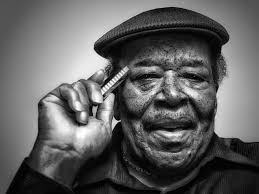
James Cotton: A Biography
Introduction
James Henry Cotton (July 1, 1935 – March 16, 2017) was one of the most influential blues harmonica players in American music history. Known for his powerful sound, energetic stage presence, and remarkable technical ability, Cotton helped define the modern Chicago blues style while preserving the traditions of the Mississippi Delta. Throughout a career that spanned more than six decades, he performed with legendary musicians including Muddy Waters, Howlin’ Wolf, Janis Joplin, B.B. King, Santana, Johnny Winter, and countless others. Often called “Superharp,” Cotton inspired generations of harmonica players and played a crucial role in bringing blues music to international audiences.
Childhood
James Henry Cotton was born in Tunica, Mississippi, in the heart of the Mississippi Delta, a region widely regarded as the birthplace of the blues. He was the youngest of eight children born to Mose and Hattie Cotton, who worked as sharecroppers. Growing up in poverty, Cotton experienced the harsh realities of rural life during the Great Depression.
His fascination with music began at an early age after his mother gave him an inexpensive harmonica. He became captivated by the performances of Sonny Boy Williamson II, whose radio broadcasts reached homes across the Delta. Cotton practiced constantly, attempting to imitate Williamson’s distinctive style while developing his own powerful tone.
Tragedy struck early in his life when both of his parents died before he reached the age of ten. Left without immediate family support, he was eventually taken under the guidance of Sonny Boy Williamson II. Although not formally adopted, Williamson became Cotton’s mentor, introducing him to professional music and teaching him both performance techniques and the realities of life as a traveling blues musician.
Youth
During his teenage years, Cotton performed wherever opportunities existed, including street corners, juke joints, and local clubs throughout Mississippi and Arkansas. Because he was often too young to enter the establishments where musicians played, he frequently entertained audiences outside until he became old enough to perform inside.
In the early 1950s, he began working with Howlin’ Wolf and guitarist Hubert Sumlin. These experiences exposed him to the emerging electric blues style that was transforming traditional Delta blues into a louder, urban sound.
In 1953, Cotton made his first professional recordings under the guidance of producer Sam Phillips, who would later become famous for founding Sun Records and discovering Elvis Presley. Among these early recordings was “Cotton Crop Blues,” a song that became one of his signature works and attracted widespread attention within the blues community.
His growing reputation eventually reached Muddy Waters. Impressed by Cotton’s harmonica playing, Waters invited the young musician to join his legendary Chicago band in 1955, replacing Junior Wells. The opportunity would dramatically change Cotton’s career and establish him among the greatest blues performers of his generation.
Adulthood
Joining Muddy Waters marked the beginning of Cotton’s rise to international recognition. During more than a decade with Waters, he toured extensively across the United States and Europe, helping introduce authentic Chicago blues to new audiences. He contributed to numerous recordings and developed a commanding stage presence characterized by explosive solos, boundless energy, and remarkable showmanship.
While still performing with Waters, Cotton gradually formed his own group, the James Cotton Blues Band. By the mid-1960s, he left Waters to devote himself fully to leading his own band. The group quickly established itself as one of the premier blues acts in America.
Throughout the late 1960s and 1970s, Cotton recorded acclaimed albums such as The James Cotton Blues Band, Cotton in Your Ears, Pure Cotton, Taking Care of Business, and 100% Cotton. His performances blended traditional Delta blues with the electrified Chicago style, often incorporating elements of soul, rhythm and blues, and rock music.
Cotton became a favorite collaborator of many rock musicians during the blues revival of the late 1960s and 1970s. He performed with artists including Janis Joplin, the Grateful Dead, Santana, Steve Miller, Johnny Winter, Gregg Allman, and Keith Richards. His powerful harmonica style influenced numerous players, including Paul Butterfield and Charlie Musselwhite, while earning admiration from musicians across multiple genres.
In 1966, Cotton survived a violent shooting after being attacked by a disturbed individual. Although seriously wounded, he recovered and returned to performing.
During the 1990s, Cotton faced another major challenge when he was diagnosed with throat cancer. Surgery and radiation treatments severely affected his ability to sing, but they did not diminish his skill as a harmonica player. Rather than retiring, he continued touring and recording, allowing guest vocalists to perform while he remained the featured instrumentalist.
Even in his later years, Cotton maintained an active touring schedule and continued releasing critically acclaimed albums. His recordings Deep in the Blues (1996), Giant (2010), and Cotton Mouth Man (2013) demonstrated that his musical creativity remained strong well into his seventies.
Over his lifetime, Cotton received numerous honors, including multiple Grammy Awards and Blues Music Awards. In 2014, he won the Grammy Award for Best Blues Album for Cotton Mouth Man, further cementing his reputation as one of the greatest blues artists of all time.
Major Compositions
Although James Cotton became famous primarily as a performer and interpreter of blues music, he also wrote or co-wrote several important songs that have become blues standards or enduring favorites.
Cotton Crop Blues
Perhaps his best-known original composition, “Cotton Crop Blues” captured the struggles of agricultural workers in the Mississippi Delta while showcasing Cotton’s extraordinary harmonica technique. The recording helped launch his professional career and attracted the attention of Muddy Waters.
Rocket 88 Boogie
An energetic instrumental highlighting Cotton’s improvisational skills, this piece demonstrated his ability to blend traditional blues with faster, more modern rhythms.
Dealin’ with the Devil
This composition reflected Cotton’s mature songwriting style, combining emotional storytelling with forceful harmonica performances.
One More Mile
Originally associated with Cotton’s later career, this song expressed perseverance and determination, themes that reflected his own personal struggles through illness and decades of touring.
Beyond his own compositions, Cotton became closely associated with performances of classics such as “Got My Mojo Working,” “Got My Mojo Workin’,” “Rocket 88,” “Help Me,” and numerous Muddy Waters standards. His interpretations often became definitive versions for later generations of blues musicians.
Death
James Cotton died on March 16, 2017, at the age of eighty-one in Austin, Texas, from complications related to pneumonia.
His death marked the loss of one of the final direct links to the golden age of Chicago blues. Musicians, critics, and fans around the world honored his extraordinary contributions to American music. Tributes emphasized not only his unmatched harmonica playing but also his generosity toward younger musicians and his unwavering dedication to preserving the blues tradition.
Cotton was buried at the Texas State Cemetery in Austin, an honor reflecting his lasting cultural significance.
Conclusion
James Cotton’s life embodied the history of the blues itself. Rising from the poverty of the Mississippi Delta, he transformed personal hardship into artistic brilliance and became one of the greatest harmonica players ever to perform. His collaborations with legendary blues pioneers, successful solo career, and influence on rock and blues musicians ensured that his music reached audiences around the world.
Even after losing much of his singing voice, Cotton continued performing with extraordinary determination, proving that his harmonica remained his true voice. His recordings continue to inspire musicians, while his innovations in tone, phrasing, and stage performance remain standards for blues harmonica players.
Today, James Cotton is remembered not only as a master instrumentalist but also as one of the most important ambassadors of American blues, whose legacy continues to shape the genre for future generations.
Comments are closed