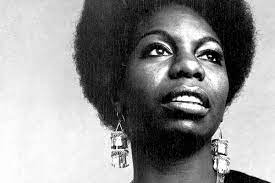
Nina Simone – A Complete Biography
INTRODUCTION
Nina Simone, born Eunice Kathleen Waymon on February 21, 1933, stands as one of the most influential and versatile musicians of the 20th century. Her extraordinary talent spanned multiple genres including classical, jazz, blues, folk, R&B, gospel, and pop music. More than just a musician, Simone was a powerful voice for civil rights and social justice, using her platform to advocate for equality during one of America’s most turbulent periods.
Known as the “High Priestess of Soul” (though she disliked this nickname), Simone possessed a distinctive contralto voice and exceptional piano skills that were heavily influenced by her classical training. Her music was characterized by its emotional intensity, raw honesty, and the seamless blending of musical traditions. Throughout her career, she recorded more than 40 albums and left an indelible mark on American music and culture.
This biography explores the remarkable journey of Nina Simone from her humble beginnings in North Carolina to international acclaim, examining how her personal experiences shaped both her artistry and activism. Her story is one of extraordinary talent, unwavering determination, and the courage to speak truth to power through music.
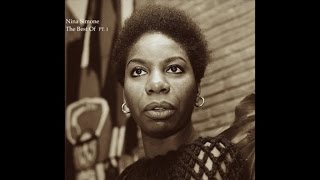
==============================================
CHILDHOOD
Eunice Kathleen Waymon was born on February 21, 1933, in Tryon, North Carolina, the sixth of eight children in a respected family. Her father, John Divine Waymon, worked as a barber, dry-cleaner, and entertainer, while her mother, Mary Kate Irvin, was a Methodist preacher. The family was poor but maintained a strong sense of dignity and pride.
Eunice’s musical talent emerged remarkably early. By the age of three, she was playing piano, and the first song she learned was “God Be With You, Till We Meet Again.” Her prodigious abilities were quickly recognized, and she began performing at her local church where her mother preached. Her natural talent was undeniable, and the community took notice.
A pivotal moment in young Eunice’s life occurred when she gave her first classical recital at the age of 12. During this performance, her parents, who had taken seats in the front row, were forced to move to the back of the hall to make way for white people. Eunice boldly refused to play until her parents were returned to their original seats. This incident left a lasting impression on her and later contributed to her involvement in the civil rights movement.
Recognizing her extraordinary talent, Eunice’s piano teacher, Mrs. Mazzanovich, established a special fund to pay for her musical education. This “Eunice Waymon Fund” allowed the young pianist to receive proper training and nurture her gift. With this financial support, Eunice attended Allen High School for Girls in Asheville, North Carolina, where she continued to develop her musical abilities and graduated as valedictorian of her class.
Throughout her childhood, Eunice remained dedicated to her dream of becoming a classical pianist. She practiced diligently, often for hours each day, developing the technical proficiency and emotional depth that would later define her unique musical style. Despite growing up in the segregated South, where opportunities for Black children were severely limited, Eunice’s talent and determination set her on a path toward musical greatness.
==============================================
YOUTH
After graduating as valedictorian from Allen High School for Girls, Eunice’s musical journey continued when she spent the summer of 1950 at the prestigious Juilliard School in New York City. Under the tutelage of Carl Friedberg, she prepared intensively for her ultimate goal: admission to the Curtis Institute of Music in Philadelphia, one of the most selective conservatories in the country.
So confident was she in her abilities that her family relocated to Philadelphia in anticipation of her acceptance. However, despite her exceptional talent and preparation, Eunice was denied admission to Curtis. Only three of 72 applicants were accepted that year, but for the rest of her life, she maintained that racial prejudice was the real reason for her rejection. This devastating setback became a defining moment in her life and career.
Determined to continue her musical education despite this disappointment, Eunice took private piano lessons with Vladimir Sokoloff, a professor at Curtis. To support herself and her family, she began teaching music to local students. In 1954, seeking additional income, she auditioned for a job playing piano at the Midtown Bar & Grill in Atlantic City, New Jersey.
The owner hired her but with one condition: she would have to sing as well as play. Reluctant to let her family know she was performing “the devil’s music” in nightclubs, she adopted the stage name “Nina Simone.” “Nina” came from a nickname meaning “little one” in Spanish that a boyfriend had given her, and “Simone” was inspired by the French actress Simone Signoret.
This unexpected turn of events launched Nina Simone’s career as a vocalist. Her unique style—a blend of classical technique with jazz improvisation—quickly attracted attention. Word spread about this remarkable new talent who transformed popular tunes into a distinctive synthesis of jazz, blues, and classical music. Her rich, deep velvet vocal tones and masterful keyboard skills soon drew audiences up and down the East Coast.
In 1957, at the age of 24, Simone recorded her first album, “Little Girl Blue,” for Bethlehem Records. The album included what would become her first hit, a rendition of George Gershwin’s “I Loves You, Porgy,” which reached the Top 20 on the Billboard charts in 1959. Also on this album was “My Baby Just Cares for Me,” which would later become a massive hit in the 1980s when used in a Chanel perfume commercial.
These early years of performing and recording established Nina Simone as a unique voice in American music—one that defied easy categorization and blended multiple musical traditions into something entirely her own.
==============================================
ADULTHOOD
As Nina Simone’s career flourished in the late 1950s and early 1960s, her personal life underwent significant changes. In 1958, she married Don Ross, but the marriage was brief, ending in divorce in 1960. The following year, she married Andy Stroud, a former police detective who became her manager. They had a daughter, Lisa Simone Kelly, who would later follow in her mother’s footsteps as a performer. However, this marriage was turbulent and eventually ended in divorce in 1971.
The 1960s marked the height of Simone’s commercial success and the beginning of her political awakening. After signing with Colpix Records, she released a series of successful albums and performed at prestigious venues, including Town Hall in New York City and the Newport Jazz Festival. Her reputation as a captivating live performer grew, and she developed a distinctive stage presence characterized by intense emotional delivery and unpredictable interactions with her audience.
Two events in 1963 profoundly changed the direction of Simone’s career and life: the assassination of civil rights leader Medgar Evers in Mississippi and the bombing of the 16th Street Baptist Church in Birmingham, Alabama, which killed four young Black girls. Devastated and enraged, Simone channeled her emotions into her music, writing “Mississippi Goddam” in response to these tragedies. This marked her transformation from an entertainer to an activist.
As the civil rights movement gained momentum, Simone became increasingly involved, performing at civil rights meetings and marches, including the Selma to Montgomery marches. Her music became more explicitly political, with songs like “Old Jim Crow,” “Four Women,” and “To Be Young, Gifted and Black” addressing racial inequality and celebrating Black identity. Unlike many civil rights leaders who advocated non-violence, Simone’s political views aligned more closely with the Black nationalist movement and figures like Malcolm X, who was her neighbor in Mount Vernon, New York.
The assassination of Martin Luther King Jr. in 1968 was another devastating blow for Simone. Disillusioned with America and its racial politics, she left the United States in 1970, living first in Barbados and then in Liberia, Switzerland, and eventually France. During this period, her career declined in the United States, though she maintained a following in Europe and Africa.
Throughout her adult life, Simone struggled with mental health issues, later diagnosed as bipolar disorder. According to biographers, she began taking medication in the mid-1960s, though this was known only to a small circle of intimates. Her behavior became increasingly erratic, with mood swings and outbursts that sometimes alienated audiences and colleagues.
Despite these personal challenges, Simone continued to perform and record throughout the 1970s and 1980s, though less prolifically than before. Her 1978 album “Baltimore” received critical acclaim, and in the 1980s, she experienced a career resurgence when “My Baby Just Cares for Me” became a hit in the UK after being used in a Chanel No. 5 perfume commercial.
In her later years, Simone settled in France, continuing to perform despite her declining health. In 1991, she published her autobiography, “I Put a Spell on You,” named after one of her signature songs. Though she lived far from her homeland, her influence on American music and culture remained profound.
==============================================
MAJOR COMPOSITIONS
Nina Simone’s musical legacy includes numerous original compositions and distinctive interpretations that transformed existing songs into powerful personal statements. Her work spans multiple genres and themes, from love songs to political anthems, all marked by her unique vocal style and piano technique.
“Mississippi Goddam” (1964) stands as perhaps her most significant original composition. Written in response to the murder of Medgar Evers and the Birmingham church bombing, this song became an anthem of the civil rights movement. With its deceptively upbeat tempo contrasting with scathing lyrics about racial injustice, the song was revolutionary in its direct confrontation of racism. So controversial was this composition that many radio stations in the South refused to play it, and promotional copies were returned broken in half.
“Four Women” (1966) is another landmark Simone composition that explores the experiences of four different Black women—Aunt Sarah, Saffronia, Sweet Thing, and Peaches—each representing different aspects of the Black female experience in America. Through these characters, Simone addressed issues of colorism, sexual exploitation, and the psychological impact of racism. The song’s stark portrayal of these women’s lives was groundbreaking in its honesty and complexity.
“To Be Young, Gifted and Black” (1969) was written in memory of Simone’s friend, playwright Lorraine Hansberry, who died of cancer in 1965. Unlike many of her protest songs filled with anger, this composition celebrated Black youth and excellence, encouraging a generation to take pride in their identity. The song became an inspirational anthem for the Black community and was later covered by numerous artists.
“Backlash Blues” (1967) featured lyrics from a poem by Langston Hughes, given to Simone shortly before his death. The collaboration between these two artistic giants resulted in a powerful indictment of racial inequality, with Simone’s musical setting perfectly complementing Hughes’ words.
Beyond her original compositions, Simone had a remarkable ability to reinterpret existing songs, infusing them with new meaning and emotional depth. Her version of “Strange Fruit,” the anti-lynching song made famous by Billie Holiday, is haunting in its intensity. Her rendition of “I Put a Spell on You,” originally by Screamin’ Jay Hawkins, transformed the song from a novelty number into a mesmerizing declaration of passionate possession.
Other notable interpretations include her version of “Ain’t Got No, I Got Life” from the musical “Hair,” which became a hit in Europe, and her rendition of the Bee Gees’ “To Love Somebody,” which demonstrated her ability to find emotional truth in contemporary pop songs. Her interpretation of George Harrison’s “Here Comes the Sun” showed her versatility in adapting rock music to her unique style.
Simone’s piano playing, deeply influenced by her classical training, particularly her love of Johann Sebastian Bach, was an essential component of her musical expression. Her keyboard technique combined classical precision with jazz improvisation, creating a distinctive sound that complemented her vocal performances and added depth to her compositions.
Throughout her career, Simone recorded more than 40 albums, leaving behind a rich musical legacy that continues to influence artists across genres. Her compositions and interpretations stand as testaments to her artistic vision and her commitment to using music as a vehicle for both personal expression and social change.
==============================================
DEATH
Nina Simone spent her final years in Carry-le-Rouet, a small town in the south of France. Despite battling breast cancer and other health issues, she continued to perform when her health permitted, giving her last concert in 2002. Throughout this period, she struggled with financial difficulties and the ongoing management of her bipolar disorder, which had been diagnosed years earlier.
In a poignant twist of fate, just two days before her death, Simone learned that she would be awarded an honorary degree from the Curtis Institute of Music—the very institution that had rejected her application decades earlier. This belated recognition from Curtis represented a bittersweet vindication of her talent and perseverance.
On April 21, 2003, Nina Simone died at her home in Carry-le-Rouet at the age of 70. According to her manager, she died in her sleep of natural causes. Her funeral service was attended by numerous celebrities and musical luminaries, reflecting the wide-ranging impact she had made on the world of music and beyond.
Following her wishes, Simone’s ashes were scattered in several African countries, symbolizing her deep connection to the continent where she had found solace during her self-imposed exile from the United States. This final journey represented her enduring identification with her African heritage and her rejection of the racism she had experienced in America.
News of Simone’s death prompted an outpouring of tributes from around the world. Musicians, civil rights activists, and fans mourned the loss of a singular talent whose voice had given expression to both personal pain and collective struggle. Though she had lived away from the United States for many years, her death rekindled appreciation for her contributions to American music and the civil rights movement.
In the years following her death, interest in Simone’s life and work has grown significantly. Her music has been featured in numerous films and television shows, introducing new generations to her artistry. In 2015, the documentary “What Happened, Miss Simone?” received critical acclaim and an Academy Award nomination, bringing renewed attention to her remarkable story. In 2018, she was posthumously inducted into the Rock and Roll Hall of Fame, a long-overdue recognition of her influence on popular music.
Perhaps the most touching tribute came in 2016, when four African American artists purchased Simone’s childhood home in Tryon, North Carolina, to preserve it as a historical site. This act of preservation ensures that the place where a young Eunice Waymon first discovered her musical gifts will stand as a monument to her legacy.
Nina Simone’s death marked the end of a life filled with extraordinary achievement and profound struggle. Yet through her recordings, compositions, and the example of her fearless artistry and activism, her influence continues to resonate across generations.
==============================================
CONCLUSION
Nina Simone’s life journey from a small town in North Carolina to international acclaim represents one of the most remarkable stories in American music. Her legacy transcends categories, encompassing her contributions as a pianist, vocalist, composer, arranger, and civil rights activist. Through her music, she gave voice to the pain, joy, anger, and hope of the Black experience in America during a pivotal period of social change.
What distinguishes Simone from many of her contemporaries was her refusal to separate her art from her politics. When she embraced activism in the 1960s, she did so wholeheartedly, using her platform to challenge injustice and inspire change. Songs like “Mississippi Goddam,” “Four Women,” and “To Be Young, Gifted and Black” were not merely entertainment but powerful statements that contributed to the discourse on race and equality in America.
Simone’s musical genius lay in her ability to transcend genre boundaries. Her classical training provided the foundation for her distinctive piano style, while her vocal performances drew from jazz, blues, folk, and gospel traditions. This versatility allowed her to create a body of work that defies easy categorization and continues to sound fresh and relevant decades after its creation.
The personal cost of Simone’s artistic and political journey was significant. Her struggles with mental health, troubled relationships, financial difficulties, and eventual exile from her homeland reveal the challenges she faced throughout her life. Yet these struggles also informed her art, giving her performances an emotional authenticity that resonates with listeners.
In the years since her death, Simone’s stature has only grown. New generations have discovered her music, drawn to its emotional power and social relevance. Artists across genres cite her as an influence, and scholars increasingly recognize her importance in American cultural history. The preservation of her childhood home and her induction into the Rock and Roll Hall of Fame represent belated acknowledgments of her significance.
Perhaps the most enduring aspect of Nina Simone’s legacy is her example of artistic integrity. Throughout her career, she remained true to her vision, refusing to compromise her music or her message to achieve commercial success. In an industry often driven by market considerations, she stood as a beacon of authenticity and courage.
As we reflect on Nina Simone’s life and work, we are reminded of the transformative power of art when wielded with conviction and purpose. Her story illustrates how music can transcend entertainment to become a force for social change and personal liberation. In her own words: “I tell you what freedom is to me: no fear.” Through her music and activism, Nina Simone embodied this fearless pursuit of freedom, leaving behind a legacy that continues to inspire and challenge us today.
Comments are closed