Arthur Big Boy Crudup – A Complete Biography
Introduction
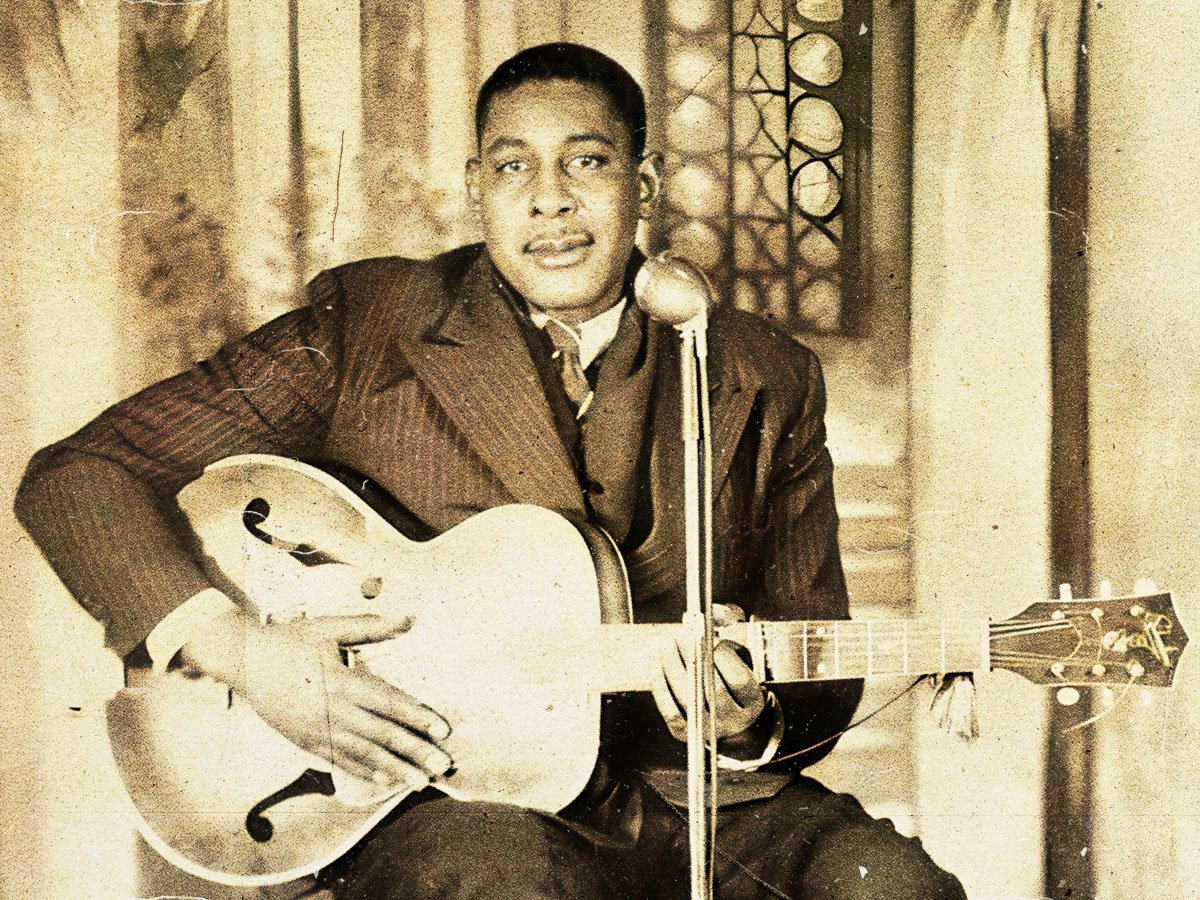
Arthur “Big Boy” Crudup was an American blues singer, guitarist, and songwriter whose work had a profound influence on the development of modern blues and early rock and roll. Although his own career was marked by financial hardship and limited recognition, his compositions became foundational to later generations of musicians. Songs he wrote in the 1940s and 1950s were later adapted into major hits, most famously by Elvis Presley, helping to shape the evolution of American popular music.
Childhood
Arthur William Crudup was born on August 24, 1905, in Forest, Mississippi. His father left the family when Arthur was still very young, leaving him to be raised primarily by his mother and grandparents. His early life was defined by poverty and mobility, as his family moved frequently in search of work.
Despite these hardships, Crudup showed an early interest in music. He participated in church choirs during childhood and was drawn to spiritual and gospel singing. According to accounts of his early years, he repaired a discarded ukulele he found at a city dump and used it to teach himself basic musical skills. However, economic pressures dominated his youth. When the family relocated temporarily to Indianapolis, Crudup left school to support his ill mother, working in a foundry before eventually returning to Mississippi.
Youth
As a young man, Crudup continued to work in manual labor and farming. Music remained part of his personal life, but he had not yet taken up the guitar seriously. It was not until he reached his early thirties that he began learning the instrument in earnest. According to later recollections, he initially practiced on a makeshift guitar with only two strings, teaching himself slowly and persistently.
In the late 1930s he joined a gospel quartet called The Harmonizing Four. The group traveled to Chicago in hopes of finding opportunities, but soon dissolved. Crudup stayed in the city with little money and no place to live, surviving by busking on street corners. During this period, his expressive singing attracted attention from musicians and promoters on the local blues scene. These contacts eventually led him to the influential talent scout Lester Melrose, who recognized Crudup’s potential and encouraged him to audition.
Adulthood
Crudup’s professional breakthrough came in 1941, when he performed at a gathering of musicians and impressed listeners with the power and emotional depth of his voice. This led to a contract with Bluebird Records, a subsidiary of RCA Victor. He began recording soon after, producing early titles such as “Mean Old ‘Frisco Blues,” “If I Get Lucky,” and “Vicksburg Blues.”
Throughout the 1940s and early 1950s, Crudup became a well-known figure in the blues world. His songs combined a raw, downhome sensibility with lyrical directness, earning him a loyal audience. He toured the American South and performed with prominent blues figures of the era. However, despite his rising reputation and the commercial success of some recordings, Crudup saw very little income. Exploitative recording contracts and poor royalty practices left him struggling financially.
By the mid-1950s he became disillusioned with the music industry. Feeling cheated and exhausted, he left professional music and returned to agricultural and manual labor to support his family. He later moved to Virginia, where he continued working various jobs, including farming and transporting migrant laborers. Though he occasionally performed in small local venues, music was no longer his primary occupation.
Major Compositions
Arthur Crudup’s catalog includes several songs that became cornerstones of blues and early rock. His most influential works include:
- “That’s All Right (Mama)” — Recorded by Crudup in the mid-1940s, this song later gained iconic status when Elvis Presley recorded it as his first commercial single in 1954.
- “My Baby Left Me” — A Crudup original that went on to be covered by Presley and numerous other artists.
- “So Glad You’re Mine” — Another influential blues composition later adapted by rock musicians.
- “Rock Me Mama” — A signature example of Crudup’s rhythmic and vocal style.
- “Mean Old ‘Frisco Blues” — One of his earliest successful recordings, helping establish him as a notable figure in the blues genre.
Although many of these compositions generated significant profits for later interpreters, Crudup himself received little financial compensation, a situation that remained a lifelong injustice.
Later Years and Death
The 1960s blues revival brought renewed attention to Crudup’s music. He performed at festivals, recorded new material, and experienced a brief resurgence of recognition. Despite this renewed visibility, he continued to struggle with poverty. Attempts to secure unpaid royalties for him were initiated but ultimately failed, leaving him without compensation for decades of influential work.
Arthur “Big Boy” Crudup died on March 28, 1974, in Nassawadox, Virginia. He passed away still burdened by financial hardship, despite the immense cultural impact of his songwriting.
Conclusion
Arthur “Big Boy” Crudup’s life is emblematic of the creative brilliance and systemic inequities experienced by many African American musicians in the twentieth century. Although he did not receive the recognition or financial reward he deserved during his lifetime, his music shaped the future of blues and rock and helped define the sound of modern American popular culture. Today he is regarded as a foundational figure whose contributions continue to resonate, affirming his enduring importance in the history of American music.
Comments are closed