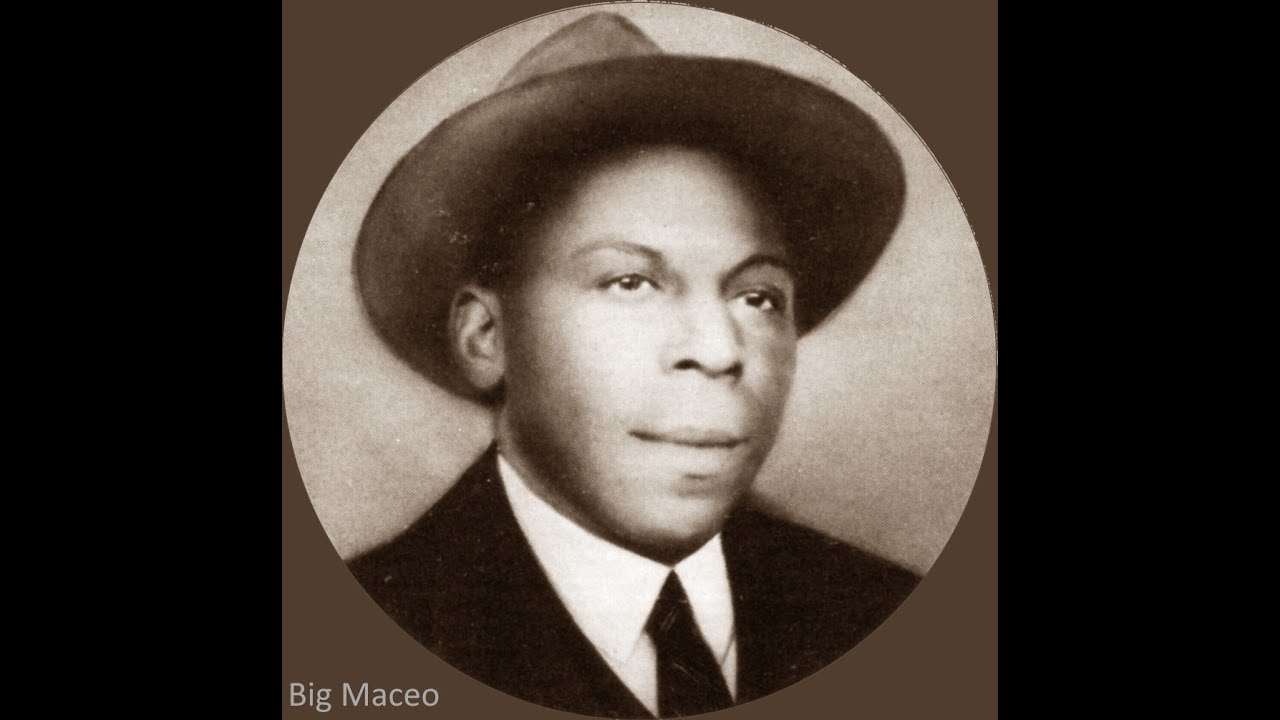
Big Maceo – A Complete Biography
Introduction
Major “Big Maceo” Merriweather (March 31, 1905 – February 23, 1953) was one of the most influential blues pianists of the prewar and immediate postwar era. Renowned for his powerful left-hand technique, deep rhythmic drive, and authoritative vocal delivery, Big Maceo played a decisive role in shaping the sound of Chicago blues piano. Although his recorded output was relatively small, his impact was immense, and his work—especially the classic “Worried Life Blues”—became foundational for later generations of blues musicians.
Childhood
Big Maceo was born Major Merriweather in rural Georgia, near the town of Newnan, though some accounts place his birthplace more generally in the Atlanta area. He spent his early childhood on a farm, growing up in a working-class environment shaped by the traditions of Southern Black life in the early twentieth century. He was left-handed and largely self-taught as a pianist, learning through observation, experimentation, and practical experience rather than formal instruction.
From an early age, Merriweather demonstrated a strong sense of rhythm and physical power at the keyboard. These qualities were reinforced by the musical demands of social gatherings and informal performances, where volume, stamina, and rhythmic authority were essential. The foundations of his later style—especially the emphasis on a forceful bass line—can be traced directly to these formative years.
Youth
During his late teens or early twenties, Merriweather left Georgia and moved north to Detroit, Michigan. At the time, Detroit was a major destination for Southern Black migrants and had a thriving blues and boogie-woogie scene centered on house parties and rent parties. These gatherings provided musicians with steady work and required a style of playing that could energize crowded rooms for long periods.
In Detroit, Big Maceo refined his musical approach, blending blues traditions with the driving pulse of boogie-woogie. His reputation grew as a commanding pianist with a massive sound and an ability to both accompany singers and hold the spotlight on his own. These years were crucial in transforming him from a regional musician into a mature artist ready for a larger stage.
Adulthood
Big Maceo moved to Chicago in 1941, at a time when the city was becoming the epicenter of urban blues. Shortly after his arrival, he entered the recording studio and achieved national recognition with “Worried Life Blues,” a performance that immediately established him as a major figure in blues piano. The recording combined emotional depth, structural clarity, and a distinctive piano accompaniment that would be widely imitated.
Throughout the early 1940s, Big Maceo recorded a series of influential tracks, often working with guitarist Tampa Red and other prominent Chicago musicians. His style was characterized by a heavy, rolling left hand, restrained but expressive right-hand figures, and a vocal approach that conveyed authority and emotional gravity rather than ornamentation.
Although his recording career was concentrated within a few years, these sessions were pivotal in defining the Chicago blues piano sound. Big Maceo’s playing bridged the gap between earlier country blues piano and the more electrified urban blues that would dominate after World War II.
Major Compositions
Big Maceo’s legacy rests largely on a small number of recordings that achieved lasting importance in the blues canon.
“Worried Life Blues” remains his most famous composition and one of the most enduring blues standards ever recorded. Built on an eight-bar blues structure, the song’s combination of melancholy lyrics and commanding piano accompaniment has inspired countless interpretations by blues, jazz, and rock musicians.
Other notable recordings include “Chicago Breakdown,” which highlights his instrumental strength and rhythmic drive, as well as “Detroit Jump” and “Texas Stomp,” both of which reflect his roots in the house-party tradition and illustrate his ability to create dance-oriented blues. Together, these recordings demonstrate his versatility as both a soloist and ensemble player.
Big Maceo’s influence can be heard clearly in the work of later Chicago pianists, many of whom adopted elements of his left-hand patterns, phrasing, and overall approach to blues accompaniment.
Later Life and Health
In 1946, Big Maceo suffered a severe stroke that dramatically affected his ability to play the piano, particularly his left hand. This was a devastating blow to an artist whose musical identity depended so heavily on physical strength and coordination at the keyboard. Although he attempted to continue performing and recording after the stroke, he was never able to return fully to his earlier level of technical mastery.
During this period, fellow musicians supported him both personally and professionally. Some assisted him in performances, while others helped ensure his contributions were not forgotten as his public presence diminished. Despite these challenges, Big Maceo remained respected within the blues community for his earlier achievements and enduring influence.
Death
Big Maceo died on February 23, 1953, in Chicago, after suffering a heart attack. At the time of his death, his music was no longer in the commercial spotlight, but his importance was increasingly recognized by musicians and scholars who understood the foundational role he played in Chicago blues.
In the decades following his death, reissues of his recordings and renewed historical interest helped restore his reputation. He was eventually honored posthumously for his contributions to American blues history, and long-overdue recognition was given to his life and work.
Conclusion
Major “Big Maceo” Merriweather occupies a central place in the evolution of blues piano. With a style defined by rhythmic power, emotional directness, and structural clarity, he helped establish the musical language of Chicago blues during a crucial period of transition. Though illness curtailed his career and limited his recorded output, the recordings he left behind proved profoundly influential.
Big Maceo’s music continues to resonate because it captures the essence of blues piano at its most elemental and forceful. His legacy lives on in the countless musicians who drew inspiration from his work and in the enduring presence of his songs within the blues tradition.
Comments are closed