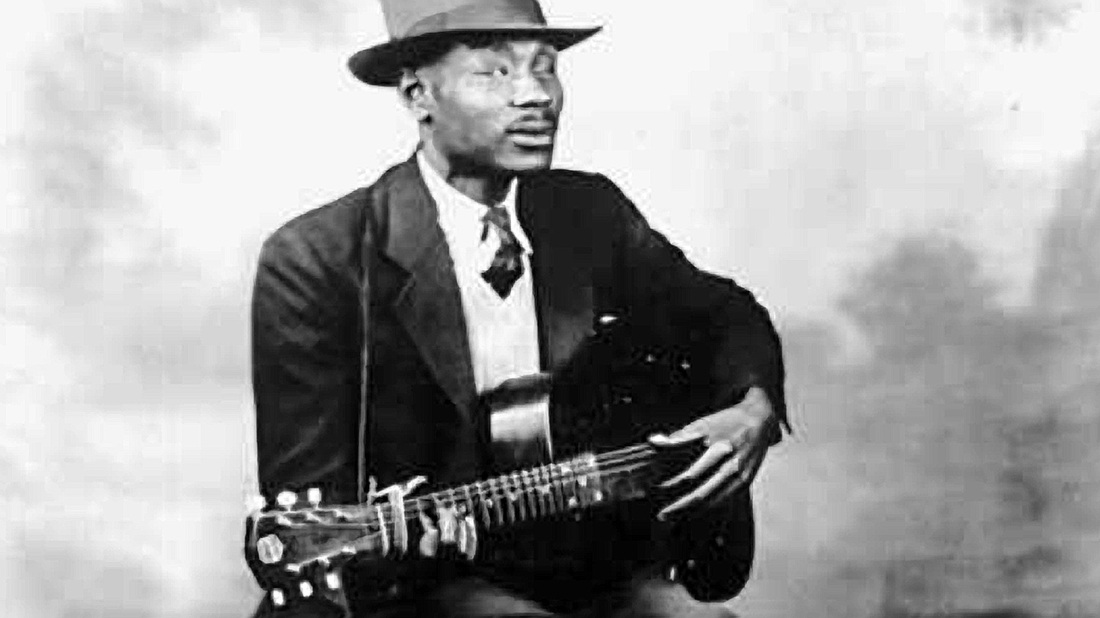
Blind Boy Fuller – A Complete Biography
Introduction
Fulton Allen, better known as Blind Boy Fuller, was one of the most prominent and influential blues musicians of the Piedmont tradition during the 1930s. Renowned for his expressive singing, agile fingerstyle guitar playing, and engaging performance style, Fuller helped define the sound of East Coast blues. His music blended ragtime rhythms, traditional country blues, and popular song forms, often delivered with humor and earthy realism. Despite a short career, his extensive recording output and stylistic impact secured his place among the most important figures in prewar American blues.
Childhood
Blind Boy Fuller was born Fulton Allen in Wadesboro, North Carolina, into a large family. His parents were Calvin Allen and Mary Jane Walker. After his mother’s death when he was still young, the family relocated to Rockingham, North Carolina. Growing up in the rural South, Allen was surrounded by folk music, work songs, and early blues influences that would later shape his musical vocabulary. Music was a common form of expression in his community, and he absorbed its sounds long before he ever performed professionally.
Youth
In his teenage years, Allen married Cora Mae Martin. Around this same period, he began to suffer from progressive vision loss. By his early twenties, he had become completely blind, most likely due to complications from untreated eye infections. The loss of his sight significantly altered his life path. With limited employment opportunities available to a blind Black man in the segregated South, Allen turned increasingly to music as both a means of survival and self-expression. He began performing on street corners, at house parties, and in tobacco warehouses throughout North Carolina and neighboring states, honing his skills and building a local reputation.
Adulthood and Professional Career
Blind Boy Fuller’s professional recording career began in the mid-1930s after he was discovered by a talent scout who arranged recording sessions in New York. Over the next five years, Fuller became one of the most prolific blues recording artists of his era, cutting well over one hundred tracks. His recordings featured a mix of solo performances and collaborations, and he was frequently accompanied by harmonica players and other musicians from the Durham blues scene.
Fuller was known for his confident vocal delivery and sophisticated guitar work, often performed on a steel-bodied resonator guitar. His playing exemplified the Piedmont blues style, characterized by alternating bass lines, syncopated treble melodies, and a rhythmic drive influenced by ragtime. His lyrics ranged from playful and humorous to direct and gritty, reflecting everyday experiences, relationships, and street life. As a mentor and collaborator, he influenced several musicians who would go on to achieve their own prominence.
Major Compositions
Blind Boy Fuller’s recorded legacy includes many songs that have become staples of the Piedmont blues repertoire. He was particularly adept at upbeat, rhythmically complex numbers that showcased his guitar technique and engaging personality. His repertoire included blues standards, reworked traditional tunes, and original compositions that blended humor, innuendo, and narrative storytelling. Many of his recordings were revisited and reinterpreted by later artists, underscoring their lasting influence. Through numerous reissues and compilations, his music has remained accessible to new generations of listeners and musicians.
Death
In the late 1930s, Blind Boy Fuller’s health began to deteriorate. He suffered from serious medical issues that required surgery, and his condition worsened afterward. By 1940, he was largely confined to bed and no longer able to perform. Blind Boy Fuller died on February 13, 1941, in Durham, North Carolina, at a relatively young age. His passing marked the end of a remarkably productive career that had lasted barely more than half a decade but had left an enduring mark on American blues music.
Conclusion
Blind Boy Fuller remains a central figure in the history of Piedmont blues. His recordings capture a style that is both technically refined and emotionally direct, bridging rural tradition and commercial recording culture. Through his guitar technique, vocal delivery, and lyrical approach, Fuller influenced countless musicians and helped shape the sound of East Coast blues. Though his life was short and often marked by hardship, his music endures as a vivid testament to creativity, resilience, and the richness of early American blues.
Comments are closed