Introduction
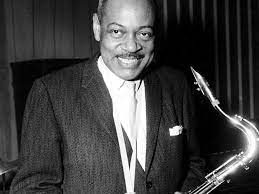
Coleman Randolph Hawkins was one of the most influential musicians in the history of jazz and is widely regarded as the father of the jazz tenor saxophone. Born in St. Joseph, Missouri, on November 21, 1904, Hawkins transformed the saxophone from a relatively minor instrument into one of the defining voices of jazz. His powerful tone, sophisticated harmonic understanding, and innovative improvisational style influenced generations of musicians, including Sonny Rollins, John Coltrane, and many others.
Known by the nicknames “Hawk” and “Bean,” Hawkins enjoyed a career that spanned nearly five decades. He played a central role during the Swing Era, helped pave the way for bebop, and remained a respected figure throughout his life. His 1939 recording of “Body and Soul” is considered one of the greatest jazz performances ever recorded and remains a landmark in the history of improvisation.
Childhood
Coleman Hawkins was born into a musical family in St. Joseph, Missouri. His mother, Cordelia Hawkins, was a pianist and organist who encouraged his musical development from an early age. Under her guidance, he began studying piano when he was four years old. Several years later, he learned to play the cello, developing a strong understanding of melody and harmony.
At the age of nine, Hawkins began playing the saxophone, the instrument that would eventually make him famous. His talent became apparent almost immediately. Unlike many young musicians of his era, Hawkins received formal musical training and developed a solid foundation in music theory. By his early teenage years, he was already performing publicly and displaying an unusual level of technical skill.
His early exposure to classical music and formal study helped distinguish him from many of his contemporaries and contributed to the advanced harmonic approach that later became his trademark.
Youth
As a teenager, Hawkins continued to refine his musical abilities while attending school in Kansas. He studied harmony and composition and quickly gained recognition as a promising young musician. By the time he was in his mid-teens, he was already performing professionally.
In the early 1920s, Hawkins joined the band of blues singer Mamie Smith, which provided him with valuable touring experience and introduced him to the professional music world. His reputation grew rapidly, and in 1923 he joined the orchestra of Fletcher Henderson in New York City.
The Henderson Orchestra was one of the most important jazz ensembles of the era, and Hawkins became one of its star performers. During the eleven years he spent with the band, he developed a distinctive style characterized by a rich, powerful tone and a sophisticated approach to improvisation. His work with Henderson helped establish the tenor saxophone as a major jazz instrument and earned him national recognition.
Adulthood
By the mid-1930s, Hawkins had become one of the leading musicians in jazz. In 1934, he left the United States to tour and perform throughout Europe. During his five-year stay abroad, he achieved international fame and expanded his artistic horizons.
When Hawkins returned to the United States in 1939, he recorded “Body and Soul.” The recording became a sensation and is often cited as one of the most important jazz performances ever made. Rather than simply playing the song’s melody, Hawkins created an intricate improvisation based on its harmonic structure. This approach revolutionized jazz soloing and demonstrated new possibilities for improvisation.
Throughout the 1940s, Hawkins remained at the forefront of jazz innovation. Unlike many established swing musicians, he embraced the emerging bebop movement. He performed and recorded with younger musicians such as Dizzy Gillespie and Max Roach, helping bridge the gap between swing and modern jazz.
During the 1950s and early 1960s, Hawkins continued to record extensively and perform around the world. He collaborated with many leading artists, including Duke Ellington, Thelonious Monk, Oscar Peterson, Ben Webster, and Sonny Rollins. His ability to adapt to changing musical styles while maintaining his distinctive voice earned him respect across multiple generations of jazz musicians.
Even as jazz evolved, Hawkins remained a powerful and influential performer. His later recordings demonstrated the same creativity, technical mastery, and emotional depth that had characterized his work since the 1920s.
Major Compositions
Although Coleman Hawkins is remembered primarily as a performer and improviser, he also composed several notable works.
Body and Soul (1939)
Although not originally composed by Hawkins, his recording of “Body and Soul” became his signature performance and one of the most celebrated recordings in jazz history. The solo demonstrated an unprecedented level of harmonic sophistication and remains a cornerstone of jazz education.
Picasso (1948)
“Picasso” is one of Hawkins’s most innovative recordings. Performed as an unaccompanied tenor saxophone solo, it was among the first significant examples of a solo saxophone recording in jazz history. The piece highlighted his technical brilliance and artistic independence.
Bean and the Boys
Named after Hawkins’s nickname, “Bean and the Boys” became one of his best-known original compositions. Built on the chord progression of “Lover Come Back to Me,” it became a favorite among jazz musicians and remains a respected jazz standard.
Blues for René
Written for his son, René Hawkins, this composition demonstrated Hawkins’s ability to combine emotional expression with sophisticated harmonic ideas.
Hawk’s Variations and Other Works
Throughout his career, Hawkins contributed numerous original compositions and arrangements that reflected his deep understanding of jazz harmony and improvisational structure. His works influenced both swing-era musicians and later modern jazz performers.
Death
Despite his continued success, Hawkins faced personal struggles during the final years of his life. He suffered from periods of depression and increasingly relied on alcohol. These difficulties affected his health and gradually reduced his musical activity.
Coleman Hawkins died from complications related to liver disease on May 19, 1969, in New York City. He was sixty-four years old. His death marked the end of one of the most remarkable careers in jazz history.
He was buried at Woodlawn Cemetery in the Bronx, New York, where many notable jazz musicians are also interred.
Conclusion
Coleman Hawkins occupies a unique place in the history of American music. More than any other musician, he established the tenor saxophone as a central instrument in jazz. His innovations in tone, harmony, and improvisation changed the direction of jazz and influenced generations of performers.
From his early years in Missouri to his international fame as a jazz pioneer, Hawkins demonstrated extraordinary creativity, discipline, and artistic courage. His willingness to embrace new musical ideas allowed him to remain relevant throughout a rapidly changing musical landscape.
Today, Coleman Hawkins is remembered not only as one of the greatest saxophonists of all time but also as one of the architects of modern jazz. His recordings continue to inspire musicians and listeners around the world, ensuring that his legacy remains as vibrant as ever.
Comments are closed