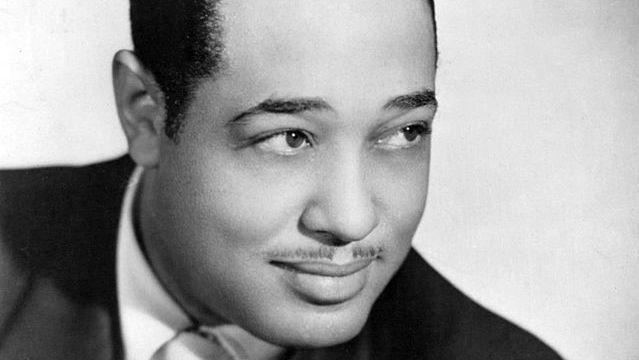
Introduction
Duke Ellington was one of the most influential musicians in American history. Born Edward Kennedy Ellington on April 29, 1899, in Washington, D.C., he became a celebrated pianist, composer, arranger, and bandleader whose career lasted more than fifty years. Although often associated with jazz, Ellington viewed his music as transcending categories and labels. Through thousands of compositions and performances, he transformed American music and established a legacy that continues to inspire musicians around the world.
Ellington was a pioneer of big-band jazz and is widely regarded as one of the greatest composers of the twentieth century. His innovative use of orchestration, harmony, and rhythm helped elevate jazz from popular entertainment to a respected art form. Throughout his life, he composed music for concerts, films, theater productions, and sacred performances while maintaining one of the most successful orchestras in history.

Childhood
Edward Kennedy Ellington was born into a middle-class African American family in Washington, D.C. His father, James Edward Ellington, worked as a butler and occasionally served in government positions, while his mother, Daisy Kennedy Ellington, encouraged her son’s appreciation for culture, manners, and the arts.
As a child, Ellington displayed an interest in drawing and painting before focusing seriously on music. He began piano lessons at the age of seven. Although he was not immediately enthusiastic about practicing, he gradually developed a fascination with the instrument. His parents provided a supportive environment that exposed him to education, literature, and music.
The nickname “Duke” was reportedly given to him during his youth because of his refined manners, elegant appearance, and dignified behavior. Friends and acquaintances felt he carried himself with the grace of a nobleman, and the nickname remained with him throughout his life.
Growing up in Washington, D.C., Ellington was surrounded by a vibrant African American cultural community. The city’s churches, theaters, dance halls, and social clubs exposed him to ragtime, blues, and early jazz, influences that would shape his future musical style.
Youth
During his teenage years, Ellington became increasingly interested in music and began performing professionally. He drew inspiration from local pianists and absorbed elements of ragtime and blues. By the age of seventeen, he was already playing in small bands and earning money as a musician.
Although he showed considerable artistic talent and was offered a scholarship to study commercial art at the Pratt Institute in New York, he chose to pursue music instead. This decision proved to be one of the most important turning points in his life.
In the early 1920s, Ellington formed a group known as The Washingtonians. The ensemble gained popularity in Washington before relocating to New York City, which was rapidly becoming the center of jazz culture. The move placed Ellington at the heart of the Harlem Renaissance, a flourishing period of African American artistic and intellectual achievement.
Adulthood
Ellington’s career expanded dramatically after his orchestra secured a residency at Harlem’s famous Cotton Club in 1927. The club’s radio broadcasts introduced his music to audiences across the United States, helping establish him as a national figure.
Unlike many bandleaders of his era, Ellington composed specifically for the individual musicians in his orchestra. He recognized the unique sounds and talents of his performers and crafted arrangements that highlighted their strengths. This approach gave his orchestra a distinctive and recognizable sound.
Throughout the 1930s and 1940s, Ellington and his orchestra toured extensively across the United States and internationally. During these years, he produced many of his most celebrated works and collaborated with outstanding musicians, including Billy Strayhorn, who became one of his closest creative partners.
Ellington’s influence extended beyond entertainment. He composed ambitious suites exploring African American history, culture, and identity. Works such as Black, Brown and Beige demonstrated his desire to create large-scale compositions that reflected the African American experience.
His orchestra remained active through changing musical trends, surviving the decline of the big-band era and continuing to perform successfully during the rise of bebop and modern jazz. Ellington’s creativity never diminished, and he continued composing and touring into his seventies.
Major Compositions
Duke Ellington composed thousands of musical works during his lifetime. Among his most famous compositions are:
“Mood Indigo” (1930)
One of Ellington’s earliest masterpieces, “Mood Indigo” became a jazz standard and demonstrated his innovative approach to orchestration. Its unusual instrumental combinations created a rich and atmospheric sound.
“Sophisticated Lady” (1932)
This elegant composition became one of Ellington’s signature songs. It remains a classic example of his melodic sophistication and emotional depth.
“It Don’t Mean a Thing (If It Ain’t Got That Swing)” (1932)
This piece helped popularize the concept of “swing” and became one of the defining songs of the Swing Era.
“In a Sentimental Mood” (1935)
Known for its lyrical beauty, this composition remains one of the most frequently performed jazz ballads.
“Take the ‘A’ Train” (1941)
Written primarily by Billy Strayhorn and adopted as the theme song of the Duke Ellington Orchestra, this work became one of the most recognizable pieces in jazz history.
“Black, Brown and Beige” (1943)
This extended suite represented one of Ellington’s most ambitious projects. It explored the history and contributions of African Americans through music.
“Satin Doll” (1953)
Another enduring jazz standard, “Satin Doll” showcased Ellington’s gift for memorable melodies and sophisticated harmonies.
Sacred Concerts (1965–1973)
In his later years, Ellington composed a series of Sacred Concerts that combined jazz with religious themes. He considered these among the most important works of his career.
Death
In the early 1970s, despite declining health, Ellington continued to compose, record, and perform. His dedication to music remained unwavering throughout his final years.
Duke Ellington died of lung cancer and pneumonia on May 24, 1974, in New York City, at the age of seventy-five. His death marked the end of one of the most remarkable careers in American music.
Thousands of admirers mourned his passing. Musicians, critics, and cultural leaders recognized that the world had lost not only a brilliant performer but also one of the greatest composers America had ever produced.
Following his death, his archives, manuscripts, recordings, and personal papers were preserved and studied extensively, ensuring that future generations could continue to appreciate his contributions to music and culture.
Conclusion
Duke Ellington’s life was a story of extraordinary creativity, discipline, and innovation. From his childhood in Washington, D.C., to his international fame as a composer and bandleader, he consistently expanded the artistic possibilities of jazz.
His influence can be heard in countless genres of music, from traditional jazz and swing to modern orchestral and popular music. Through his compositions, performances, and leadership, Ellington transformed American culture and helped establish jazz as one of the nation’s most significant artistic achievements.
More than fifty years after his death, Duke Ellington remains a symbol of musical excellence, artistic vision, and cultural achievement. His work continues to inspire audiences and musicians around the world, securing his place among the greatest composers in history.
Comments are closed