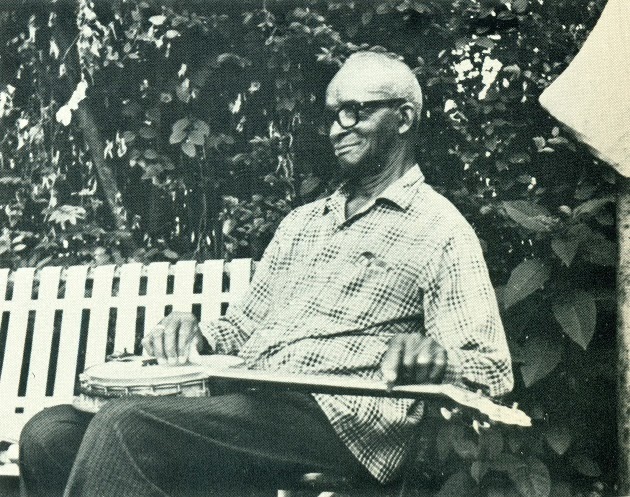
Introduction
Gustavus “Gus” Cannon was one of the most influential figures in the history of American folk blues and jug band music. Best known as the leader of Cannon’s Jug Stompers, he helped popularize a distinctive musical style that blended blues, folk traditions, ragtime rhythms, and improvised instrumentation. His recordings from the late 1920s became foundational works in American roots music and influenced generations of musicians long after their original release.
Although Cannon spent much of his life working as a laborer and sharecropper, his musical innovations left a lasting mark on American culture. Songs such as “Walk Right In,” “Minglewood Blues,” and “Viola Lee Blues” survived far beyond their era, reaching new audiences during the folk revival of the 1950s and 1960s. Today, he is recognized as a pioneer whose work helped shape both blues and folk music traditions.
Childhood
Gus Cannon was born on September 12, 1883, in Red Banks, Mississippi, though some historical sources disagree about the exact year of his birth. He grew up in a large family on plantations in northern Mississippi during the post-Reconstruction era.
Music was an important part of family life. Cannon and his siblings regularly sang folk songs and played traditional string-band music. Despite having no formal musical education, he developed a strong interest in instruments at an early age. As a child, he built his own banjo from a frying pan and raccoon skin, demonstrating both creativity and determination.
When Cannon was still young, his family moved frequently in search of work. These experiences exposed him to a wide range of musical traditions throughout the Mississippi Delta. He listened closely to local musicians and absorbed elements of folk songs, blues, and dance music that would later become central to his own style.
Youth
At around twelve years old, Cannon moved to Clarksdale, Mississippi, where he worked alongside his brother in the cotton fields. During this period, he encountered talented local musicians whose performances inspired him to develop his skills further.
He learned techniques from regional performers and became proficient on both banjo and fiddle. Particularly important was his exposure to early blues music, which was beginning to emerge as a distinct genre in the Mississippi Delta. Cannon adapted slide techniques and folk melodies into his banjo playing, creating a unique sound that blended older traditions with newer musical forms.
As a teenager, he left home and began traveling throughout the South. He entertained workers in railroad camps, levee camps, and sawmills. These experiences provided valuable opportunities to perform before diverse audiences and refine his stage presence.
By the early twentieth century, Cannon had settled near Memphis, Tennessee, a city that would become central to his musical career. There he met musicians such as Noah Lewis and Jim Jackson, forming relationships that would later lead to some of his most important recordings.
Adulthood
Throughout his adult life, Cannon balanced music with demanding physical labor. He worked as a sharecropper, ditch digger, and laborer while continuing to perform at dances, parties, and traveling medicine shows. These medicine shows took him throughout the South and Midwest, exposing him to a wide variety of musical influences and audiences.
In 1927, Cannon made his first commercial recordings under the name “Banjo Joe.” Soon afterward, Victor Records invited him to assemble a recording group. This led to the formation of Cannon’s Jug Stompers, featuring harmonica virtuoso Noah Lewis and guitarist Ashley Thompson, later joined by other musicians.
Between 1928 and 1930, the group recorded a series of influential songs that became classics of jug band music. Their recordings combined banjo, harmonica, guitar, jug, washboard, and other improvised instruments, creating a lively and rhythmic sound that appealed to both rural and urban audiences.
Despite the quality of these recordings, the economic hardships of the Great Depression limited commercial opportunities for many blues musicians. By the late 1930s, Cannon had largely retired from recording and returned to ordinary work to support his family.
His career experienced a revival during the folk music resurgence of the 1950s and 1960s. Folk enthusiasts rediscovered his earlier recordings, and younger musicians recognized their historical importance. When the Rooftop Singers turned his song “Walk Right In” into a major hit in 1963, Cannon received renewed attention and returned to the recording studio. He subsequently recorded an album for Stax Records and made appearances at colleges, coffeehouses, and folk festivals.
Even in old age, Cannon remained a respected figure in American roots music and was celebrated as a living link to the earliest generations of blues performers.
Major Compositions
Gus Cannon’s legacy rests largely on a body of songs that became standards within American folk and blues traditions.
Walk Right In
“Walk Right In” is Cannon’s most famous composition. Originally recorded by Cannon’s Jug Stompers in 1929, the song achieved international fame when the Rooftop Singers released a cover version in 1963. The recording reached the top of the charts and introduced Cannon’s music to millions of listeners.
Viola Lee Blues
“Viola Lee Blues” became widely known through later interpretations by rock musicians, most notably the Grateful Dead. The song demonstrated Cannon’s ability to combine traditional blues themes with memorable melodies and rhythmic energy.
Minglewood Blues
One of the defining recordings of Cannon’s Jug Stompers, “Minglewood Blues” remained influential for decades and was reinterpreted by numerous blues and rock performers.
Pig Ankle Strut
This instrumental piece showcased the band’s rhythmic sophistication and reflected the strong connection between jug band music, dance traditions, and ragtime influences.
White House Station
Another notable recording, “White House Station” illustrated Cannon’s skill as both a storyteller and ensemble leader, blending humor, narrative, and musical craftsmanship.
Together, these compositions helped preserve African American folk traditions while influencing later generations of blues, folk, country, and rock musicians.
Death
Gus Cannon died on October 15, 1979, in Memphis, Tennessee, at the age of ninety-six. By the time of his death, he had become recognized as one of the last surviving pioneers of early blues and jug band music.
His passing marked the end of a remarkable career that spanned nearly eight decades. Although much of his life had been spent outside the spotlight, the folk revival ensured that his contributions would not be forgotten.
He was buried in Mississippi, close to the region where his musical journey had begun nearly a century earlier.
Conclusion
Gus Cannon occupies a unique place in American musical history. Through his mastery of the banjo, his leadership of Cannon’s Jug Stompers, and his gift for blending blues, folk, and ragtime traditions, he helped create one of the most distinctive sounds of the early twentieth century.
His music preserved elements of African American folk culture at a time when many traditions were disappearing, and his recordings later inspired artists across multiple genres. Songs such as “Walk Right In,” “Viola Lee Blues,” and “Minglewood Blues” continue to be performed and studied today.
More than a blues musician, Gus Cannon was a cultural bridge between generations. His work connected nineteenth-century folk traditions with modern American popular music, ensuring that the spirit of jug band music would remain alive long after his lifetime.
Comments are closed