Introduction
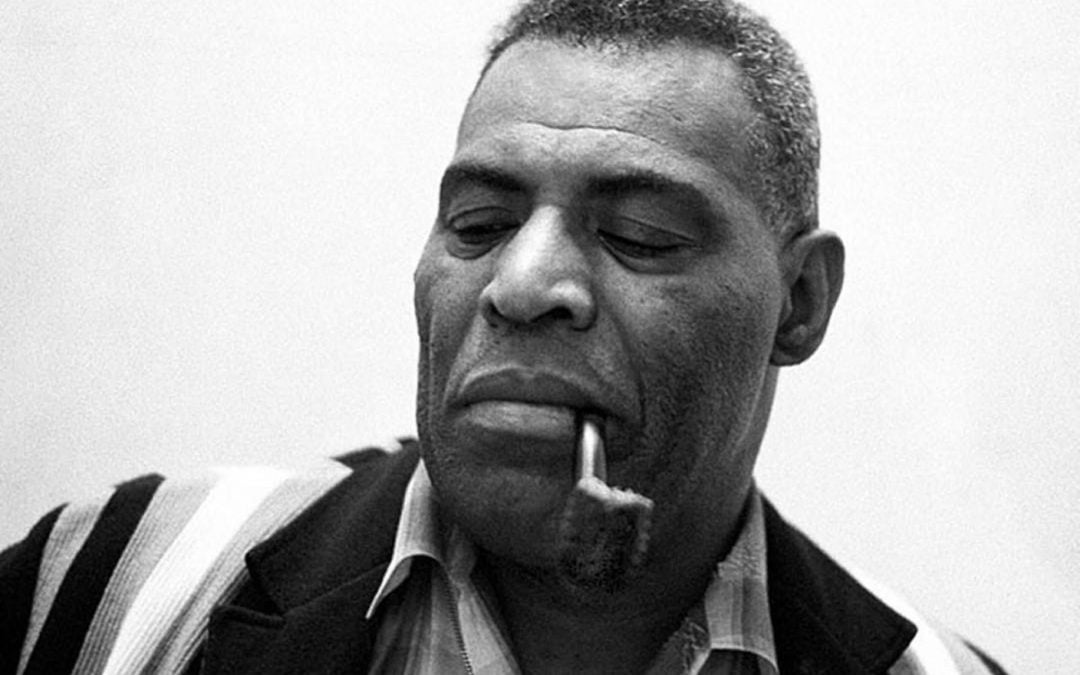
Howlin’ Wolf was one of the most powerful and influential musicians in the history of American blues. Born Chester Arthur Burnett, he became famous for his enormous physical presence, commanding stage performances, and unmistakable voice—a deep, rough growl that could suddenly rise into a frightening howl. His music helped transform the rural blues of the Mississippi Delta into the amplified, aggressive sound of Chicago blues.
During a career that lasted several decades, Howlin’ Wolf recorded songs that became standards of blues and rock music. His performances influenced generations of musicians, including the Rolling Stones, Eric Clapton, the Doors, Cream, and numerous other American and British rock artists. Although he emerged from poverty and experienced a difficult childhood, he eventually became one of the defining figures of twentieth-century American music.
Howlin’ Wolf was not simply a blues singer. He was a performer who embodied the emotional intensity of the blues. His voice, harmonica playing, and theatrical stage presence created a musical identity that has remained instantly recognizable long after his death.
Childhood
Chester Arthur Burnett was born on June 10, 1910, in White Station, Mississippi, near the town of West Point. He was named after Chester A. Arthur, the twenty-first president of the United States. His parents were Leon “Dock” Burnett and Gertrude Jones.
Burnett grew up in the rural American South during an era of severe racial segregation and economic hardship. Life was especially difficult for African American families in Mississippi. Agricultural labor dominated the region, and many Black workers lived under systems of economic exploitation connected to plantations and sharecropping.
His parents separated when he was very young. Burnett initially lived with his mother and sang in a Baptist church choir. His relationship with her, however, became troubled. As a child, he was sent away from her home and eventually lived with a relative who reportedly treated him harshly.
The experience was deeply painful. Burnett later fled and traveled a long distance to find his father. Living with his father provided him with greater stability, although he continued to work in agriculture and had little formal education.
Several stories exist about the origin of his famous nickname. According to one commonly repeated account, his grandfather frightened him as a child by warning that wolves would come after him. Burnett was also known by nicknames such as “Big Foot Chester” and “Bull Cow,” references to his unusual size. As an adult, he stood more than six feet tall and weighed close to three hundred pounds.
The difficulties of Burnett’s childhood would remain part of his emotional world. Themes of loneliness, fear, betrayal, movement, and survival later appeared throughout his music.
Youth
As a teenager, Burnett became increasingly interested in music. In 1928, when he was seventeen years old, he acquired his first guitar. This moment marked the beginning of his development as a professional musician.
One of the most important figures in his musical education was Charley Patton, a legendary Mississippi Delta blues musician. Burnett met Patton around 1930 and began observing his performances. Patton was not only a guitarist and singer but also a spectacular entertainer. He moved his guitar around his body, played it in unusual positions, and used physical gestures to capture the audience’s attention.
Burnett learned guitar techniques and elements of showmanship from Patton. The influence was permanent. Years later, Howlin’ Wolf would become famous for crawling across stages, shaking his body, howling, and creating dramatic performances that sometimes appeared almost uncontrollable.
Burnett also absorbed the music of performers such as Blind Lemon Jefferson, Tommy Johnson, the Mississippi Sheiks, and country singer Jimmie Rodgers. Rodgers’s famous yodeling was particularly significant. Burnett reportedly attempted to imitate the yodel but developed a rough, animal-like howl instead. This vocal technique eventually became one of the central characteristics of the Howlin’ Wolf persona.
Another important teacher was Sonny Boy Williamson II, also known as Aleck Miller. Williamson helped Burnett improve his harmonica playing. The harmonica became an essential part of Wolf’s early sound, complementing his powerful singing and guitar work.
During the 1930s, Burnett performed throughout the Mississippi Delta. He played at small gatherings, local dances, juke joints, and other venues serving African American communities. He often worked on farms during the day and performed music at night.
In 1941, Burnett entered the United States Army during World War II. His military experience was difficult, and he was discharged in 1943. After leaving the Army, he returned to agricultural work and music.
By this period, Burnett had accumulated years of musical experience. He had learned directly from important Delta musicians and had begun developing a distinctive combination of traditional blues, amplified instruments, harmonica, and dramatic vocals. The foundations of Howlin’ Wolf’s mature style were already in place.
Adulthood
In 1948, Burnett moved to West Memphis, Arkansas. This decision was a major turning point in his career. He formed an electric blues band and began working as a radio performer and disc jockey at station KWEM.
Radio gave him access to a larger audience. His powerful voice and unusual musical style attracted attention throughout the region. His band developed an aggressive electric sound that anticipated some of the characteristics later associated with Chicago blues and early rock and roll.
Record producer Sam Phillips heard Howlin’ Wolf and immediately recognized his extraordinary talent. Phillips, who later founded Sun Records and worked with Elvis Presley, Johnny Cash, and Jerry Lee Lewis, considered Wolf one of the greatest artists he ever encountered.
In 1951, Howlin’ Wolf began making important commercial recordings in Memphis. Among his earliest successes were “Moanin’ at Midnight” and “How Many More Years.” The recordings demonstrated his mature style: distorted electric guitar, heavy rhythm, raw harmonica, and Wolf’s enormous voice.
His recordings attracted the attention of Chess Records in Chicago. In the early 1950s, Wolf moved to Chicago and became one of the label’s major blues artists. Chicago was then a center of African American musical innovation. Thousands of Black Southerners had moved to the city during the Great Migration, bringing Southern musical traditions into an urban and industrial environment.
At Chess Records, Howlin’ Wolf became a central figure in the development of electric Chicago blues. His principal contemporary and sometimes professional rival was Muddy Waters. Both musicians recorded for Chess and became internationally recognized blues legends, but their musical personalities were different. Muddy Waters often projected confidence and sophistication, while Wolf cultivated a darker, more primitive, and physically intimidating sound.
One of the most important musicians in Wolf’s band was guitarist Hubert Sumlin. Sumlin developed an angular and expressive guitar style that perfectly complemented Wolf’s voice. Their musical partnership became one of the most important relationships in blues history.
Wolf also worked extensively with songwriter and bassist Willie Dixon. Dixon wrote several songs that became signature Howlin’ Wolf recordings. Through Chess Records, Wolf transformed Dixon’s compositions into intense performances filled with tension, humor, sexuality, and menace.
Despite his wild stage personality, Burnett was known for taking the business of music seriously. He paid his musicians professionally and expected discipline from his band. Unlike many musicians of his generation, he also sought additional education as an adult, attending classes to improve his literacy and business knowledge.
His personal life became more stable after he married Lillie Handley. Their marriage remained an important part of his adult life. Lillie helped manage household finances and supported him during his later health problems.
During the 1960s, Howlin’ Wolf gained a new audience. Young British musicians had become fascinated by American blues records. Bands such as the Rolling Stones, the Yardbirds, and Cream recorded songs associated with Wolf and other Chess Records musicians.
The Rolling Stones were particularly enthusiastic admirers. In 1965, they helped introduce Howlin’ Wolf to a wider American television audience by insisting that he appear on the television program Shindig!
Wolf also toured Europe, where blues musicians were often treated with enormous respect. In 1970, he recorded The London Howlin’ Wolf Sessions with prominent British rock musicians, including Eric Clapton and members of the Rolling Stones. The project demonstrated the enormous influence Wolf had exercised on the development of British rock.
Major Compositions
Howlin’ Wolf’s musical legacy includes both songs he wrote and compositions by other songwriters that became inseparable from his performances.
“Smokestack Lightning”
“Smokestack Lightning” is perhaps Howlin’ Wolf’s most famous original composition. Recorded in 1956, the song developed from musical ideas that Wolf had performed for many years.
The recording is built around a repetitive, hypnotic guitar pattern. Instead of following a conventional narrative, the lyrics present fragments of emotional imagery. Wolf’s howls, moans, and vocal cries create an atmosphere of romantic suffering and psychological tension.
“Smokestack Lightning” became a blues classic and influenced numerous rock musicians. It was inducted into the Grammy Hall of Fame and later selected for the National Recording Registry of the Library of Congress.
“Moanin’ at Midnight”
Recorded in 1951, “Moanin’ at Midnight” was one of Wolf’s earliest major recordings. The song immediately established the characteristics of his musical personality.
The performance opens with an eerie vocal sound that is neither conventional singing nor ordinary speech. Wolf uses his voice almost as a musical instrument. The recording helped introduce his distinctive style to a national rhythm-and-blues audience.
“How Many More Years”
“How Many More Years” was another important early recording. Its aggressive electric guitar and strong rhythmic structure have led some music historians and musicians to identify it as an important precursor to rock and roll.
The song expresses emotional frustration and exhaustion within a troubled relationship. Wolf’s performance transforms a familiar blues subject into something physically intense and threatening.
“Killing Floor”
Written by Howlin’ Wolf, “Killing Floor” was recorded in the 1960s and became one of his most influential compositions.
The title uses the image of a slaughterhouse killing floor as a metaphor for an emotionally destructive relationship. The song was later performed or adapted by major rock musicians, including Jimi Hendrix and Led Zeppelin.
“Spoonful”
“Spoonful” was written by Willie Dixon but became one of Howlin’ Wolf’s signature recordings. The lyrics use the image of a “spoonful” to describe the small things that can produce enormous human desire and conflict.
Wolf’s performance gives the song a dark and threatening quality. Cream later recorded a famous rock version, helping introduce the composition to a younger international audience.
“The Red Rooster”
Also known as “Little Red Rooster,” this Willie Dixon composition became closely associated with Howlin’ Wolf. The song draws on traditional blues imagery and rural Southern symbolism.
The Rolling Stones recorded their own version in 1964. Their interpretation became a major British hit and demonstrated the direct influence of Chicago blues on the development of British rock music.
“Back Door Man”
Written by Willie Dixon, “Back Door Man” became another classic Howlin’ Wolf performance. The song uses a traditional blues expression describing a secret lover who escapes through the back door when a woman’s husband returns home.
Wolf performs the song with humor, arrogance, and sexual confidence. The Doors later recorded a rock version for their debut album.
“I Ain’t Superstitious”
Another Willie Dixon composition, “I Ain’t Superstitious” combines references to traditional superstitions with an ironic narrator who claims not to believe in them.
Wolf’s dramatic vocal delivery helped make the song a blues standard. It was later recorded by numerous rock musicians.
Together, these recordings demonstrate the essential qualities of Howlin’ Wolf’s music: repetitive rhythms, powerful guitar riffs, traditional blues imagery, emotional intensity, and one of the most distinctive voices in recorded music.
Death
By the late 1960s and early 1970s, Howlin’ Wolf was experiencing serious health problems. He suffered from heart trouble, high blood pressure, and severe kidney problems. A serious automobile accident further damaged his health, and he eventually required regular dialysis treatments.
Despite medical advice, Wolf continued performing. Music was not simply his profession; it was the central activity of his life. His band members and family became increasingly concerned about the physical demands of his performances.
During his final years, his concerts were sometimes limited because of his declining condition. Nevertheless, he continued recording and appearing before audiences. His final studio album, The Back Door Wolf, was released in 1973.
Howlin’ Wolf gave his final performance in November 1975 in Chicago, appearing with fellow blues legend B. B. King.
Chester Arthur Burnett died on January 10, 1976, at the age of sixty-five, in Hines, Illinois. His death followed years of serious kidney and heart problems and complications associated with his declining health.
He was buried at Oakridge Cemetery in Hillside, Illinois, near Chicago. His gravestone includes images of a guitar and harmonica, the instruments that accompanied his extraordinary voice throughout his musical career.
After his death, Howlin’ Wolf received numerous honors. He was inducted into the Blues Hall of Fame in 1980 and the Rock and Roll Hall of Fame in 1991. His recording of “Smokestack Lightning” entered the Grammy Hall of Fame in 1999 and was selected for the Library of Congress National Recording Registry in 2009.
Conclusion
Howlin’ Wolf occupies a unique position in American musical history. He emerged from the rural Mississippi Delta, learned directly from musicians of the early blues tradition, and eventually became one of the architects of electric Chicago blues.
His importance cannot be explained only by his powerful voice. Wolf understood performance as a complete physical and emotional experience. His growls, howls, movements, and facial expressions transformed blues concerts into dramatic events. He could appear frightening, humorous, vulnerable, and commanding within a single performance.
Musically, he connected several generations. His roots belonged to the world of Charley Patton and the Mississippi Delta. His recordings helped define the Chicago blues sound of the 1950s. During the 1960s and 1970s, his music became a fundamental influence on rock musicians in the United States and Great Britain.
The musicians who admired Howlin’ Wolf did not simply copy his songs. They absorbed his use of repetition, distortion, powerful guitar riffs, and emotional intensity. Elements of his music can be heard throughout blues rock, hard rock, and other forms of modern popular music.
Yet Howlin’ Wolf remains impossible to reproduce completely. His voice was a product of his individual physiology, musical education, personal history, and extraordinary sense of theater. Many singers have imitated his growl and howl, but few have achieved the same combination of terror, humor, pain, and humanity.
Comments are closed