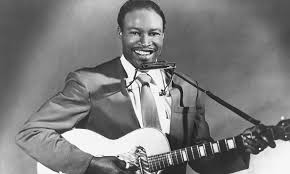
Jimmy Reed: A Biography
Introduction
Jimmy Reed was one of the most influential blues musicians of the twentieth century. Known for his relaxed vocal delivery, distinctive harmonica playing, and deceptively simple guitar style, he helped bridge the gap between traditional Delta blues and the emerging electric blues of postwar America. His recordings became commercial successes during the 1950s and early 1960s, reaching both African American rhythm-and-blues audiences and white listeners who would later fuel the blues revival. Reed’s music inspired countless musicians, including Elvis Presley, The Rolling Stones, Bob Dylan, Neil Young, and many others who incorporated elements of his sound into rock and popular music. Although his career was affected by health problems and alcoholism, his musical legacy remains one of the strongest in blues history.
Childhood
Jimmy Reed was born Mathis James Reed on September 6, 1925, near Dunleith, Mississippi, in the heart of the Mississippi Delta. He was the youngest of ten children born to sharecropping parents who worked the fertile but demanding farmland of the region. Like many children growing up in the rural South during the Great Depression, Reed experienced poverty from an early age and spent much of his childhood helping his family in the cotton fields.
His formal education was limited, as economic necessity required him to leave school after only a few years. Despite these hardships, music became an important part of his life. He learned to play the harmonica and guitar while still a child, receiving guidance from his close friend Eddie Taylor, who would later become his longtime musical partner. Reed also sang in church groups, where he developed the relaxed vocal style that would later distinguish his recordings.
The combination of gospel music, Delta blues traditions, and everyday rural experiences formed the foundation of his musical identity. These influences remained evident throughout his career, even after he transitioned to electric blues.
Youth
As a teenager, Reed sought opportunities beyond the plantations of Mississippi. In 1943, he moved to Chicago, joining the growing migration of Southern African Americans searching for industrial jobs and better living conditions. Chicago was rapidly becoming the center of electric blues, exposing Reed to new musical possibilities.
His plans were interrupted when he was drafted into the United States Navy during World War II. After completing his military service, he returned briefly to Mississippi, where he married Mary Reed, affectionately known as “Mama Reed.” The couple would remain together throughout much of his life, and Mary became an essential figure in both his personal and professional journey. During recording sessions, she often helped him remember lyrics when his health problems interfered with his performances.
The newly married couple eventually settled in Gary, Indiana, where Reed worked in a meatpacking plant while performing in clubs throughout northwestern Indiana and nearby Chicago. During this period, he reunited with Eddie Taylor, whose steady guitar playing complemented Reed’s distinctive rhythm and harmonica style.
Adulthood
Jimmy Reed’s professional breakthrough came after signing with Vee-Jay Records in the mid-1950s. Although his earliest recordings attracted little attention, his fortunes changed dramatically in 1955 with the release of “You Don’t Have to Go.” The record became a major rhythm-and-blues hit and established Reed as one of the label’s leading artists.
Over the next several years, Reed enjoyed an extraordinary run of commercial success. Unlike many blues musicians of his era, he consistently placed songs on both the R&B and pop charts, expanding the audience for electric blues. His music featured simple chord progressions, repetitive rhythms, memorable melodies, and conversational lyrics that made his songs accessible to both experienced musicians and beginners.
His relaxed performance style became his trademark. While technically less flashy than some of his contemporaries, Reed created a hypnotic groove that audiences immediately recognized. His guitar, harmonica, and vocals blended into a sound that was unmistakably his own.
Despite his popularity, Reed faced serious personal challenges. He struggled with alcoholism throughout much of his adult life, and he also suffered from epilepsy, a condition that was often misunderstood during the period. These health issues frequently disrupted recording sessions and live performances, limiting his ability to maintain the momentum of his career.
During the 1960s, changing musical tastes and the financial collapse of Vee-Jay Records contributed to a decline in his commercial success. Nevertheless, Reed continued recording and touring. Ironically, as his popularity declined in the United States, a new generation of British rock musicians embraced his music. Bands such as The Rolling Stones introduced Reed’s songs to millions of new listeners, helping preserve his reputation as one of the architects of modern blues and rock music.
Major Compositions
Jimmy Reed wrote and recorded numerous songs that became enduring blues standards. Many have been covered by hundreds of artists across blues, rock, country, and popular music.
“You Don’t Have to Go” (1955) was his first major commercial success and launched his recording career.
“Honest I Do” (1957) became one of his signature songs. Its gentle rhythm and heartfelt lyrics made it a favorite among blues performers, and it was later recorded by The Rolling Stones.
“Ain’t That Lovin’ You Baby” (1958) demonstrated Reed’s ability to combine blues feeling with catchy melodies, becoming one of his most frequently covered compositions.
“Baby What You Want Me to Do” (1960) remains one of the most recognizable blues songs ever written. Built around a simple but compelling riff, it became a staple for blues and rock musicians alike.
“Bright Lights, Big City” (1961) captured the excitement and loneliness of urban life while showcasing Reed’s distinctive harmonica playing. It has since become a classic of the Chicago blues tradition.
“Big Boss Man” (1961) achieved widespread popularity and has been interpreted by artists from many different genres, including blues, rock, country, and soul.
Together, these recordings established Jimmy Reed as one of the most commercially successful blues artists of his generation. Their straightforward structures made them ideal for aspiring musicians while preserving the emotional authenticity of the blues.
Death
Jimmy Reed continued performing during the 1970s despite ongoing health difficulties. Years of alcoholism and recurring epileptic seizures took a significant toll on his physical condition. On August 29, 1976, shortly before his fifty-first birthday, Reed died in Oakland, California after suffering health complications following a performance.
His death marked the end of a remarkable career, but his influence continued to grow. As blues scholarship expanded and rock musicians increasingly acknowledged their musical roots, Reed’s contributions received renewed recognition. In 1991, he was inducted into the Rock and Roll Hall of Fame, honoring his lasting impact on American music.
Conclusion
Jimmy Reed transformed the sound of electric blues through simplicity rather than technical virtuosity. His relaxed vocals, steady guitar rhythms, expressive harmonica playing, and unforgettable melodies created a style that appealed to listeners across racial, cultural, and generational boundaries. At a time when many blues musicians remained confined to niche audiences, Reed achieved widespread commercial success without abandoning the emotional honesty of the blues tradition.
His songs became foundational works for the development of rock and roll, influencing artists from Elvis Presley and Bob Dylan to The Rolling Stones and countless others. Even decades after his death, musicians continue to record his compositions, and his recordings remain essential listening for anyone interested in the history of American blues. Jimmy Reed’s legacy rests not only on the popularity of his songs but also on the enduring accessibility of his music, which continues to inspire performers and audiences around the world.
Comments are closed