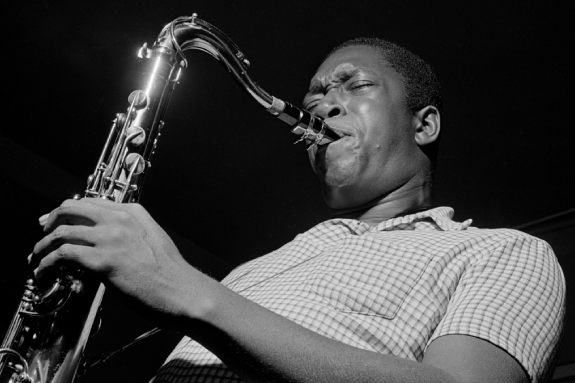
John Coltrane: A Complete Biography
Introduction
John William Coltrane (September 23, 1926 – July 17, 1967) was one of the most influential musicians in the history of jazz and one of the greatest saxophonists of the twentieth century. Although often associated with bebop, hard bop, modal jazz, and free jazz, Coltrane transcended stylistic boundaries through constant musical exploration and spiritual inquiry. His relentless pursuit of artistic excellence transformed the language of jazz, inspiring generations of musicians across genres including classical, rock, blues, and world music.
Known for his remarkable technical ability, emotional intensity, and groundbreaking improvisational style, Coltrane redefined what was possible on the tenor and soprano saxophone. His recordings, particularly Giant Steps, My Favorite Things, A Love Supreme, and Ascension, remain among the most celebrated works in modern music. Throughout a career that lasted less than twenty-five years, he evolved from a talented sideman into one of the most visionary composers and performers in American music.
Childhood
John William Coltrane was born on September 23, 1926, in Hamlet, North Carolina, and grew up in the nearby town of High Point. He was the son of John R. Coltrane, a tailor and amateur musician, and Alice Blair Coltrane. Music surrounded him from an early age. His father played several instruments, including the violin and ukulele, while other family members were active in church music.
Coltrane’s childhood was deeply affected by tragedy. Between 1938 and 1939, several close relatives died within a short period, including his father, his grandparents, and an uncle. These losses placed emotional and financial strain on the family. His mother eventually moved to Philadelphia, Pennsylvania, seeking better employment opportunities, and John joined her shortly afterward.
While attending William Penn High School in Philadelphia, Coltrane became increasingly interested in music. He initially studied the clarinet before switching to the alto saxophone. His early influences included Lester Young, Johnny Hodges, and Charlie Parker, whose innovative improvisations profoundly shaped Coltrane’s musical ambitions.
Philadelphia’s thriving jazz scene exposed the young musician to talented performers and frequent live performances. He devoted countless hours to practicing, establishing the disciplined work ethic that would define his entire career.
Youth
After graduating from high school in 1943, Coltrane continued studying music while taking various jobs to support himself. During World War II, he enlisted in the United States Navy in 1945. Although segregation limited opportunities for African American servicemen, Coltrane joined a Navy band and gained valuable performance experience. One of his earliest recordings was made during his military service in Hawaii.
Following his discharge in 1946, Coltrane returned to Philadelphia and enrolled at the Ornstein School of Music. He also studied privately with several respected teachers while performing with local rhythm-and-blues groups.
Throughout the late 1940s and early 1950s, Coltrane worked with numerous bandleaders, including Eddie “Cleanhead” Vinson, Earl Bostic, and Dizzy Gillespie. These engagements allowed him to refine his technique and become familiar with bebop’s demanding harmonic structures.
His reputation steadily grew, and fellow musicians recognized both his exceptional dedication and his remarkable ability to absorb new musical ideas. Coltrane often practiced for ten or more hours a day, experimenting with scales, harmonic substitutions, and extended improvisational techniques.
Adulthood
Coltrane’s career entered a new phase in 1955 when he joined Miles Davis’s First Great Quintet. Playing alongside pianist Red Garland, bassist Paul Chambers, and drummer Philly Joe Jones, Coltrane quickly became one of the leading voices in modern jazz.
Despite his growing success, he struggled with heroin and alcohol addiction. These problems eventually led Miles Davis to dismiss him from the group in 1957. Determined to rebuild his life, Coltrane underwent a difficult withdrawal period at his mother’s home in Philadelphia. He later described this experience as a profound spiritual awakening that transformed both his life and his music.
After recovering, he briefly joined Thelonious Monk at New York City’s Five Spot Café. Monk encouraged Coltrane’s harmonic experimentation and expanded his understanding of improvisation. This collaboration proved instrumental in shaping Coltrane’s mature musical style.
Later in 1957, Miles Davis invited him back into the quintet. During this period, Coltrane participated in several landmark recordings, including Milestones and Kind of Blue, one of the most influential jazz albums ever produced.
By 1960, Coltrane formed his own quartet, featuring pianist McCoy Tyner, bassist Jimmy Garrison, and drummer Elvin Jones. This ensemble became one of the most celebrated groups in jazz history. Their performances combined technical brilliance with deep emotional and spiritual expression.
Coltrane continuously expanded his artistic vision. His early solo recordings emphasized sophisticated harmonic progressions, while later works increasingly embraced modal improvisation, extended forms, African and Asian musical influences, and avant-garde experimentation.
His spiritual beliefs became central to his creative process. Drawing inspiration from Christianity, Hinduism, Buddhism, Islam, and various philosophical traditions, Coltrane viewed music as a universal language capable of promoting peace, compassion, and spiritual growth.
His masterpiece, A Love Supreme (1965), embodied these ideals. The four-part suite expressed gratitude for his spiritual rebirth and remains one of the most significant recordings in jazz history.
During the final years of his career, Coltrane pursued increasingly adventurous musical directions. Albums such as Ascension, Meditations, Interstellar Space, and Expression challenged traditional notions of melody, harmony, and rhythm while influencing future generations of experimental musicians.
Major Compositions
John Coltrane composed numerous works that have become jazz standards and landmarks of twentieth-century music.
Giant Steps (1960) introduced an innovative harmonic progression now known as the “Coltrane Changes.” Its rapid chord movements remain one of the greatest technical challenges in jazz improvisation.
Naima (1959), dedicated to his first wife, is one of jazz’s most beautiful ballads. Its lyrical melody and rich harmonic texture have made it a favorite among performers worldwide.
My Favorite Things (1961) transformed the Rodgers and Hammerstein Broadway song into an extended modal jazz masterpiece. Coltrane’s use of the soprano saxophone helped popularize the instrument in modern jazz.
Impressions (1963) demonstrated his mastery of modal improvisation, allowing lengthy, highly expressive solos built upon relatively simple harmonic foundations.
A Love Supreme (1965) stands as his greatest artistic achievement. Combining composition, improvisation, and spiritual devotion, the four movements—”Acknowledgement,” “Resolution,” “Pursuance,” and “Psalm”—form a unified musical prayer.
Alabama (1963) served as a solemn response to the bombing of the Sixteenth Street Baptist Church in Birmingham, Alabama. The composition reflects mourning, dignity, and hope during one of the most turbulent periods of the Civil Rights Movement.
Other important works include Countdown, Central Park West, Equinox, Crescent, India, Spiritual, Resolution, and Dear Lord, each illustrating different aspects of his evolving musical language.
Death
In early 1967, Coltrane’s health began to deteriorate. Despite experiencing increasing physical discomfort, he continued performing and recording with extraordinary commitment.
Doctors eventually diagnosed him with liver cancer, though the illness had already reached an advanced stage. John Coltrane died on July 17, 1967, at Huntington Hospital in Long Island, New York, at the age of forty.
His death shocked the international music community. Although his life was relatively short, his artistic output had fundamentally changed the course of modern jazz.
Thousands of musicians, friends, and admirers mourned his passing. Memorial services celebrated not only his extraordinary musical achievements but also his generosity, humility, and spiritual dedication.
Conclusion
John Coltrane remains one of the most transformative figures in American music. His relentless pursuit of innovation, combined with an unwavering commitment to personal growth and spiritual exploration, elevated jazz to new artistic heights.
His influence extends far beyond jazz. Classical composers, rock musicians, experimental artists, and performers from countless musical traditions continue to draw inspiration from his fearless creativity and profound emotional expression.
Albums such as Blue Train, Giant Steps, My Favorite Things, Crescent, and A Love Supreme continue to be studied, performed, and celebrated around the world. His improvisational concepts revolutionized saxophone performance and expanded the possibilities of musical composition.
More than half a century after his death, John Coltrane’s music continues to inspire listeners with its beauty, complexity, intensity, and spiritual depth. His legacy endures not only through his recordings but also through the countless musicians who continue to explore the artistic pathways he opened, ensuring that his voice remains one of the most enduring and influential in the history of modern music.
Comments are closed