Introduction

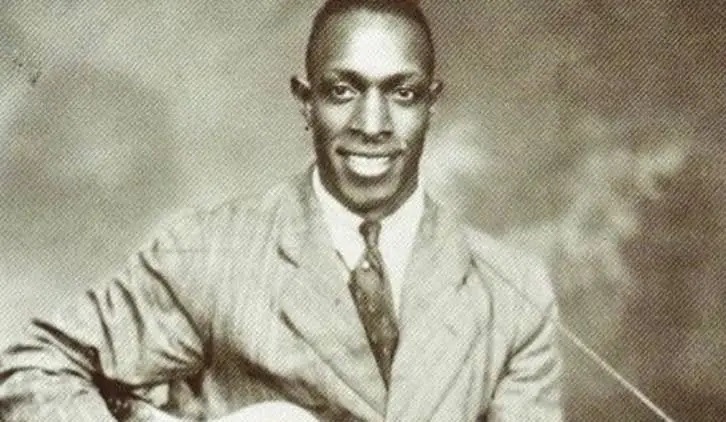
William Bunch (1902-1941), famously known as Peetie Wheatstraw, was an influential American blues musician of the 1930s. His distinctive style, characterized by his piano playing and a unique vocal delivery, earned him monikers such as "The Devil's Son-in-Law" and "The High Sheriff from Hell." Wheatstraw's music resonated deeply within the African-American community during the Great Depression, making him one of the era's most popular and widely imitated blues artists. His persona, often boastful and demonic, has been compared to modern-day rap artists, and his influence extended to other blues legends like Robert Johnson.


Childhood

William Bunch was born on December 21, 1902, in Ripley, Tennessee. However, there is some speculation regarding his birthplace, with some accounts suggesting Cotton Plant, Arkansas, where he was later buried, as his true hometown. Bluesman Big Joe Williams, who recorded with Bunch, supported the idea that Peetie hailed from Cotton Plant. Soon after his birth, Bunch's family settled in Cotton Plant, Arkansas, which was a significant cultural hub in the early 1900s. He began playing both piano and guitar at a young age. In 1920, the Bunch family, including William, his parents Jim and Mary, and his six siblings, worked as farm laborers.


Youth

Around 1927, William Bunch left Cotton Plant and embarked on a journey through the Deep South as a musician. By 1929, he had relocated north, establishing himself in East St. Louis, Illinois, and across the Mississippi River in St. Louis, Missouri. It was during this period that he adopted the stage name Peetie Wheatstraw, a name rooted in African-American folklore, often associated with an evil twin personality. He was already a proficient guitarist but primarily focused on piano for his recordings. He frequently performed at local clubs, including Lovejoy in East St. Louis and a juke joint above a barbershop on West Biddle Street, quickly gaining popularity for his idiosyncratic piano style.


Adulthood

Peetie Wheatstraw began his recording career in 1930, introduced to the process by fellow blues musician Charlie Jordan, who connected him with Vocalion Records and Decca Records. His debut recording was

"Tennessee Peaches Blues" in August 1930, a duet with an artist known as Neckbones. His prolific output included 21 songs within two years, such as "Don't Feel Welcome Blues," "Strange Man Blues," "School Days," and "So Soon." After a brief hiatus from recording between March 1932 and March 1934, he returned with a more refined style, becoming one of the most recorded blues singers and accompanists of his time. His total of 161 recorded songs was surpassed by only a few pre-war blues artists. Despite his widespread popularity in St. Louis and East St. Louis clubs, there is limited evidence of him touring extensively outside these cities, except for recording sessions.


Major Compositions

Peetie Wheatstraw's compositions often reflected the social issues faced by working-class African Americans during the Great Depression, such as unemployment. His distinctive vocal delivery, often punctuated by his signature falsetto cry, "Ooh, well, well," became a hallmark of his style. He recorded for labels like Vocalion, Decca, and Bluebird. Some of his notable early works include "Tennessee Peaches Blues" (1930) and "Six Weeks Old Blues" (1931). Later, he produced songs like "Peetie Wheatstraw Stomp" (1937). His lyrics often featured a boastful, demonic persona, earning him nicknames like "The Devil's Son-in-Law" and "The High Sheriff from Hell." This persona, combined with his "two-fisted barrelhouse piano work," contributed to his unique appeal. His influence is evident in the work of other blues musicians, including Robert Johnson, who borrowed lyrical ideas and musical elements from Wheatstraw's tunes, such as "Police Station Blues."


Death

Peetie Wheatstraw's successful career was tragically cut short on December 21, 1941, his 39th birthday. His last known recordings, "Mister Livingood" and "Bring Me Flowers While I'm Living," were made just weeks before his death, on November 25, 1941. On the day of his death, Wheatstraw and some friends were driving to find more liquor. He had attempted to persuade fellow blues singer Teddy Darby to join them, but Darby's wife prevented him. Wheatstraw, along with Big Joe Williams and two other companions, got into a car. Fortunately for Williams, he was dropped off downtown to catch a streetcar. Traveling at high speed, the car struck a standing freight train less than a block from Wheatstraw's home in East St. Louis. His two companions died instantly, and Wheatstraw succumbed to head injuries five hours later in the hospital. Despite a popular legend that his death went unnoticed, the accident was widely reported in St. Louis and East St. Louis newspapers, and obituaries appeared in national music publications like _Down Beat_.


Conclusion

Peetie Wheatstraw, born William Bunch, left an indelible mark on the blues landscape of the 1930s. His innovative piano style, distinctive vocalizations, and the creation of a memorable, often mischievous, persona cemented his place as a blues icon. His ability to connect with the struggles of his audience through his lyrics, coupled with his prolific recording career, ensured his widespread popularity and lasting influence. Though his life was tragically brief, Wheatstraw's musical legacy continues to be recognized, with his impact evident in the works of subsequent blues generations. His story serves as a testament to the enduring power of the blues during a challenging era in American history.

Comments are closed