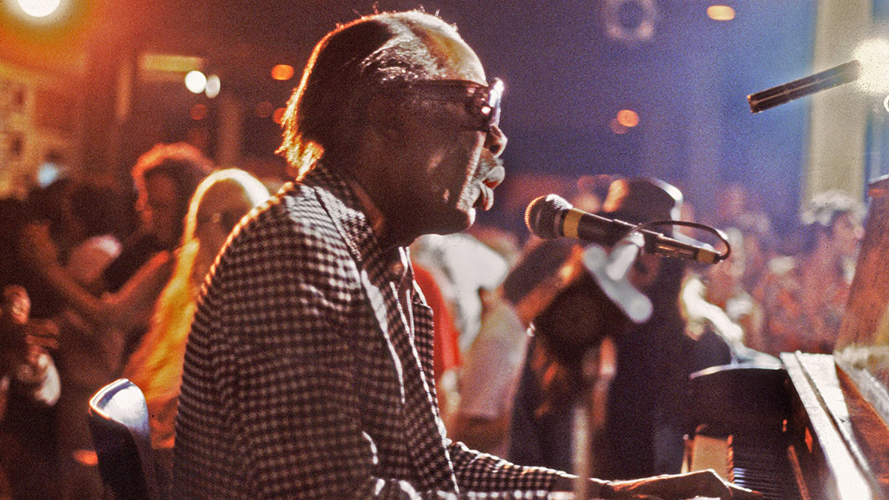
Professor Longhair – A Complete Biography
Introduction
Henry Roeland “Roy” Byrd, known to the world as Professor Longhair or simply “Fess,” stands as a cornerstone of New Orleans rhythm and blues. His unmistakable piano style—full of rolling triplets, Afro-Caribbean rhythms, and syncopated swagger—helped define the city’s sound and inspired generations of players from Fats Domino and Huey “Piano” Smith to Allen Toussaint and Dr. John. Though he had limited commercial success during his lifetime, his artistic impact is profound and enduring, and his recordings remain essential listening for anyone seeking the roots of New Orleans piano and modern R&B.

Childhood
Professor Longhair was born on December 19, 1918, in Bogalusa, Louisiana. He spent parts of his youth in and around New Orleans, absorbing the city’s musical culture from an early age. Family and neighborhood influences introduced him to the rudiments of music, and he taught himself piano under challenging circumstances—famously learning to play on a battered instrument with missing keys. Early on, he performed as a tap dancer and later explored drums and guitar before settling on piano. He also learned informally from notable New Orleans pianists, including Isidore “Tuts” Washington and peers on South Rampart Street. The city’s vibrant mix of jazz, blues, and Caribbean sounds would shape his approach and become the foundation of his singular style.
Youth
By the late 1940s, Byrd began performing in New Orleans clubs, and the owner of the Caldonia Club, Mike Tessitore, bestowed the nickname “Professor Longhair,” echoing a local tradition of calling top keyboardists “piano professors.” In 1949, he recorded with the Shuffling Hungarians for the Star Talent label, cutting early versions of material that would become central to his repertoire, including “Mardi Gras in New Orleans.” The following year, performing under the name Roy Byrd and His Blues Jumpers, he scored his only national chart hit with “Bald Head” (1950). During this era, he recorded for labels such as Mercury, Atlantic, and Federal, often using pseudonyms to navigate the complex and sometimes exploitative recording contracts of the time. Even then, his playing stood out: a rolling boogie-woogie bass, deft right-hand triplets, and rhythms that hinted at rumba, mambo, and calypso gave his music an irresistible, off-kilter groove.
Adulthood
The 1950s brought both critical recognition and personal challenges. Longhair cut classics like “Tipitina” and “Go to the Mardi Gras” and inspired a cohort of younger New Orleans pianists. He also suffered health setbacks, including a stroke in the mid-1950s, and his career faltered through the 1960s. Work was scarce, and he supported himself largely as a gambler and by taking odd jobs, including sweeping a record store. In 1970, a group of local enthusiasts—among them Quint Davis, who later co-founded the New Orleans Jazz & Heritage Festival—helped track him down and restart his career. He returned to major stages with triumphant appearances at the New Orleans Jazz & Heritage Festival (1971), Newport and Montreux (1973), and frequent performances at Tipitina’s, the New Orleans nightclub founded in 1977 and named for his signature song. A late-career renaissance followed: he recorded Live on the Queen Mary (recorded in 1975, released in 1978) with support from Paul and Linda McCartney, and he finally cut his first full studio album, Crawfish Fiesta, for Alligator Records in 1979. These projects solidified his legacy and introduced his work to new audiences across the United States and Europe.
Major Compositions
“Mardi Gras in New Orleans” (first recorded 1949) – A parade-ready anthem built on clave-like rhythmic figures, it captures the festive heartbeat of the city’s Carnival season and showcases Longhair’s rumba-boogie feel.
“Tipitina” (1953) – His most emblematic piece, with playful vocals, lilting triplets, and deeply syncopated left-hand patterns. The song’s cultural footprint is so large that Tipitina’s club was named in its honor.
“Go to the Mardi Gras” (notably re-recorded 1959) – A perennial Carnival favorite, recorded in multiple versions across his career, and a staple of Mardi Gras soundtracks.
“Big Chief” (first recorded 1964 with Earl King) – A swaggering, chant-driven classic tied to the city’s Black Mardi Gras traditions and Indian masking culture.
“Bald Head” (1950) – His lone national hit, recorded as Roy Byrd and His Blues Jumpers, which helped cement his reputation beyond Louisiana.
“In the Night” and “No Buts—No Maybes” (1950s) – Essential cuts that underline the breadth of his style, from bluesy storytelling to rhythmically adventurous piano work.
Death
Professor Longhair died in his sleep of a heart attack on January 30, 1980, in New Orleans, just as a documentary about New Orleans piano masters (Piano Players Rarely Ever Play Together) was being filmed. He was laid to rest at Mount Olivet Cemetery. Crawfish Fiesta, completed shortly before his death, was released in 1980 and became a widely praised capstone to his career. Posthumous recognition followed swiftly: he was inducted into the Blues Hall of Fame in 1981; a reissue collection earned him a Grammy Award in 1987; and he entered the Rock & Roll Hall of Fame in 1992 in the Early Influences category, reflecting his far-reaching impact on American popular music.
Conclusion
Professor Longhair’s legacy lives at the heart of New Orleans music. He synthesized boogie-woogie, blues, and Latin-derived rhythms into a piano vocabulary that felt both ancient and futuristic—earthy, joyful, and perpetually in motion. His songs became the soundtrack of Mardi Gras, his performances ignited crowds on both sides of the Atlantic, and his style inspired generations. That influence can be heard not only in the work of his direct disciples—Toussaint, Dr. John, James Booker, Art Neville, and more—but also in the broader arc of rock and R&B. Longhair didn’t simply play New Orleans piano; he defined it. For listeners and musicians alike, Fess remains the guardian angel of the city’s sound and one of American music’s most distinctive voices.
Comments are closed