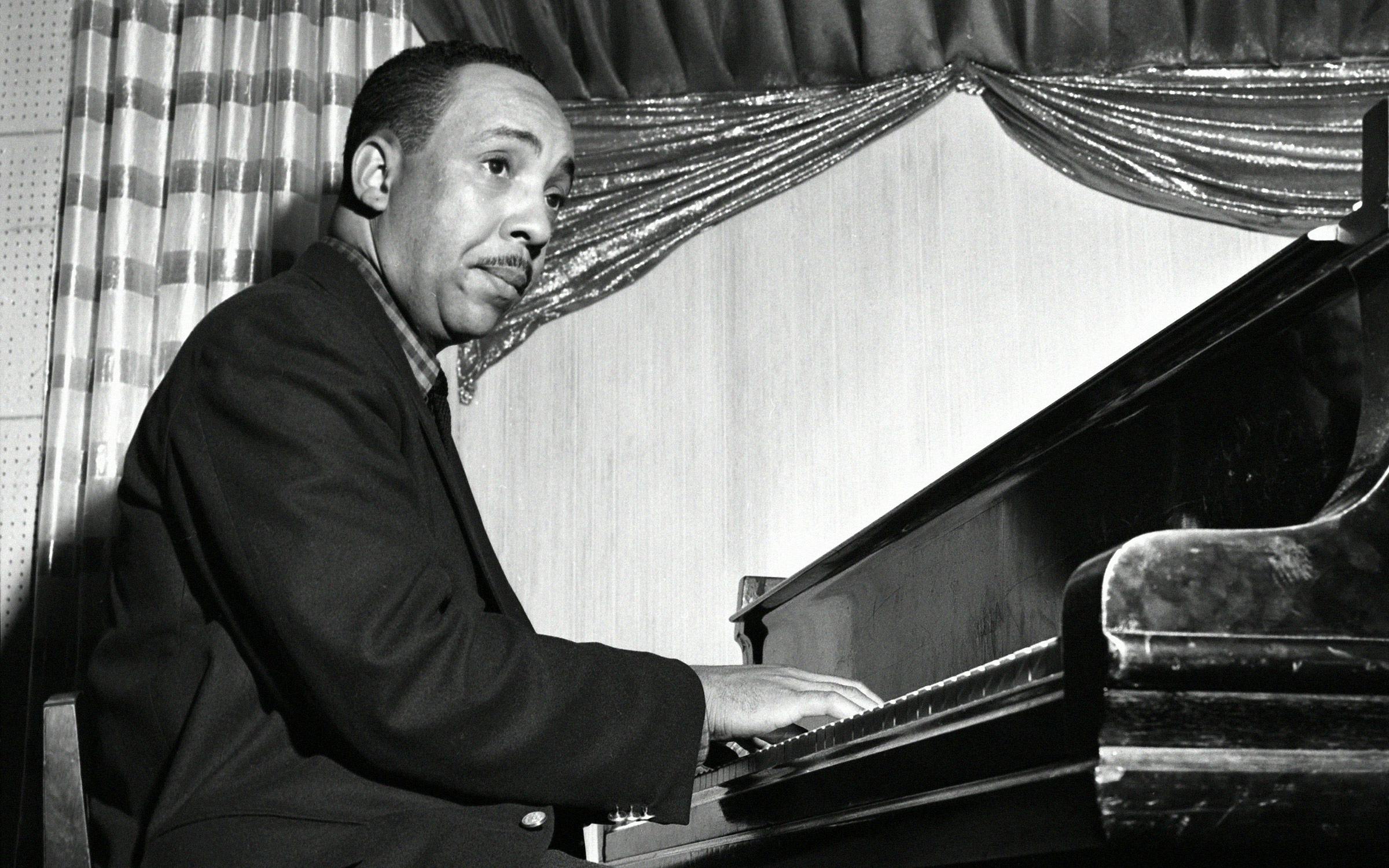
Red Garland – A Complete Biography
Introduction
Red Garland stands among the most influential pianists in the history of jazz and blues-infused modern music. Known for his elegant touch, rhythmic precision, and unique blending of swing, bebop, and blues, Garland carved his own niche as both a solo artist and an essential member of the Miles Davis Quintet. His sophisticated chord voicings, block-chord techniques, and subtle rhythmic sensibilities shaped the sound of postwar jazz piano. While not as widely celebrated as some of his contemporaries, Garland’s influence endures through generations of pianists who continue to draw inspiration from his innovative approach.

Childhood
William “Red” Garland was born on May 13, 1923, in Dallas, Texas. His early life was marked by the cultural vibrancy of Dallas’s African American community, where music and church life played a central role. His father worked for the Santa Fe railroad, while his mother was a homemaker with a love for gospel and spiritual music. Garland’s first exposure to music came through the piano his family kept in the home. Though he initially showed no great enthusiasm for formal lessons, he was fascinated by the blues sounds that poured out of local juke joints and churches.
In his early teens, Garland was more interested in athletics than music. He became an accomplished boxer, winning several local matches in his weight class. However, this competitive streak would later find a new outlet when he turned to the piano in earnest.
Youth
In the early 1940s, Garland’s interests shifted from sports to music. Inspired by the records of Art Tatum, Count Basie, Nat King Cole, and Ahmad Jamal, he began teaching himself piano. During this time, Dallas’s Deep Ellum district was a hotbed for jazz and blues, providing Garland with a rich musical environment to develop his craft.
Garland’s first professional gigs were with local bands in Dallas, where he quickly gained attention for his smooth touch and rhythmic drive. His talent grew rapidly, and by the time he was drafted into the U.S. Army during World War II, he had developed a distinctive musical style rooted in swing but open to the emerging modern jazz sounds of the 1940s. After the war, he moved to New York City, determined to immerse himself in the heart of the jazz world.
Adulthood
By the early 1950s, Red Garland was fully entrenched in the New York jazz scene. He worked with several prominent musicians, including Billy Eckstine, Coleman Hawkins, and Eddie “Lockjaw” Davis. His reputation for elegance, taste, and an impeccable sense of swing made him a sought-after accompanist.
Garland’s major breakthrough came in 1955 when he joined the Miles Davis Quintet, which also featured John Coltrane, Philly Joe Jones, and Paul Chambers. This group became one of the most celebrated ensembles in jazz history. Garland’s delicate, blues-tinged piano style provided the perfect balance to Davis’s lyrical trumpet and Coltrane’s intense saxophone. His signature use of block chords and subtle rhythmic comping defined the group’s sound during the mid-1950s.
Garland played on some of Davis’s most iconic albums, including Workin’, Steamin’, Relaxin’, and Cookin’—each a cornerstone of the hard bop era. His performance on tracks such as “If I Were a Bell” and “My Funny Valentine” displayed his exceptional ability to combine sensitivity with swing.
After leaving Davis’s group in 1958, Garland pursued a successful solo career. He recorded prolifically for Prestige Records, producing acclaimed albums such as Groovy (1957), Red Garland’s Piano (1956), A Garland of Red (1956), and All Kinds of Weather (1958). His trios, often featuring Paul Chambers on bass and Art Taylor on drums, became models of balance and sophistication in jazz trio performance.
Throughout the 1960s and 1970s, Garland’s activity slowed somewhat, but he continued to perform and record intermittently. Despite changing musical trends, he remained faithful to his roots—always infusing his music with blues and swing at its core.
Major Compositions
While Red Garland was primarily known as an interpreter rather than a prolific composer, his arrangements and improvisations showcased a deep musical intelligence and emotional warmth. Among his most celebrated recordings are:
- “Ahmad’s Blues” – A tribute to Ahmad Jamal, this tune demonstrates Garland’s ability to blend lyricism with rhythmic intricacy.
- “Will You Still Be Mine?” – A bright, swinging interpretation that highlights his signature block-chord style.
- “One O’Clock Jump” – Garland’s version of the Count Basie classic captures his ability to merge Kansas City swing with bebop phrasing.
- “C Jam Blues” – His take on this Duke Ellington staple reveals his deep love for the blues and sense of timing.
- “My Romance” – A delicate ballad performance that exhibits his touch, phrasing, and emotional depth.
Garland’s influence was not just in what he played, but how he played it. His comping style—using full, resonant chords in rhythmic patterns—became a defining characteristic of post-bop piano. Pianists like Wynton Kelly, Bill Evans, and later Herbie Hancock all drew inspiration from Garland’s phrasing and rhythmic sensibility.
Death
Red Garland’s later years were quieter, spent mostly in his hometown of Dallas. Although he performed occasionally in clubs and small festivals, he largely withdrew from the spotlight. His health began to decline in the late 1970s, but he continued to play and record as long as he was able.
Garland passed away on April 23, 1984, at the age of 60. His death marked the end of a unique voice in jazz—a musician who bridged the gap between swing, bebop, and the blues with unmatched grace and intelligence.
Conclusion
Red Garland remains one of jazz’s most elegant and understated pianists. His work with Miles Davis and his trio recordings defined the sound of modern jazz piano in the 1950s and continue to influence generations of musicians. His ability to merge technical precision with soulful expressiveness made his music timeless. Garland never chased trends or fame; instead, he focused on the integrity of his craft.
Today, his recordings stand as monuments to an era of refinement and musical sophistication. Red Garland’s legacy lives not only in his own recordings but also in the countless pianists who carry forward his spirit—his balance of discipline, heart, and the deep, unshakeable rhythm of the blues.
Comments are closed