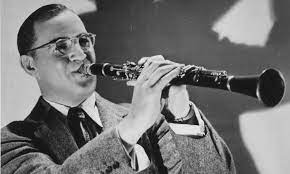
Benny Goodman – A Complete Biography
Introduction
Benny Goodman, often called the “King of Swing,” stands as one of the most influential figures in American music. His clarinet mastery, bandleading genius, and trailblazing approach to racial integration in performance transformed the cultural and musical landscape of the United States during the twentieth century. Goodman’s work helped shape the sound of the Swing Era, introduced jazz to new social spaces, and elevated the big-band idiom to unprecedented commercial and artistic heights. His life story spans poverty and struggle, international acclaim, generational innovation, and an enduring legacy that continues to inform American music.
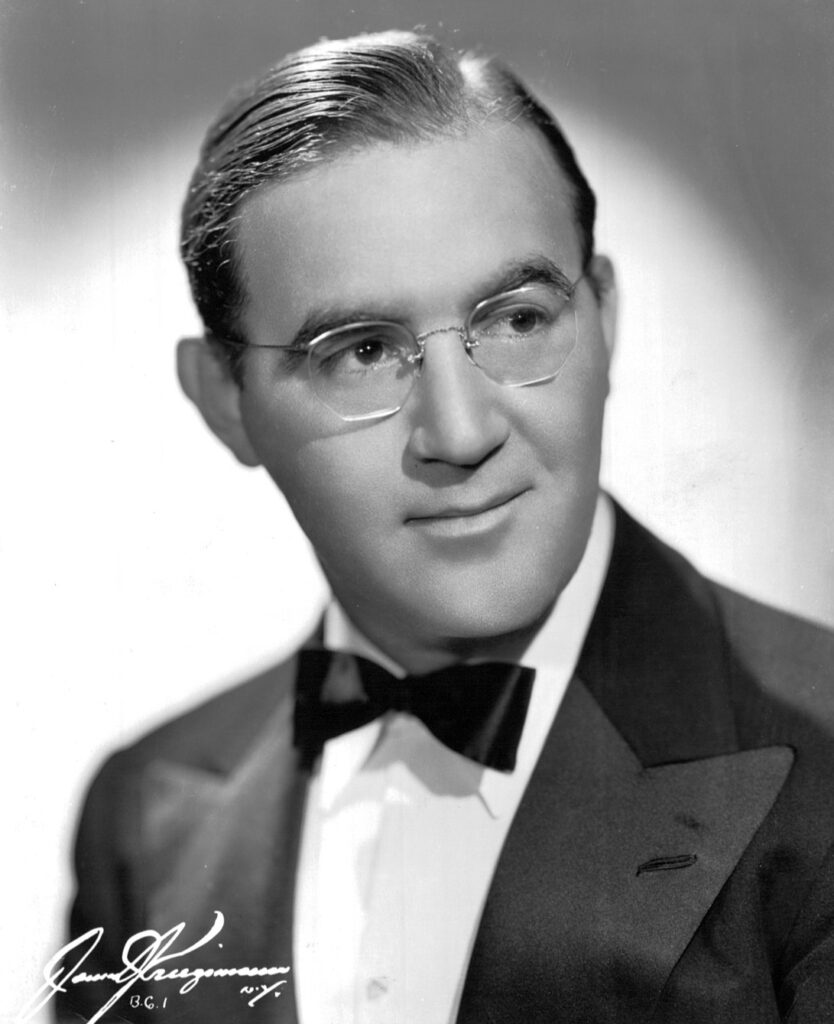
Childhood
Benjamin David Goodman was born on May 30, 1909, in Chicago, Illinois, to Jewish immigrants who had recently arrived from Eastern Europe. His parents struggled financially, and the family’s circumstances were modest even within the dense immigrant neighborhoods of Chicago’s West Side. Goodman’s father, a tailor, placed a strong emphasis on discipline, education, and cultural advancement, despite the family’s limited means.
At the age of ten, Benny was enrolled in a local synagogue music program that offered free instrumental lessons to underprivileged children. It was here that he first encountered the clarinet. His teachers quickly recognized his natural aptitude, and he soon progressed to study with some of Chicago’s most respected classical clarinetists, who provided rigorous training in tone, technique, and repertoire. These formative experiences laid the technical foundations that would later enable his distinctive blend of virtuosity and expressiveness.
Youth
Goodman’s teenage years unfolded against the backdrop of Chicago’s thriving jazz scene. By the early 1920s, he was playing professionally, absorbing the innovations of musicians working in dance halls, cabarets, and riverboat bands. At fourteen, he joined the Ben Pollack Orchestra, gaining valuable experience touring nationally and recording commercially.
This period also exposed Goodman to the diverse musical idioms that would shape his future style: the hot jazz of New Orleans transplants, the urban sophistication of Chicago-style improvisation, and the driving rhythmic sensibilities associated with Black dance bands. His technical polish and precocious musical intelligence set him apart, and he quickly developed a reputation as one of the most promising young clarinetists in the country.
By the time he moved to New York in the late 1920s, Goodman was already in demand as a freelance studio musician. He performed on radio broadcasts, backing vocalists, and pit orchestras while gradually developing his leadership abilities and forging connections with the city’s top arrangers and instrumentalists.
Adulthood
The 1930s marked Goodman’s rise to national prominence. In 1934, he secured a spot on the popular radio program “Let’s Dance,” which featured newly commissioned arrangements from ambitious orchestrators. These charts, combined with Goodman’s exacting rehearsal standards and his band’s fiercely disciplined execution, helped define the signature sound that would become synonymous with swing.
Goodman’s breakthrough occurred during a cross-country tour in 1935. After lukewarm receptions in many cities, the band reached the Palomar Ballroom in Los Angeles, where a youthful crowd embraced their high-energy style with an enthusiasm that ignited the Swing Era. Overnight, Goodman became a household name, and his orchestra dominated American popular music throughout the late 1930s.
Beyond commercial success, Goodman made significant cultural contributions. His ensembles were among the first racially integrated groups to perform publicly in the United States. He hired extraordinary Black musicians such as Teddy Wilson, Charlie Christian, and Lionel Hampton—decisions that challenged entrenched segregation norms in the entertainment industry. His leadership advanced jazz as an art form and expanded opportunities for many historically marginalized performers.
Goodman also maintained a parallel classical career, performing clarinet concertos and chamber works with major symphony orchestras. His collaborations with leading composers and conductors reflected his commitment to bridging musical traditions and elevating the clarinet within American concert life.
Throughout the 1940s, 1950s, and 1960s, Goodman continued to tour internationally, record prolifically, and appear on television. Although musical tastes evolved, he remained a commanding presence in the jazz world, admired for his technical brilliance, refined tonal palette, and uncompromising musical standards.
Major Compositions
While Benny Goodman was primarily celebrated as a performer and bandleader, his career is associated with several signature works that became central to the swing repertoire. Many of these pieces were arranged or composed by members of his band or by prominent jazz arrangers working at his direction. The following compositions are especially significant in understanding his artistic legacy:
Sing, Sing, Sing
Perhaps the quintessential swing anthem, this extended piece showcased Goodman’s powerful clarinet lines and the dynamic interplay of his orchestra. Its infectious rhythmic drive became a cultural emblem of the late 1930s.
Stompin’ at the Savoy
A staple of Goodman’s performances, this piece exemplified the elegance and precision of his small-group ensembles. Its melodic clarity and rhythmic sophistication made it one of the most recognizable jazz standards of the era.
Don’t Be That Way
Introduced as the opening number at his historic 1938 Carnegie Hall concert, this composition symbolized Goodman’s push to bring jazz into the concert hall and elevate it to a respected position within American musical culture.
Let’s Dance
Closely associated with Goodman due to its use on his influential radio program, “Let’s Dance” became part of his public identity. The piece highlighted his ability to fuse entertainment with artistic integrity.
Through these works—and countless interpretations of standards—Goodman helped codify the sonic vocabulary of big-band swing and demonstrated the clarinet’s expressive potential within jazz.
Death
Benny Goodman remained musically active well into his later years, continuing to perform, practice, and refine his craft. He passed away on June 13, 1986, at his home in New York City. His death marked the end of an extraordinary career spanning more than six decades. Widely mourned by musicians, critics, and fans, Goodman left behind an extensive recorded legacy that continues to serve as a benchmark for clarinetists and jazz enthusiasts around the world.
Conclusion
Benny Goodman’s life represents a defining chapter in the history of American music. Rising from impoverished beginnings in Chicago, he became a pioneering force who shaped the sound of an era, broadened the cultural reach of jazz, and challenged racial barriers during a turbulent period in American history. His clarinet artistry set technical and expressive standards that remain influential, and his leadership catalyzed the Swing Era’s explosive growth. Through disciplined musicianship, innovative bandleading, and a commitment to artistic excellence, Goodman secured a permanent place among the giants of twentieth-century music.
Comments are closed