Introduction
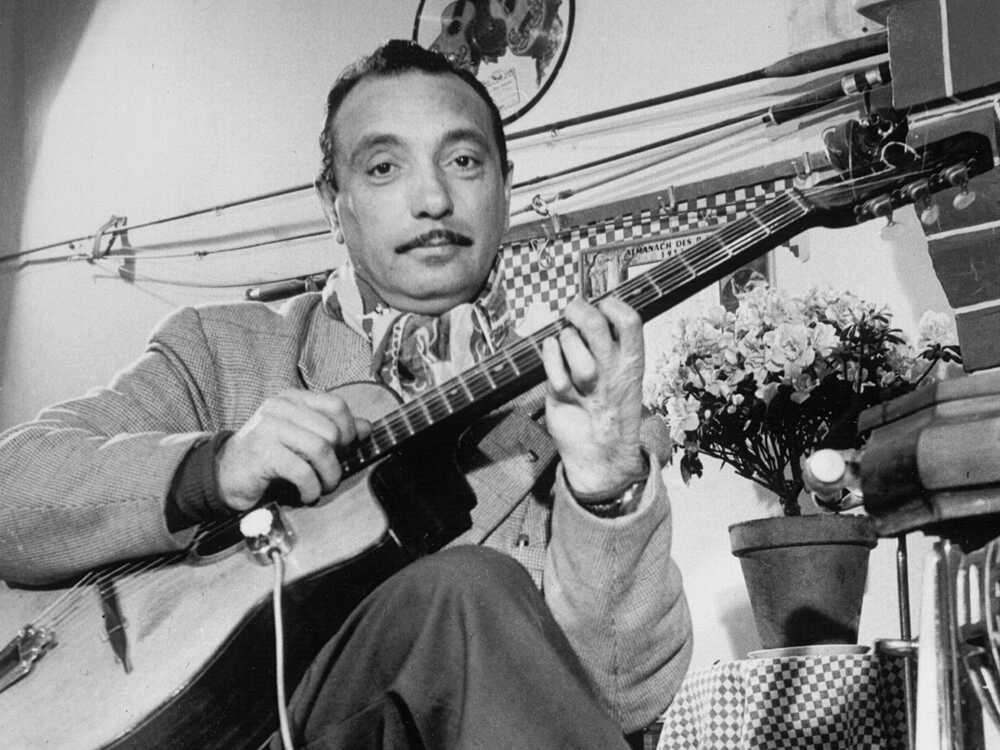
Django Reinhardt was one of the most influential guitarists in the history of jazz and a pioneer of what later became known as Gypsy Jazz. Born Jean Reinhardt on January 23, 1910, in Liberchies, Belgium, he rose from humble beginnings in a traveling Romani family to become one of the first internationally recognized European jazz musicians. His innovative guitar technique, extraordinary improvisational ability, and unique musical vision transformed the role of the guitar in jazz.
Despite suffering a devastating injury that permanently damaged two fingers of his left hand, Reinhardt developed a revolutionary playing style that astonished audiences and inspired generations of musicians. His influence extends far beyond jazz, reaching blues, rock, country, and contemporary guitar music. Today, he remains a legendary figure whose recordings continue to be studied and celebrated around the world.
Childhood
Django Reinhardt was born into a Manouche Romani family that traveled throughout Belgium and France. His father was a musician and entertainer, while his mother worked as a dancer. The family lived a nomadic lifestyle, spending much of their time in caravans and temporary settlements.
As a child, Django was surrounded by music. Traditional Romani melodies, popular French songs, and street performances formed the soundtrack of his early years. Although he received little formal education and remained largely self-taught throughout his life, he displayed remarkable musical talent from an early age.
During his childhood, the family eventually settled near Paris, where young Django became exposed to a wider variety of musical influences. He learned to play several instruments, including the violin and banjo-guitar, and quickly developed a reputation as a gifted performer.
By the time he was a teenager, Reinhardt was already earning money through music, performing at dance halls, cafés, and local events. His natural talent and exceptional ear allowed him to progress rapidly without formal instruction.
Youth
During his teenage years, Reinhardt became a professional musician. He performed with accordion players and dance bands in Paris, where he gained valuable experience and made some of his earliest recordings in 1928.
At the age of seventeen, he married Florine “Bella” Mayer, a young woman from the same Romani community. His career appeared to be on a promising path, and opportunities were beginning to emerge beyond France.
However, tragedy struck on the night of November 2, 1928. A fire broke out in the caravan where Reinhardt and his wife lived. The blaze was caused by highly flammable artificial flowers that Bella manufactured. Django suffered severe burns over much of his body and was hospitalized for more than a year.
The injury nearly ended his musical career. The fourth and fifth fingers of his left hand were permanently damaged, and doctors believed he would never play guitar professionally again. Refusing to accept this prediction, Reinhardt embarked on a remarkable period of rehabilitation. He developed an entirely new technique that relied primarily on his index and middle fingers for solos while using his injured fingers only for certain chord shapes.
This adaptation became one of the most extraordinary stories in music history. Rather than limiting him, it helped shape the distinctive style that would later make him famous.
Adulthood
In the early 1930s, Reinhardt discovered American jazz through recordings by artists such as Louis Armstrong and Duke Ellington. The music captivated him and inspired a new artistic direction.
His career reached a major turning point in 1934 when he joined forces with violinist Stéphane Grappelli to form the Quintette du Hot Club de France. The ensemble was unusual because it relied primarily on string instruments rather than brass and percussion. The group’s sound was innovative, energetic, and unmistakably original.
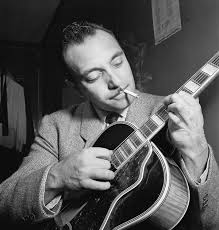
Throughout the 1930s, the Quintette became one of Europe’s most celebrated jazz ensembles. Reinhardt’s dazzling improvisations and technical brilliance attracted international attention. He demonstrated that the guitar could serve as a lead instrument capable of matching the expressive power of horns and piano.
During World War II, Reinhardt remained in France and continued performing despite the challenges of the occupation. His composition “Nuages” became especially popular during this period and provided comfort to many listeners living through uncertain times.
After the war, Reinhardt continued recording and touring. In 1946, he traveled to the United States and performed with Duke Ellington’s orchestra. Although the tour presented logistical and artistic challenges, it further enhanced his international reputation.
In his later years, he became increasingly interested in modern jazz developments, including bebop. He continued experimenting musically until the end of his life, demonstrating a constant desire for artistic growth.
Major Compositions
Django Reinhardt composed numerous works that became standards of the Gypsy Jazz repertoire and remain widely performed today.
Minor Swing
“Minor Swing,” co-written with Stéphane Grappelli and first recorded in 1937, is perhaps Reinhardt’s most famous composition. Built around a simple harmonic structure, the piece provides an ideal framework for improvisation and has become one of the defining works of Gypsy Jazz.
Nuages
Composed during World War II, “Nuages” is one of Reinhardt’s most beloved melodies. The title translates as “Clouds,” and the piece is known for its lyrical beauty and emotional depth. It became enormously popular in France and remains a jazz standard.
Djangology
“Djangology” showcases Reinhardt’s sophisticated harmonic ideas and melodic imagination. The composition has been recorded by countless jazz musicians and is considered a cornerstone of the Gypsy Jazz tradition.
Daphne
“Daphne” combines elegance, rhythmic drive, and memorable melodic lines. The composition highlights Reinhardt’s gift for creating music that is both technically impressive and accessible to listeners.
Belleville
Named after a district of Paris, “Belleville” reflects the vibrant urban atmosphere that influenced much of Reinhardt’s work. The piece demonstrates his ability to blend jazz improvisation with European melodic sensibilities.
Swing ’42
One of his notable wartime compositions, “Swing ’42” displays Reinhardt’s mature style and his continued mastery of swing rhythm and melodic invention.
Together, these compositions helped establish a distinctive European jazz language and continue to influence musicians worldwide.
Death
On May 16, 1953, Django Reinhardt died suddenly in Fontainebleau, France, at the age of forty-three. The cause of death was a brain hemorrhage.
His passing shocked the music world. Although his life was relatively short, his artistic achievements had already secured his place among the greatest musicians of the twentieth century.
At the time of his death, Reinhardt was still evolving as an artist and exploring new musical directions. Many observers believe that he had much more to contribute had he lived longer.
Conclusion
Django Reinhardt’s life is a remarkable story of talent, resilience, and innovation. Born into a traveling Romani family, he overcame poverty, limited education, and a catastrophic injury to become one of the most influential guitarists in history.
His groundbreaking technique redefined jazz guitar and helped create an entirely new musical genre. Through recordings, performances, and compositions such as “Minor Swing” and “Nuages,” he left a legacy that continues to inspire musicians across the world.
More than seventy years after his death, Django Reinhardt remains a symbol of creativity triumphing over adversity. His music endures not only as an important chapter in jazz history but also as a testament to the limitless possibilities of artistic expression.
Comments are closed