Introduction
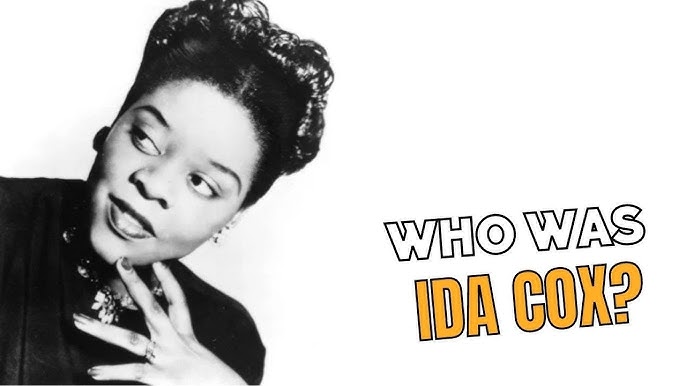
Ida Cox was one of the most influential blues singers and songwriters of the classic female blues era. Best known as the “Uncrowned Queen of the Blues,” she combined exceptional vocal ability, commanding stage presence, and remarkable business acumen at a time when few African American women had control over their own artistic careers. During the 1920s, she recorded dozens of songs that explored love, hardship, independence, racism, poverty, and women’s empowerment. Unlike many of her contemporaries, Cox wrote much of her own material, giving her music a distinctive voice and perspective. Her career spanned more than five decades, from minstrel shows and vaudeville performances to a celebrated recording comeback in the early 1960s. Today, she is recognized as one of the pioneering figures who helped establish blues as a major American musical tradition.
Childhood
Ida Cox was born Ida Prather in Toccoa, Georgia. Although historians have debated her exact birth year, most modern references identify February 25, 1896, as her birth date. She spent much of her childhood in Cedartown, Georgia, where she grew up in modest circumstances during an era of racial segregation and limited opportunities for African Americans.
Music entered her life at an early age through church. She sang in the choir of the local African Methodist Episcopal church, developing the vocal skills and confidence that would later define her professional career. The spirituals and religious music she learned in church provided a strong musical foundation, even though she would eventually become famous for secular blues.
Life in rural Georgia offered few educational or economic opportunities for young Black women. Like many aspiring entertainers of her generation, Cox viewed traveling performance companies as a path toward both artistic expression and financial independence.
Youth
As a teenager, Cox left home to join traveling minstrel and vaudeville companies. Her earliest performances included comic roles, most notably portraying Topsy in productions based on Uncle Tom’s Cabin. She later toured with several well-known companies, including the White and Clark’s Black & Tan Minstrels, the Florida Orange Blossom Minstrels, the Silas Green Show, and the Rabbit Foot Minstrels.
These demanding tours required performers to travel constantly throughout the American South, often under difficult conditions. Despite these hardships, the experience allowed Cox to develop into a polished entertainer. She learned not only singing but also comedy, stage movement, audience engagement, and showmanship.
By the mid-1910s, she had transitioned from comic performances to singing blues almost exclusively. Around this period she married Adler Cox, a trumpeter whose surname she retained throughout her career, even after his death during World War I. As her reputation grew, she became a featured attraction on the Theater Owners Booking Association circuit, one of the most important networks for African American entertainers of the era.
Adulthood
Ida Cox’s professional breakthrough came after the commercial success of blues recordings in the early 1920s created new opportunities for African American female singers. In 1923 she signed with Paramount Records and immediately achieved success with her first recordings, including “Graveyard Dream Blues” and “Weary Way Blues.”
Between 1923 and 1929 she recorded seventy-eight titles for Paramount, becoming one of the label’s leading artists. Paramount promoted her as the “Uncrowned Queen of the Blues,” a title that remained associated with her throughout her life. Unlike many performers of the period, Cox wrote a significant portion of her own songs, allowing her to address themes of female independence, social injustice, economic hardship, romance, and resilience from a distinctly female perspective.
Her stage performances were equally impressive. Known for elegant costumes, dramatic entrances, and charismatic delivery, she became one of the leading attractions on the vaudeville circuit. During the late 1920s she and pianist Jesse “Tiny” Crump, whom she married in 1927, created the touring revue Raisin’ Cain. Cox managed the production herself, demonstrating rare entrepreneurial skill for a Black woman in the entertainment industry during that era.
Although the Great Depression sharply reduced demand for classic female blues performers, Cox continued touring throughout the 1930s. In 1939 she experienced a career revival after appearing in John Hammond’s celebrated From Spirituals to Swing concert at Carnegie Hall. She subsequently recorded with prominent jazz musicians including Charlie Christian, Lionel Hampton, and Hot Lips Page.
A stroke suffered during a nightclub performance in 1945 forced her into retirement. She moved to Knoxville, Tennessee, where she lived quietly with her daughter for many years. During the folk and blues revival of the late 1950s, music historian John Hammond located Cox and encouraged her to return to the recording studio. In 1961 she recorded Blues for Rampart Street, accompanied by distinguished jazz musicians such as Coleman Hawkins and Roy Eldridge. The album introduced her artistry to a new generation of listeners and served as a fitting conclusion to an extraordinary career.
Major Compositions
Ida Cox composed and recorded numerous songs that became classics of early blues. Her lyrics often centered on women’s experiences, emotional independence, economic struggle, and social inequality. Many of her compositions challenged traditional gender expectations by portraying women as confident and self-reliant.
Among her best-known works are:
- “Wild Women Don’t Have the Blues” – Perhaps her signature composition, celebrated as one of the earliest blues songs advocating female independence and personal freedom.
- “Graveyard Dream Blues” – Her debut recording for Paramount Records and one of her earliest commercial successes.
- “Weary Way Blues” – Another successful early recording that established her reputation.
- “Cemetery Blues” – A memorable example of her recurring fascination with themes of death and mourning.
- “Death Letter Blues” – Written in collaboration with Jesse Crump and noted for its emotional intensity.
- “Pink Slip Blues” – A song addressing unemployment and financial insecurity during difficult economic times.
- “Last Mile Blues” – A socially conscious composition dealing with capital punishment.
- “Bone Orchard Blues” and “Coffin Blues” – Additional examples of the graveyard imagery that became one of her artistic trademarks.
Her compositions distinguished themselves through sharp storytelling, memorable melodies, and realistic portrayals of African American life in the early twentieth century. Modern scholars frequently recognize her songwriting as an important contribution to both blues history and early expressions of Black feminist thought.
Death
Following her final recording project, Cox returned permanently to Knoxville, Tennessee, where she lived with her daughter, Helen Goode. She remained active in church life but suffered another stroke during the mid-1960s. After a battle with cancer, Ida Cox died on November 10, 1967, in Knoxville.
Although her passing received relatively limited national attention, the renewed appreciation for early blues during the following decades led historians and musicians to recognize her lasting importance. Her recordings continue to be studied, reissued, and celebrated as foundational works in the history of American blues.
Conclusion
Ida Cox occupies a central place in the history of American blues. More than a gifted vocalist, she was a songwriter, entrepreneur, producer, and performer who exercised unusual creative control over her career. Her willingness to write about women’s autonomy, social injustice, and everyday struggles gave her music a depth that continues to resonate with modern audiences.
Comments are closed